
Introduction
The Black-backed Dwarf-kingfisher (Ceyx erithaca) is a stunning member of the Alcedinidae family, renowned for its diminutive size and breathtaking coloration. As one of the smallest kingfishers in the world, this bird captivates ornithologists and birdwatchers alike with its vibrant appearance. Primarily found in the lush, tropical forests of Southeast Asia and parts of India, this species represents the diversity of perching birds in dense, humid environments. Unlike the more common, larger kingfishers that dominate riverbanks, the Black-backed Dwarf-kingfisher prefers the shaded understory of forest interiors, often remaining elusive to the casual observer. Its scientific name, Ceyx erithaca, refers to the mythological Greek bird, the Halcyon, highlighting its legendary beauty. Understanding this bird requires a deep appreciation for its specialized niche within the ecosystem. As a small, insectivorous predator, it plays a vital role in maintaining forest insect populations. This guide provides an in-depth look at its biology, behavior, and the conservation challenges it faces in an ever-changing landscape.
Physical Appearance
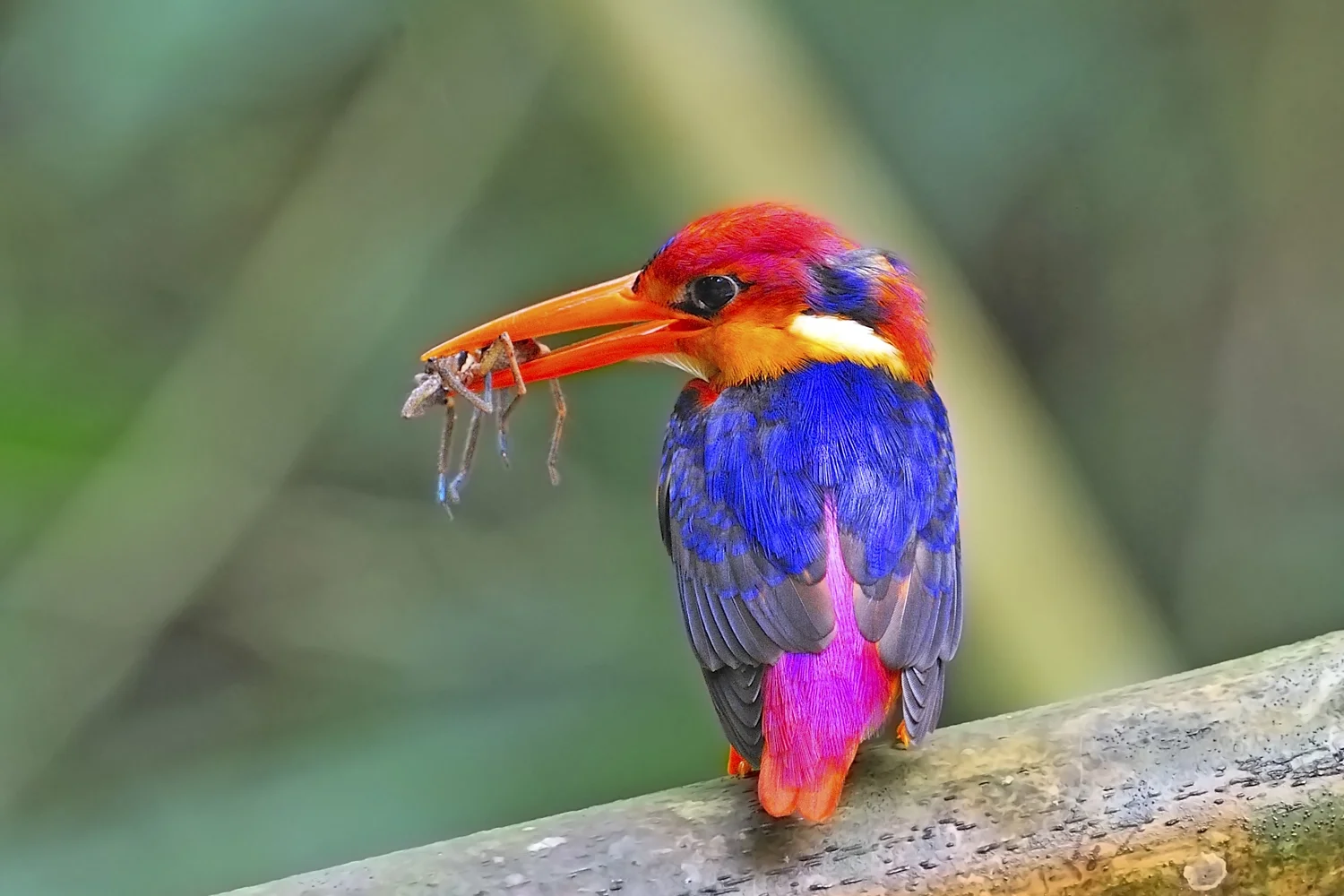
The Black-backed Dwarf-kingfisher is a masterpiece of avian design, measuring only 12 to 14 centimeters in length. Its plumage is a vivid display of contrast, characterized by a dominant, brilliant yellow underbelly that transitions into a striking black mantle across its back and wings. This distinct color palette is complemented by a bright red, heavy bill, which serves as a highly efficient tool for capturing small prey. The head often features a dark crown, and its small, delicate feet are typically a bright orange-red. Despite its small size, the bird possesses a robust build, typical of kingfishers, allowing it to navigate through dense vegetation with surprising agility. Its wings are relatively short and rounded, suited for rapid, short-distance flights between perches in the forest undergrowth. The iridescence of its feathers can sometimes shift in the light, displaying subtle purplish or blue hues depending on the angle, making it one of the most visually captivating perching birds found in tropical forest ecosystems.
Habitat
This species is highly specialized, favoring the dense, humid rainforests and well-wooded areas of Southeast Asia. You will typically find the Black-backed Dwarf-kingfisher near small streams, forest pools, or swampy areas where the vegetation is thick and the canopy provides constant shade. Unlike many other kingfishers that require open water, this bird is a forest dweller that thrives in the leaf litter and low branches of the understory. It prefers environments with high humidity and abundant insect life, often staying hidden within the deep shadows of the forest floor. The protection offered by thick foliage is essential for its survival, as it relies on camouflage to avoid predators while hunting for food in its preferred, quiet, and secluded tropical habitat.
Diet
The diet of the Black-backed Dwarf-kingfisher consists primarily of small invertebrates, making it an insectivorous specialist. It feeds on a variety of prey, including crickets, grasshoppers, beetles, spiders, and occasionally small aquatic creatures like tadpoles or tiny fish if found in shallow pools. Its hunting technique involves sitting perfectly still on a low-hanging branch, scanning the ground or leaf litter for movement. Once prey is spotted, the bird executes a rapid, precise strike, capturing the victim with its sharp bill before returning to its perch to consume it. This "sit-and-wait" strategy is highly effective in the dark, cluttered environment of the forest floor, allowing the bird to conserve energy while efficiently foraging for food throughout the day.
Breeding and Nesting
Breeding for the Black-backed Dwarf-kingfisher is a fascinating process that revolves around the construction of specialized nests. During the breeding season, pairs work together to excavate small tunnels in earthen banks, often along the sides of streams or even in the root balls of fallen trees. These tunnels are typically short, leading to a small chamber where the female lays a clutch of round, white eggs. Both parents take turns incubating the eggs and feeding the chicks once they hatch. The secretive nature of their nesting sites helps protect the vulnerable young from predators. The parents are incredibly diligent, making numerous trips throughout the day to provide insects for their fast-growing brood, ensuring the survival of the next generation in their highly competitive environment.
Behavior
The behavior of the Black-backed Dwarf-kingfisher is marked by extreme shyness and a solitary nature. They are rarely seen in groups, preferring to spend their days in quiet contemplation on low perches. When threatened, they are capable of incredibly fast, darting flights that make them difficult to track with the human eye. Their vocalizations are high-pitched, thin whistles that can be hard to distinguish from the ambient noise of the rainforest. Despite their timid appearance, they are territorial during the breeding season and will defend their chosen nesting area with surprising vigor. Their movement patterns are rhythmic and deliberate, reflecting a bird that has perfectly adapted to the constraints and opportunities of life in the dense tropical undergrowth.
Conservation Status - NT Near Threatened
The Black-backed Dwarf-kingfisher is currently classified as a species of Least Concern by the IUCN, but its population is increasingly threatened by habitat loss. As a forest-dependent species, the degradation of primary rainforests due to logging, agriculture, and urban expansion poses a significant risk to its long-term survival. Protecting the integrity of its forest habitat is essential to ensure that these birds can continue to thrive. Conservation efforts must focus on maintaining stream corridors and preserving the dense understory vegetation that this kingfisher relies on for both hunting and nesting purposes.
Interesting Facts
- They are among the smallest kingfishers in the world, measuring only 12-14 cm.
- Unlike many kingfishers, they are primarily forest-dwellers rather than water-dwellers.
- Their bright red bill is specifically adapted for handling small insects.
- They often nest in earthen banks or the root systems of large trees.
- They are known for their incredibly fast, elusive flight patterns.
- Their plumage can appear to change color depending on the light angle.
- They play a crucial role in controlling insect populations in the forest.
Tips for Birdwatchers
To spot the elusive Black-backed Dwarf-kingfisher, patience is your greatest asset. Focus your search in the deep, shaded understory of primary rainforests, particularly near small, quiet streams. Use high-quality binoculars and move slowly to avoid alerting the bird. Because they are shy, wearing camouflage clothing and minimizing noise is essential. Early morning and late afternoon are the best times for activity. Look for small, motionless shapes on low-hanging branches near the ground. If you hear a high-pitched, thin whistle, freeze and scan the area carefully. Persistence is key, as these birds are masters of disguise and can easily blend into the dark, dappled light of the forest floor, making them a rewarding find for any dedicated birdwatcher.
Conclusion
The Black-backed Dwarf-kingfisher is a spectacular example of nature's ability to thrive in specialized, hidden niches. From its vibrant yellow and black plumage to its unique hunting techniques and nesting habits, this bird is a testament to the diversity of life within tropical rainforests. While it is currently not at immediate risk of extinction, the ongoing loss of forest habitat serves as a reminder of the fragility of such specialized species. By understanding the needs of the Black-backed Dwarf-kingfisher, we can better appreciate the importance of preserving the ecosystems they call home. Whether you are an experienced ornithologist or a casual birdwatcher, encountering this small but mighty bird is a highlight of any trip into the wild. Their presence reminds us of the intricate balance of forest life and the need to protect the natural world for future generations. We must continue to support conservation initiatives that ensure these beautiful birds have a safe, undisturbed place to hunt, breed, and thrive in the wild for years to come.