
Introduction
The Black-capped Kingfisher (Halcyon pileata) is one of the most striking members of the Alcedinidae family. Renowned for its vibrant plumage and distinct, bold markings, this species is a true gem of the Asian wetlands and coastal regions. Measuring between 28 and 31 cm, it is a relatively large kingfisher that commands attention whenever it is spotted perched near water bodies. Unlike many of its relatives, this bird is not strictly a fish-eater, showcasing a versatile nature that allows it to thrive in diverse environments. Its name is derived from the prominent, velvet-black cap that contrasts sharply with its otherwise vivid, iridescent blue and purple mantle. Ornithologists and birdwatchers alike are drawn to its complex vocalizations and elegant hunting style. As a migratory species in many parts of its range, the Black-capped Kingfisher plays a vital role in the ecosystem, acting as both a predator of small vertebrates and an indicator of wetland health. Understanding this bird requires a deep look into its biology, ranging from its specialized hunting techniques to its complex social behaviors, making it a fascinating subject for avian enthusiasts worldwide.
Physical Appearance
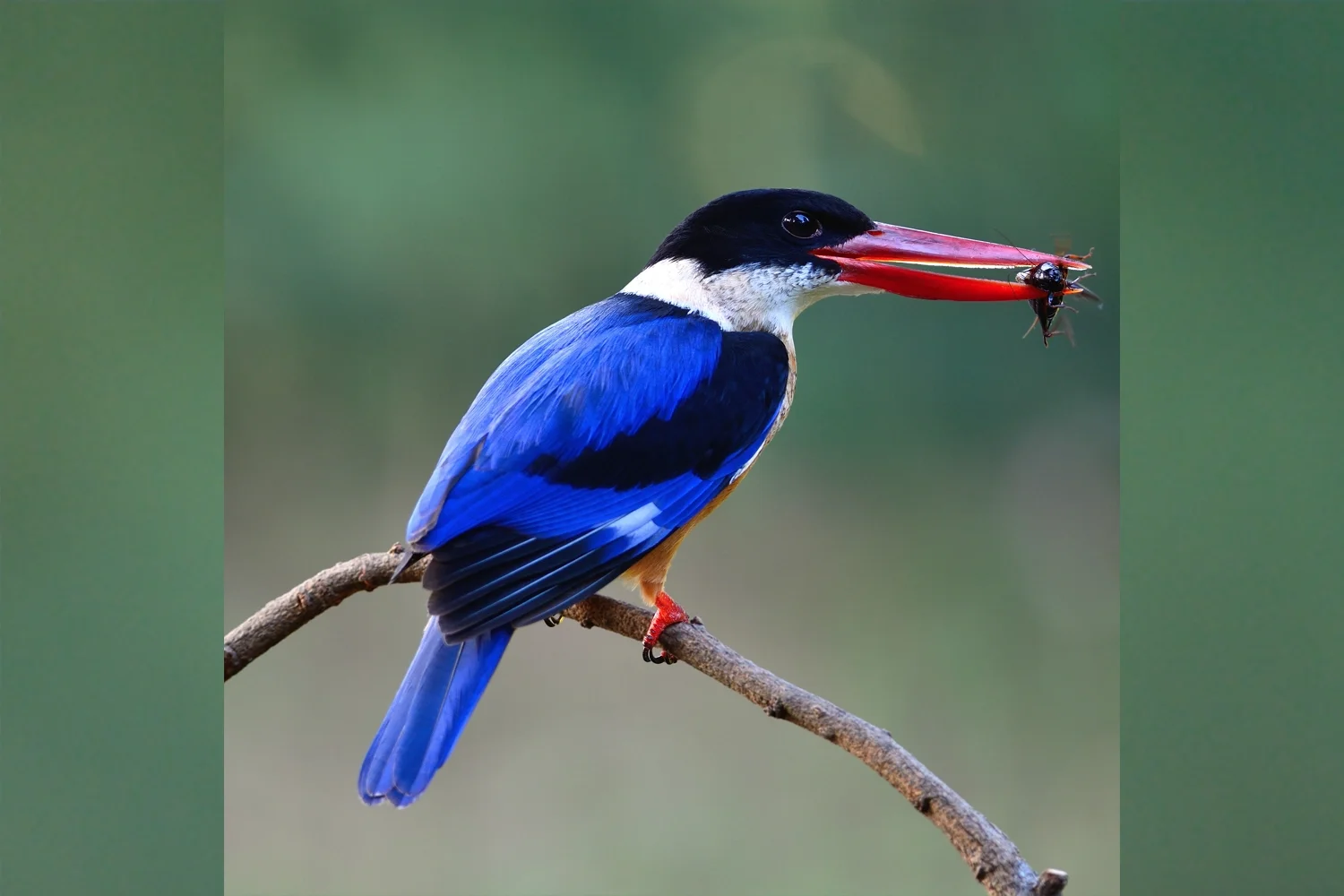
The physical appearance of the Black-capped Kingfisher is defined by a vivid contrast of colors that make it unmistakable in the wild. Its most prominent feature is the deep, velvet-black crown or 'cap' that extends down to the eyes, creating a mask-like appearance. Below this, the bird boasts a brilliant, iridescent blue mantle and wings, which shimmer with varying shades of azure and purple depending on how the sunlight hits the feathers. The underparts are a clean, warm buff-orange, providing a beautiful balance to the darker dorsal colors. A notable white patch on the throat and neck area adds further visual interest. The bill is perhaps its most formidable tool; it is long, heavy, and bright red, perfectly adapted for snatching prey from various surfaces. With a body size ranging from 28 to 31 cm, the bird appears sturdy and compact. Both sexes share similar plumage, though subtle differences may exist in intensity. This combination of bright red, deep black, and electric blue makes the Black-capped Kingfisher one of the most aesthetically pleasing birds to observe in the field, often standing out against the lush green foliage of its tropical habitat.
Habitat
The Black-capped Kingfisher is primarily found across tropical Asia, with a range extending from India and China down to Southeast Asia. It prefers habitats that provide easy access to water, such as mangrove forests, tidal creeks, estuaries, and coastal areas. However, it is also frequently observed in freshwater habitats including riverbanks, ponds, and even large garden pools. Unlike some forest-dwelling kingfishers, this species favors open or semi-open environments where it can utilize elevated perches to scout for food. During the non-breeding season, these birds are known to migrate, often moving toward warmer coastal regions to find better feeding grounds. The presence of dense vegetation for cover combined with clear water sightlines is essential for its survival, as it relies on these features for both hunting and protection from predators.
Diet
The diet of the Black-capped Kingfisher is remarkably diverse, reflecting its adaptability as a predator. While many kingfishers are strictly piscivorous, the Black-capped Kingfisher is an opportunistic hunter. Its primary food sources include small fish, crustaceans, and aquatic insects found in shallow waters. However, it is equally adept at hunting on land, often preying on small reptiles such as lizards, amphibians, and occasionally large insects like grasshoppers or beetles. It utilizes a 'sit-and-wait' hunting strategy, perched motionlessly on a branch before diving down with incredible speed to snatch prey. Once caught, the prey is often struck against the branch to subdue it before being swallowed whole. This flexible dietary habit allows the species to maintain its energy levels even when fish populations are scarce, ensuring its success across varying ecological zones.
Breeding and Nesting
Breeding for the Black-capped Kingfisher is a complex affair that usually occurs during the warmer months, varying slightly by region. Unlike some birds that build intricate nests in trees, this species is a cavity nester. They typically excavate tunnels into sandy riverbanks, earth mounds, or even termite mounds, creating a safe, dark chamber for their eggs. Both the male and female participate in the excavation process, using their heavy bills to dig long, horizontal burrows. Once the nest is prepared, the female lays a clutch of three to five white, spherical eggs. Both parents take turns incubating the eggs and later feeding the chicks, which are born altricial and require constant care. This period of intense parental investment ensures that the fledglings are strong enough to survive once they eventually leave the burrow, usually after about three to four weeks of intensive feeding and protection within the nesting chamber.
Behavior
The Black-capped Kingfisher is known for its solitary and territorial nature, especially when it is not in the breeding season. It is a highly vigilant bird, often seen perched on exposed branches or power lines, scanning the area for movement. When threatened or when asserting its territory, it performs striking displays, often accompanied by loud, piercing calls that echo through the mangroves. Despite its solitary habits, it is quite vocal and communicates through a series of sharp, rhythmic shrieks. During the breeding season, they become more defensive of their nesting site. They are also known to be quite agile fliers, capable of quick, darting movements when pursuing prey or evading potential threats, showcasing a level of dexterity that is impressive for a bird of its size.
Conservation Status - VU Vulnerable
Currently, the Black-capped Kingfisher is categorized as a species of Least Concern by the IUCN. However, this does not mean it is entirely safe from environmental pressures. Habitat loss, particularly the degradation of mangrove forests and the pollution of coastal waterways, poses a significant threat to its long-term stability. As urbanization encroaches upon its natural nesting grounds, the availability of suitable riverbanks for burrowing has decreased. Conservation efforts focusing on wetland preservation and the protection of coastal ecosystems are vital to ensure that this beautiful species continues to thrive across its native range, maintaining the balance of its local aquatic ecosystems.
Interesting Facts
- The Black-capped Kingfisher can hunt on both land and water.
- It uses its heavy red bill to excavate nesting tunnels in hard earth.
- They are known to be migratory birds in the northern parts of their range.
- Their vibrant blue plumage is structural, meaning it changes color based on the angle of light.
- They are often referred to as 'perching birds' due to their frequent use of high-vantage branches.
- The bird's loud, laughing call is a signature sound of Asian mangrove forests.
Tips for Birdwatchers
For birdwatchers hoping to spot the Black-capped Kingfisher, patience is the ultimate key. Focus your search near coastal mangroves, estuaries, or slow-moving riverbanks, especially during the early morning or late afternoon when the birds are most active. Because they are sit-and-wait predators, look for birds perched on branches that overhang the water; they will often remain motionless for long periods. Using high-quality binoculars or a spotting scope will help you appreciate the iridescent blue of their plumage from a distance without disturbing them. If you hear a series of sharp, laughing calls, scan the immediate surroundings, as this is often how they announce their presence. Always maintain a respectful distance to avoid flushing the bird, as they are sensitive to human presence near their favorite hunting perches.
Conclusion
In conclusion, the Black-capped Kingfisher (Halcyon pileata) stands as a testament to the beauty and adaptability of avian life in tropical ecosystems. From its striking physical appearance—defined by that iconic black cap and brilliant blue mantle—to its versatile hunting strategies, this bird is a source of wonder for observers. Its ability to transition between aquatic and terrestrial hunting highlights its evolutionary success in diverse habitats. By understanding its nesting behaviors, dietary needs, and the importance of its wetland habitat, we can better appreciate why conservation efforts for this species are so critical. As birdwatchers, our role is to observe and document these creatures with care, ensuring that their natural behaviors remain undisturbed. The Black-capped Kingfisher is more than just a colorful subject for photography; it is a vital indicator of the health of our coastal and riverine environments. Protecting their habitat is essentially protecting the biodiversity of the entire region. We encourage all nature enthusiasts to continue learning about this magnificent species, supporting local conservation initiatives, and sharing the beauty of the Black-capped Kingfisher with others to foster a deeper respect for the natural world and the delicate balance it maintains.