
Introduction
The Black-rumped Flameback (Dinopium benghalense), often referred to as the Lesser Golden-backed Woodpecker, is a striking member of the Picidae family. Widely distributed across the Indian subcontinent, this bird is a quintessential example of the specialized evolutionary adaptations found in tree-clinging species. With its vibrant plumage and distinct drumming sounds, it is a charismatic presence in both dense forests and urban gardens. As a medium-sized woodpecker measuring approximately 26-29 cm, it stands out due to its brilliant golden-yellow back, which contrasts sharply with its black-streaked underparts and dark rump. Ornithologists and birdwatchers alike admire this species for its agility and resilience. Whether it is navigating the vertical trunks of ancient trees or foraging in open woodland, the Black-rumped Flameback remains a fascinating subject for study. Understanding its role in the ecosystem is crucial, as it acts as both a predator of wood-boring insects and a facilitator of nesting hollows for other cavity-nesting birds, thereby maintaining the delicate balance of its environment.
Physical Appearance
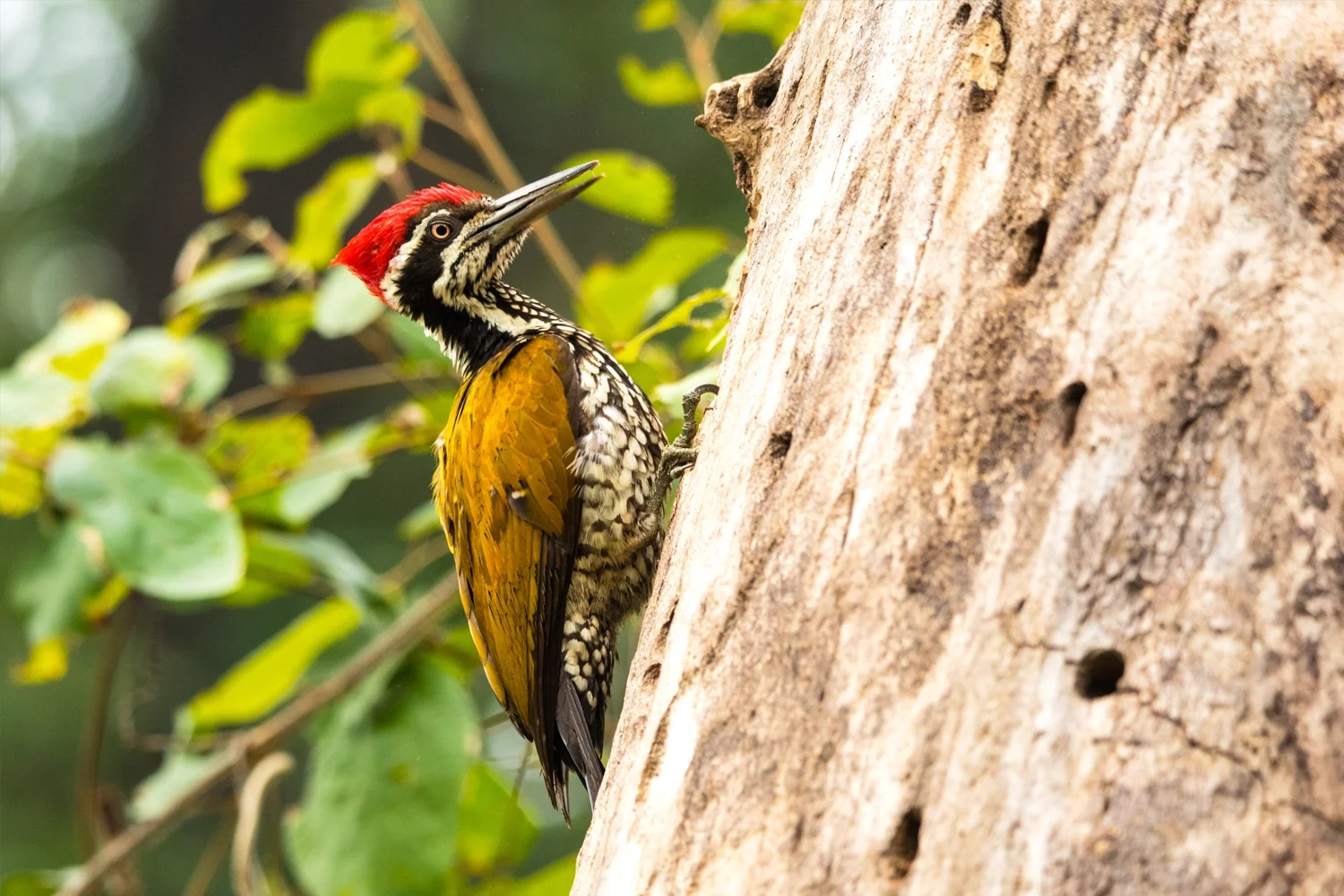
Physically, the Black-rumped Flameback is a masterclass in avian aesthetics. Measuring between 26 and 29 cm, it displays a robust body structure perfectly adapted for its arboreal lifestyle. The most defining feature of this bird is its vivid golden-yellow back, which gives the species its common name. This golden mantle is complemented by a black rump and tail, providing a bold visual contrast. The wings are often tipped with black, and the underparts are white with heavy black streaking, which helps camouflage the bird against the rugged, textured bark of trees. The head is adorned with a prominent crimson crest in males, while females typically feature a black crown with white spots. Its stout, chisel-like bill is designed for excavating wood, while its zygodactyl feet—two toes facing forward and two backward—provide the necessary grip for vertical maneuvering. The stark black eye-stripe and white throat complete its sophisticated appearance, making it one of the most easily identifiable woodpeckers within its range, especially when seen in bright sunlight.
Habitat
The Black-rumped Flameback is highly adaptable, inhabiting a diverse range of environments across South Asia. It is most frequently encountered in open forests, deciduous woodlands, and mangrove swamps. However, the species is remarkably comfortable in human-altered landscapes, often thriving in coconut plantations, mango orchards, and large, leafy urban gardens. Unlike some more reclusive woodpecker species, this flameback is not strictly confined to deep, primary forests. Instead, it prefers areas with scattered large trees that provide ample opportunities for foraging and nesting. The presence of dead or decaying wood is a critical requirement for its habitat selection, as this provides the necessary substrate for its insect-rich diet and secure nesting sites. From the foothills of the Himalayas to the coastal plains, this bird exhibits an impressive tolerance for varying elevations and climatic conditions.
Diet
As an insectivorous specialist, the Black-rumped Flameback plays a vital role in natural pest control. Its diet consists primarily of wood-boring larvae, ants, beetles, and termites that dwell within tree trunks and branches. Using its powerful, reinforced beak, the bird methodically chips away at bark and soft wood to expose hidden prey. Once the insect is located, it utilizes its long, sticky, and barbed tongue to extract the prey from deep crevices that would be otherwise inaccessible. Occasionally, this woodpecker may supplement its diet with nectar from flowers, particularly those of silk-cotton trees, or consume small fruits. This opportunistic feeding behavior allows it to thrive even when insect populations fluctuate. By foraging across the canopy and the trunk, it effectively monitors tree health, contributing to the overall vitality of the forest ecosystem by keeping wood-boring insect populations in check.
Breeding and Nesting
The breeding season of the Black-rumped Flameback typically spans from March to August, coinciding with the period of peak insect abundance. These birds are cavity nesters, relying on their strong bills to excavate hollows in the trunks of soft-wooded trees or dead stumps. Both the male and female participate in the arduous task of carving out the nesting chamber, which can take several days to complete. Once the cavity is ready, the female lays a clutch of two to three glossy white eggs. Incubation is shared between both parents, ensuring that the nest is rarely left unattended. After hatching, the chicks are fed a protein-rich diet of regurgitated insects. The young remain in the nest for several weeks, protected within the hollow, until they are ready to fledge. This cooperative parenting strategy is essential for the survival of the brood against potential predators and environmental stressors during their most vulnerable developmental stages.
Behavior
The Black-rumped Flameback is known for its energetic and inquisitive nature. It is a highly active bird, frequently seen hitching its way up tree trunks in a spiral pattern, using its stiff tail feathers as a prop for stability. Its flight is characterized by a distinctive undulating or bouncing motion, alternating between rapid wingbeats and short glides. Communication is a key aspect of its behavior; the bird is often heard before it is seen, producing loud, ringing calls and rhythmic drumming on resonant tree trunks to establish territory or signal to mates. While they are usually solitary or found in pairs, they can occasionally be spotted in small groups when food is abundant. Their alert demeanor makes them quick to detect movement, often freezing against the bark to avoid detection by predators, showcasing their excellent camouflage.
Conservation Status - LC Least Concern
Currently, the Black-rumped Flameback is classified as 'Least Concern' by the IUCN. Due to its wide distribution and ability to adapt to human-disturbed environments, such as plantations and gardens, its population remains stable. However, habitat loss remains a looming threat. The removal of dead, standing timber and the deforestation of old-growth trees can limit their nesting opportunities. Conservation efforts should focus on preserving old-growth trees and encouraging the maintenance of 'wild' spaces in urban environments. As long as there is a steady supply of dead wood, this species will likely continue to thrive throughout its range.
Interesting Facts
- The Black-rumped Flameback is one of the few woodpeckers that frequently visits urban gardens.
- Its tongue can extend significantly beyond the tip of its bill to extract prey.
- They use their stiff tail feathers as a third leg to support their weight while climbing.
- The male is easily distinguished from the female by its bright red crest.
- They serve as 'ecosystem engineers' by creating cavities used by other birds like owls and parakeets.
- The bird's undulating flight pattern is a classic characteristic of the woodpecker family.
- They are often heard drumming on trees as a form of communication rather than just for foraging.
Tips for Birdwatchers
To successfully spot a Black-rumped Flameback, focus your attention on large, mature trees in parks or forest edges during the early morning hours. Listen for their sharp, metallic calls and the rhythmic 'rat-a-tat-tat' sound of their drumming against tree trunks. Because they are often shy, it is best to remain still and use binoculars to observe them from a distance. If you are in a garden or orchard, check the trunks of coconut or mango trees, as these are favorite haunts. Patience is key; watch the trunk of a tree for several minutes, as they often freeze when they sense movement. Avoid using flash photography near nesting sites to minimize stress to the birds. With a bit of persistence, you will likely encounter this golden-backed beauty in its natural element.
Conclusion
The Black-rumped Flameback is more than just a colorful inhabitant of Asian forests; it is a vital component of the avian hierarchy. Through its specialized feeding habits and nesting behaviors, it contributes to the health of the trees it inhabits and supports a variety of other species that rely on its abandoned nest hollows. Its ability to bridge the gap between deep forest life and human-dominated landscapes makes it a unique subject for conservation and appreciation. As we continue to urbanize, the presence of such species serves as a reminder of the importance of maintaining biodiversity even in our own backyards. By protecting old trees and maintaining natural corridors, we ensure that future generations can continue to witness the striking golden flash of the flameback against the green canopy. Whether you are a seasoned ornithologist or a casual backyard birdwatcher, the Black-rumped Flameback offers endless opportunities for observation and wonder. Let us celebrate and protect this magnificent bird, ensuring that its rhythmic drumming continues to echo through the trees for years to come. Observing this species is not just a hobby, but an invitation to connect more deeply with the natural world that exists all around us, often right under our noses in the trees we pass every day.