
Introduction
The Blue-eared Kingfisher (Alcedo meninting) is a captivating member of the Alcedinidae family, renowned for its striking plumage and elusive nature. Often overshadowed by its more common cousin, the Common Kingfisher, this species is a true gem of the tropical forests of South and Southeast Asia. As a specialized perching bird, it thrives in dense, shaded environments near water bodies, where its brilliant blue and orange coloration creates a dazzling display against the lush green backdrop of the jungle. Despite its small size, the Blue-eared Kingfisher commands attention with its swift, darting flight and precise hunting maneuvers. Ornithologists and bird enthusiasts alike prize sightings of this bird, as it is notoriously shy and often hides deep within the undergrowth. Understanding the nuances of the Blue-eared Kingfisher requires a deep appreciation for its ecological niche, its complex life cycle, and the critical importance of preserving the riparian habitats that support its survival. This guide provides an in-depth look at this magnificent avian species, exploring its unique biological characteristics and the challenges it faces in the wild.
Physical Appearance
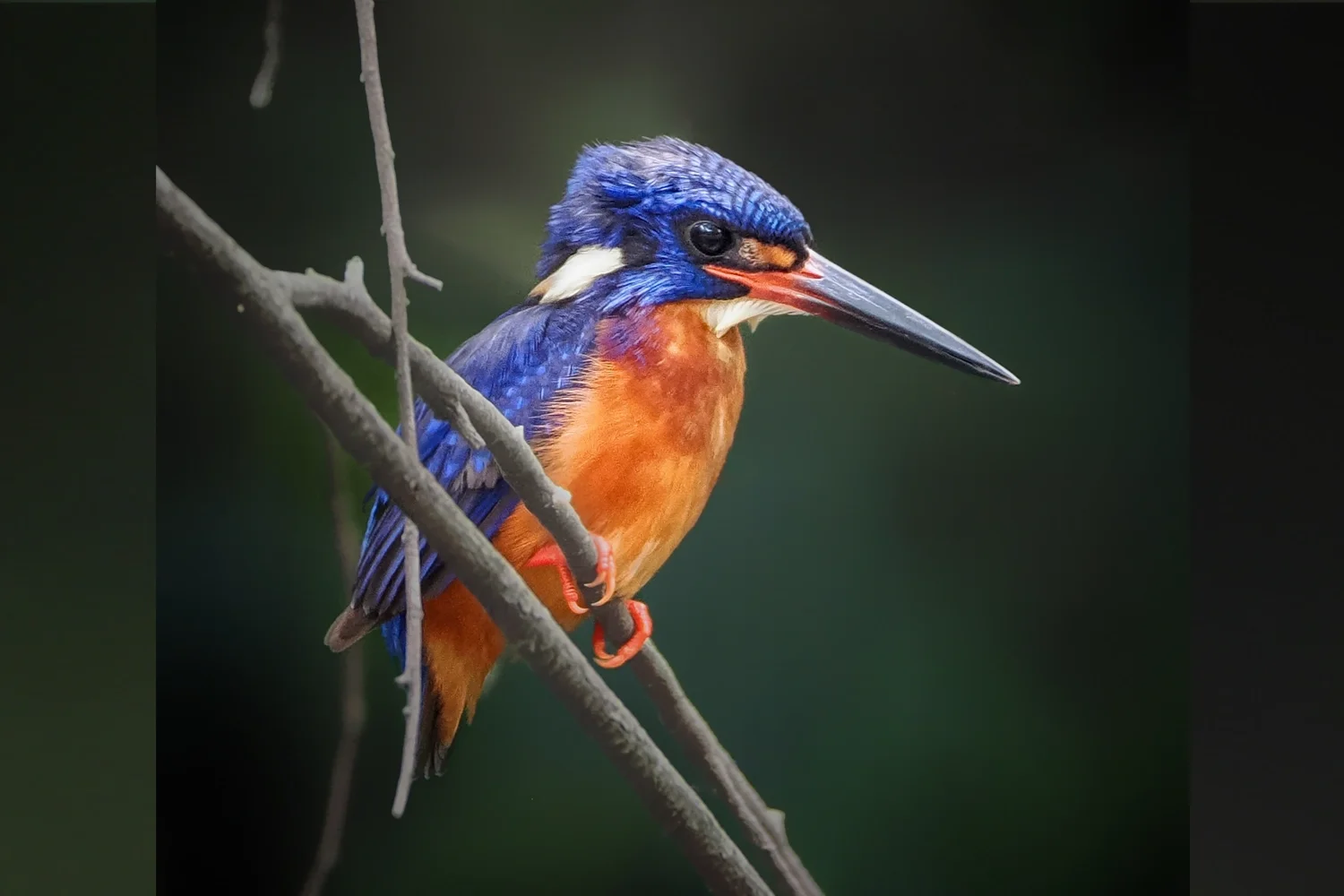
Measuring approximately 16 to 17 centimeters in length, the Blue-eared Kingfisher is a compact yet vibrant specimen. Its most distinctive feature is its brilliant, deep blue upperparts, which shimmer with an iridescent quality that changes depending on the angle of the light. The 'blue-eared' moniker refers to the dark blue patches located on the sides of its head, which distinguish it from other similar kingfisher species. The underparts are a rich, warm orange or rufous color, providing a striking contrast to the darker hues of the head and wings. Both males and females possess a long, dagger-like black bill, perfectly adapted for snatching prey from the water. The legs and feet are a bright coral-red, adding another splash of color to its small frame. Juveniles often appear slightly duller, with less defined barring on the wings, but they quickly develop the signature metallic sheen of the adults as they mature. This combination of intense blue and warm orange makes the Blue-eared Kingfisher one of the most visually stunning perching birds in its range.
Habitat
The Blue-eared Kingfisher is primarily a forest-dwelling species, favoring dense, primary, and secondary tropical evergreen forests. Unlike many other kingfishers that occupy open wetlands, this species prefers the quiet, shaded streams, small rivers, and forest pools where the canopy is thick. It relies heavily on these shaded water environments, which provide both the necessary cover for protection and the clear water required for spotting small aquatic prey. They are rarely found far from water sources, as these areas are essential for their hunting techniques. The protection of these pristine riparian corridors is vital for the species, as they are sensitive to the degradation of forest cover and water pollution, which can significantly impact their ability to find food and nesting sites.
Diet
As a carnivorous predator, the Blue-eared Kingfisher feeds almost exclusively on small aquatic organisms. Its primary diet consists of small fish, which it hunts with remarkable precision by diving from low-hanging branches into the water. In addition to fish, it is known to consume a variety of small crustaceans, aquatic insects, and larvae found near the surface of forest streams. The bird's hunting strategy is one of patience; it will sit motionless on a perch for extended periods, scanning the water for movement. Once prey is identified, it plunges into the water, secures the catch with its sharp bill, and returns to its perch to consume the meal. This high-protein diet is necessary to maintain its high metabolic rate and energy levels required for its agile flight patterns.
Breeding and Nesting
Breeding for the Blue-eared Kingfisher typically involves a fascinating process of excavation. Unlike birds that build nests in trees, this species digs long, horizontal tunnels into the soft, vertical banks of forest streams or rivers. These tunnels can extend up to a meter in length and lead to a nesting chamber at the far end. Both the male and female participate in the excavation process, using their bills to clear away soil. Once the chamber is prepared, the female lays a clutch of white, rounded eggs. Both parents take turns incubating the eggs and feeding the chicks once they hatch. The nesting period is a time of high activity, as the parents must frequently fly back and forth to provide enough food for the rapidly growing brood. This subterranean nesting strategy provides the chicks with protection from many terrestrial predators, ensuring a higher survival rate in the often-perilous jungle environment.
Behavior
The Blue-eared Kingfisher is characterized by its solitary and shy behavior. It is rarely seen in groups, preferring to patrol its own territory along a specific stretch of a stream. They are highly territorial and will aggressively defend their hunting perches from other kingfishers. Their flight is rapid and direct, usually staying low over the water to avoid detection by aerial predators. They are most active during the early morning and late afternoon hours when the light is dim, allowing them to remain inconspicuous. While they are generally silent, they may emit a sharp, high-pitched whistle when disturbed or when communicating with a mate. Their ability to remain perfectly still for long periods is a testament to their patience and focus as hunters.
Conservation Status - LC Least Concern
The Blue-eared Kingfisher is currently classified as a species of Least Concern by the IUCN, but this status masks the localized threats it faces. Its reliance on undisturbed forest streams makes it highly susceptible to habitat fragmentation, deforestation, and water pollution. As human development encroaches on tropical forests, the availability of suitable nesting banks and clean water sources is dwindling. Conservation efforts must focus on maintaining the integrity of riparian ecosystems and preventing the silting of forest streams. Protecting these areas is essential not only for the Blue-eared Kingfisher but for the entire biodiversity of the tropical forest ecosystem.
Interesting Facts
- They are expert divers, capable of hitting the water at high speeds to catch fish without damaging their bills.
- The iridescent blue feathers are not pigmented but are the result of light refraction through the feather structure.
- They are known to be extremely territorial and will defend a single stream segment for their entire adult life.
- Their nests are essentially long, dark tunnels that protect the young from predators and flooding.
- They possess a third transparent eyelid, known as a nictitating membrane, which protects their eyes while they are submerged underwater.
- Despite their small size, they are incredibly fierce hunters compared to other birds of similar stature.
- They have a distinctively sharp, high-pitched call that is often the only way to detect them in dense foliage.
Tips for Birdwatchers
To successfully spot the elusive Blue-eared Kingfisher, patience is your greatest asset. Focus your search on quiet, shaded forest streams during the early morning or late afternoon, as these are their peak activity times. Use high-quality binoculars and wear neutral-colored clothing to blend into the environment. Avoid making sudden movements or loud noises, as the species is incredibly sensitive to disturbances. If you hear a high-pitched whistle, freeze and scan the low-hanging branches over the water; they are often perched just a few feet above the surface. Having a camera with a fast shutter speed is essential for capturing their quick movements. Finally, always respect the bird's territory and maintain a distance that does not stress the bird or interrupt its hunting cycle.
Conclusion
The Blue-eared Kingfisher (Alcedo meninting) is an exquisite example of nature's artistry, representing the delicate balance of tropical forest ecosystems. From its stunning iridescent plumage to its specialized hunting techniques, every aspect of this bird is perfectly adapted to its riparian home. For birdwatchers, encountering this species is a highlight that rewards patience, stealth, and a deep respect for the natural world. However, the future of the Blue-eared Kingfisher remains tied to the health of the forests it inhabits. As we continue to study this remarkable perching bird, we must also advocate for the preservation of its environment. By protecting the pristine streams and lush corridors that define its habitat, we ensure that future generations will have the opportunity to witness the flash of electric blue that marks the presence of this forest jewel. Whether you are a seasoned ornithologist or a casual enthusiast, the Blue-eared Kingfisher serves as a powerful reminder of the beauty and fragility of our planet's wild spaces. Let its presence inspire us to be better stewards of the environment, ensuring that these vibrant creatures continue to thrive in the wild for years to come.