
Introduction
The Eurasian Wryneck (Jynx torquilla) is a fascinating and highly specialized member of the woodpecker family, Picidae. Unlike its more famous, tree-drilling relatives, the Wryneck is a bird of unique character, often described as an evolutionary link between woodpeckers and other passerines. Measuring between 16 and 17 centimeters in length, this bird is celebrated among ornithologists for its remarkable cryptic coloration and its peculiar behavioral adaptations. Despite being classified as a tree-clinging bird, the Eurasian Wryneck is rarely seen hammering on trunks; instead, it prefers to forage on the ground, seeking out its favorite prey. Its distribution spans across Europe and Asia, with many populations migrating to warmer climates during the winter months. Because of its secretive nature and camouflaged plumage, encountering a Wryneck in the wild is a prized achievement for any birdwatcher. Understanding this species requires a deep dive into its unique biology, migratory patterns, and the specific habitats that sustain its population across its vast range.
Physical Appearance
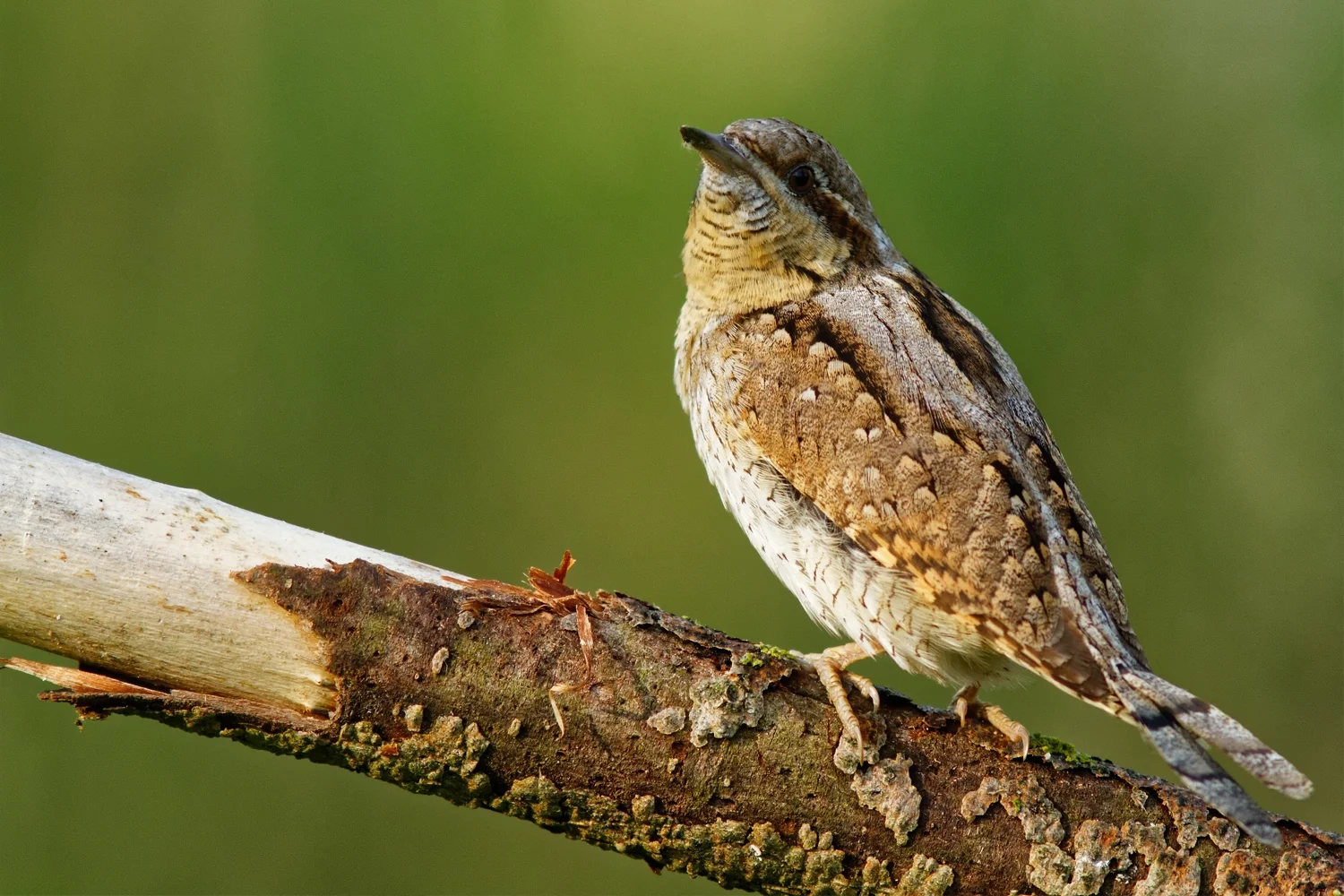
The Eurasian Wryneck displays a masterful example of natural camouflage, which is essential for its survival in wooded environments. Its plumage is a complex, intricate pattern of brown, grey, and black streaks that mimic the texture of tree bark perfectly. This cryptic coloration makes it nearly invisible when it remains motionless against a branch or a fence post. The bird has a relatively slender body compared to other woodpeckers, with a soft, rounded tail that lacks the stiff, pointed feathers used by other species to prop themselves against trees. Its beak is shorter and less chisel-like than that of a typical woodpecker, reflecting its diet of soft-bodied insects rather than wood-boring larvae. The eyes are set in a way that suggests a curious expression, and the bird is known for its ability to rotate its head almost 180 degrees, a trait that lends the species its common name. The underparts are paler, featuring delicate barring that adds to its mottled, bark-like appearance, ensuring it remains well-protected from predators while foraging or resting.
Habitat
Eurasian Wrynecks are primarily associated with open woodlands, orchards, and parklands that contain a mix of mature trees and open ground. They are particularly fond of areas with scattered trees, such as forest edges, riverine forests, and traditional farmland with hedgerows. Unlike many woodpeckers that require dense, unbroken forests, the Wryneck thrives in landscapes where it can easily transition from tree-clinging to ground foraging. They are frequently found in areas where old, hollow trees are abundant, as these provide the necessary cavities for nesting. Their habitat preferences have made them somewhat vulnerable to agricultural intensification, which often leads to the removal of the old trees and the loss of the grassy clearings they rely upon for hunting ants and other terrestrial invertebrates.
Diet
The diet of the Eurasian Wryneck is highly specialized, consisting almost entirely of ants and their pupae. This preference for formicids is a defining characteristic of the species. When foraging, the bird often hops along the ground, using its long, sticky, and highly extensible tongue to extract ants from their nests or from the surface of the soil. This method of feeding is vastly different from the drilling behavior of other woodpeckers. Aside from ants, they may occasionally consume other small insects like beetles, caterpillars, and spiders, especially during the breeding season when the demand for high-protein food is increased for the growing chicks. Their ability to locate ant colonies is a testament to their keen observational skills and their adaptation to specific ecological niches.
Breeding and Nesting
The breeding season for the Eurasian Wryneck typically occurs from May to July. Unlike many other woodpeckers, they do not excavate their own nest holes. Instead, they are secondary cavity nesters, relying on abandoned woodpecker holes, natural tree hollows, or even artificial nest boxes. The female lays a clutch of seven to ten white, glossy eggs, which are incubated primarily by the female for about two weeks. Both parents are actively involved in feeding the young. A unique defensive strategy employed by the Wryneck during the nesting period is the use of a hissing sound, similar to a snake, when the nest is disturbed. This mimicry, combined with their ability to twist their necks, acts as a powerful deterrent against potential predators, earning them their reputation as a truly unique bird.
Behavior
The behavior of the Eurasian Wryneck is marked by its shy and secretive nature. When threatened, it performs its signature head-twisting motion, which, combined with its snake-like hissing, serves as a remarkable defensive mechanism. They are solitary birds for much of the year, only coming together during the breeding season. During migration, they are known to travel long distances, often alone or in loose groups. They are not particularly vocal, but during the spring, the male produces a distinct, repetitive 'quee-quee-quee' call to establish territory and attract a mate. Their movement is fluid, often characterized by quick, darting flights between trees or across open ground, where they quickly return to cover if they feel exposed.
Conservation Status - LC Least Concern
The Eurasian Wryneck is currently classified as a species of Least Concern by the IUCN, although its populations are declining in many parts of its range. The primary threats to the species include the loss of suitable nesting sites due to the removal of old, dead trees and the degradation of open foraging habitats caused by modern agricultural practices. Pesticide use also poses a significant risk, as it reduces the available supply of ants and other insects. Conservation efforts focus on preserving traditional orchards and encouraging the installation of nest boxes, which can help support local populations in areas where natural nesting cavities have become scarce.
Interesting Facts
- The name 'Wryneck' comes from the bird's ability to turn its head 180 degrees.
- They are the only members of the woodpecker family that are long-distance migrants.
- Wrynecks do not drill into wood but instead occupy existing cavities.
- They are specialist ant-eaters, consuming thousands of ants in a single day.
- When threatened in the nest, they hiss and twist their necks like a snake to scare off intruders.
- Their tongue is exceptionally long and sticky, allowing them to reach deep into ant tunnels.
- They often prefer to forage on the ground rather than climbing up tree trunks.
Tips for Birdwatchers
For birdwatchers hoping to spot a Eurasian Wryneck, patience and silence are essential. Because they are so well camouflaged, they are often heard before they are seen. Familiarize yourself with their repetitive, piping call, which is most frequent during the spring months. Focus your search on areas with open, park-like landscapes, old orchards, or edges of forests with plenty of bare ground. Instead of looking high up in the canopy, keep your eyes on the ground or on lower branches, fence posts, and stumps. If you are in a suitable habitat during the breeding season, look for signs of activity near tree cavities. Carrying high-quality binoculars is a must, as these birds are small and easily overlooked even when sitting in plain sight. Always maintain a respectful distance to avoid causing stress, especially during the nesting period, as the birds are highly sensitive to human presence.
Conclusion
The Eurasian Wryneck is an extraordinary bird that defies many of the conventional expectations associated with the woodpecker family. From its cryptic, bark-like plumage to its specialized diet of ants and its peculiar snake-like defensive displays, the species offers a wealth of intrigue for both the casual observer and the serious ornithologist. While it is not as visually striking as some of its more colorful counterparts, the Wryneck’s subtle beauty and behavioral complexity make it a unique component of the European and Asian avifauna. Protecting this species requires a commitment to preserving the diverse, semi-open habitats they depend on, including the protection of old-growth trees and the maintenance of traditional farming landscapes. As we continue to study the migratory patterns and ecological requirements of the Wryneck, we gain deeper insights into the delicate balance of the ecosystems they inhabit. For those lucky enough to witness one in the wild, the Eurasian Wryneck serves as a reminder of the incredible adaptations that have evolved in the avian world. By supporting conservation initiatives and fostering a greater appreciation for such specialized species, we can ensure that the distinctive call of the Wryneck continues to echo through our woodlands for generations to come, enriching our natural heritage with its mysterious and charming presence.