
Introduction
The Golden-throated Barbet (Psilopogon franklinii) is a captivating member of the Asian barbet family, known for its striking plumage and distinct vocalizations. These medium-sized, tree-clinging birds are primarily found in the dense, evergreen forests of Southeast Asia and parts of the Himalayas. Belonging to the family Megalaimidae, they are highly specialized forest dwellers that play a crucial role in their ecosystem, often acting as seed dispersers for various fruit-bearing trees. Their presence is usually announced by their repetitive, rhythmic calls that resonate through the forest canopy, making them more frequently heard than seen. As a species, the Golden-throated Barbet represents the vibrant biodiversity of high-altitude and montane forests, showcasing the complex evolutionary adaptations required to thrive in dense, humid environments. Understanding this species is essential for ornithologists and enthusiasts alike, as it provides valuable insights into the health of forest habitats and the intricate relationships between avian populations and their botanical surroundings. Through their unique life history and ecological niche, these birds continue to fascinate researchers and nature lovers across their extensive range.
Physical Appearance
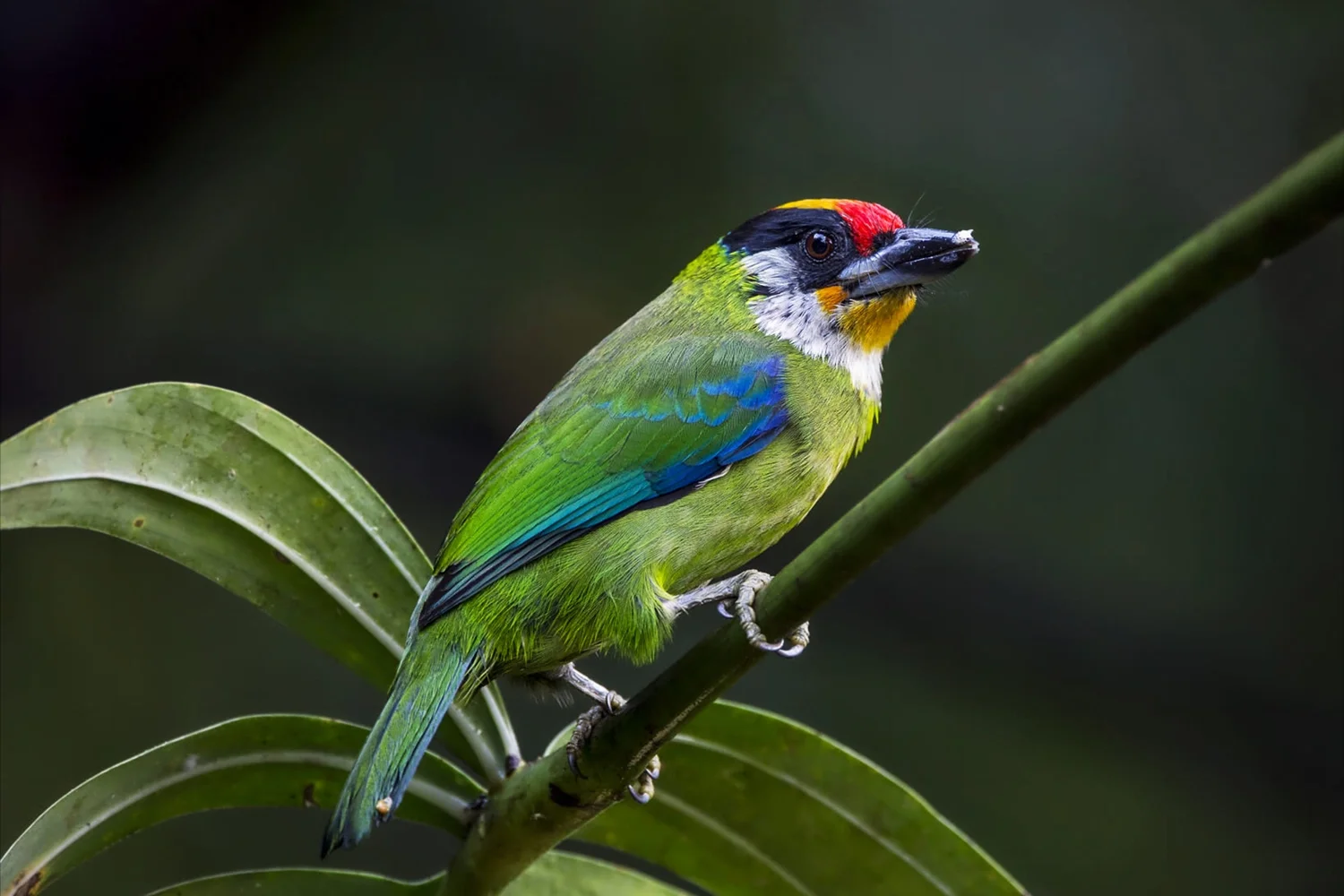
Measuring approximately 22 to 24 cm in length, the Golden-throated Barbet is a robust, thick-billed bird characterized by its vibrant and distinctive coloration. The plumage is predominantly green, which provides excellent camouflage against the foliage of the forest canopy. The species gets its name from the brilliant, golden-yellow patch on its throat, which serves as a striking contrast to its lush green body. Further examination reveals subtle details, such as a black crown and intricate markings around the eyes and face that vary slightly by subspecies. Its bill is heavy and stout, perfectly adapted for excavating nest holes in decaying wood and consuming tough fruits. The feet are zygodactyl, meaning two toes point forward and two point backward, providing a firm grip on branches as the bird clings to trees. This physical structure is typical of the barbet family, emphasizing their life as sedentary, tree-dwelling creatures that rarely descend to the forest floor, relying instead on their agility and specialized morphology to navigate the complex layers of the tropical forest canopy.
Habitat
The Golden-throated Barbet primarily inhabits humid, montane evergreen forests, often frequenting altitudes ranging from 900 to 2,500 meters above sea level. They are endemic to Southeast Asia, with populations distributed across the Himalayas, Southern China, and parts of the Indochinese Peninsula. These birds favor dense, old-growth forests where there is an abundance of fruiting trees and decaying timber, which is vital for their nesting requirements. Unlike some species that migrate long distances, the Golden-throated Barbet is largely sedentary, remaining within its forest territory throughout the year. Their reliance on specific forest structures makes them sensitive to habitat loss and fragmentation, highlighting the importance of conserving high-altitude forest ecosystems to ensure the long-term survival of this beautiful avian species.
Diet
As a specialized frugivore, the diet of the Golden-throated Barbet consists mainly of a wide variety of forest fruits, berries, and figs. They are particularly fond of the fruit produced by the Ficus genus, which serves as a staple food source throughout their range. Their powerful, stout bills allow them to manipulate and consume various sizes and textures of fruit with ease. While fruit makes up the majority of their diet, they are also known to supplement their nutritional intake with insects, especially during the breeding season when protein requirements are higher. By consuming large quantities of fruit and dispersing seeds through their droppings, these barbets play an essential role in forest regeneration and plant diversity, acting as ecological engineers within their native habitat.
Breeding and Nesting
The breeding season for the Golden-throated Barbet typically occurs during the spring and early summer months. These birds are cavity nesters, meaning they excavate their own nesting holes in the trunks or thick branches of dead or decaying trees. Both the male and female participate in the labor-intensive process of carving out the nest, using their strong, chisel-like bills to create a secure chamber. Once the nest is prepared, the female lays a clutch of white eggs. Both parents are highly involved in the incubation process and the subsequent feeding of the chicks. The young are altricial, meaning they are born blind and helpless, requiring constant care and protection from their parents until they are ready to fledge. The selection of suitable nesting trees is a critical factor in their reproductive success, as it protects the brood from predators and harsh weather conditions found in the montane environment.
Behavior
The Golden-throated Barbet is a predominantly solitary bird, though they may be seen in small groups when feeding at a particularly productive fruit tree. They are known for their territorial behavior, often defending their chosen nesting and feeding areas with vigorous vocalizations. Their calls are rhythmic, repetitive, and often described as a hollow 'tuk-tuk' or 'pook-pook' sound that carries over long distances. Despite their bright colors, they can be surprisingly difficult to spot due to their habit of remaining still for long periods within the dense foliage. They exhibit a distinct tree-clinging posture, using their strong feet to stabilize themselves while they forage, which is a classic behavioral trait of the Megalaimidae family.
Conservation Status - LC Least Concern
Currently, the Golden-throated Barbet is classified as a species of Least Concern by the IUCN, as it maintains a relatively large range and stable population trends. However, like many forest-dependent birds, they are not immune to the threats of habitat loss, deforestation, and climate change. As montane forests face increasing pressure from human encroachment, the availability of suitable nesting trees and food sources may decline. Conservation efforts focusing on preserving large tracts of old-growth forest and managing protected areas are vital to ensuring that this unique barbet continues to thrive across its natural distribution in Asia.
Interesting Facts
- The Golden-throated Barbet is a member of the diverse Asian Barbet family (Megalaimidae).
- Their zygodactyl feet allow them to cling to vertical tree trunks with incredible stability.
- They are considered key seed dispersers, helping to maintain the health of their forest ecosystems.
- Their repetitive calls are a signature sound of the Southeast Asian montane forests.
- They primarily nest in holes carved into dead wood, often reusing sites over multiple seasons.
- The golden-yellow throat patch serves as their primary identifying feature in the field.
- They are primarily frugivorous, with figs making up a significant portion of their diet.
Tips for Birdwatchers
For birdwatchers hoping to spot the Golden-throated Barbet, patience and a keen ear are your best tools. Since these birds are often hidden by dense canopy leaves, you should first learn to identify their repetitive, rhythmic call. Once you hear the vocalization, slowly scan the middle to upper levels of the forest canopy, specifically looking for fruiting trees like figs. Early morning is the best time for observation, as the birds are most active and vocal during this period. Using a high-quality pair of binoculars or a spotting scope is essential for picking out their green plumage against the leaves. Always practice ethical birding by keeping a respectful distance and avoiding playback calls, which can cause unnecessary stress to the birds during their breeding season.
Conclusion
The Golden-throated Barbet (Psilopogon franklinii) is a testament to the beauty and complexity of avian life within the high-altitude forests of Asia. From its brilliant golden throat to its specialized zygodactyl feet, every aspect of this bird is perfectly adapted for a life spent among the branches. As we have explored, their role as frugivores and forest dwellers is vital to the ecological balance of their environment. By understanding their habitat needs, dietary habits, and nesting behaviors, we gain a greater appreciation for the delicate ecosystems they inhabit. For birdwatchers and nature enthusiasts, encountering this species in the wild is a rewarding experience that highlights the importance of preserving our natural world. As human development continues to impact remote forest areas, our commitment to conservation becomes ever more critical. Protecting the old-growth forests that the Golden-throated Barbet calls home ensures that future generations will continue to hear their rhythmic calls echoing through the misty mountain canopies. Whether through supporting local conservation initiatives or practicing responsible birdwatching, every effort counts toward safeguarding the future of this magnificent species and the vibrant biodiversity it represents.
