
Einführung
Die Kastaniennonne (Lonchura atricapilla), oft auch als Schwarzkopfnonne bezeichnet, ist eine faszinierende Art aus der Familie der Prachtfinken. Diese kleinen, geselligen Vögel sind im tropischen Asien weit verbreitet, wo sie für ihr lebhaftes Gefieder und ihr geselliges Wesen geschätzt werden. Die Kastaniennonne kommt typischerweise in offenem Grasland, auf landwirtschaftlichen Flächen und an Feuchtgebieten vor und hat sich gut an vom Menschen veränderte Landschaften angepasst, wo man sie oft in großen, aktiven Schwärmen bei der Nahrungssuche beobachten kann. Ornithologen und Vogelbeobachter fühlen sich von diesen Vögeln aufgrund ihrer komplexen Sozialstrukturen und der rhythmischen, sanften Rufe angezogen, die sie beim Bewegen durch hohes Schilf oder Gras ausstoßen. Trotz ihrer geringen Größe ist ihre Präsenz in ihren heimischen Ökosystemen bedeutend, da sie eine wichtige Rolle bei der Samenverbreitung spielen. Die Lebensgeschichte der Kastaniennonne bietet einen faszinierenden Einblick in die Anpassungsfähigkeit kleiner Sperlingsvögel in sich schnell verändernden Umgebungen. Ob Sie ein Gelegenheitsbeobachter oder ein engagierter Vogelliebhaber sind, die Kastaniennonne bietet ein wunderbares Erlebnis für alle, die sich die Zeit nehmen, ihr subtiles Verhalten und ihre komplexen sozialen Interaktionen in der Wildnis zu beobachten.
Physisches Erscheinungsbild
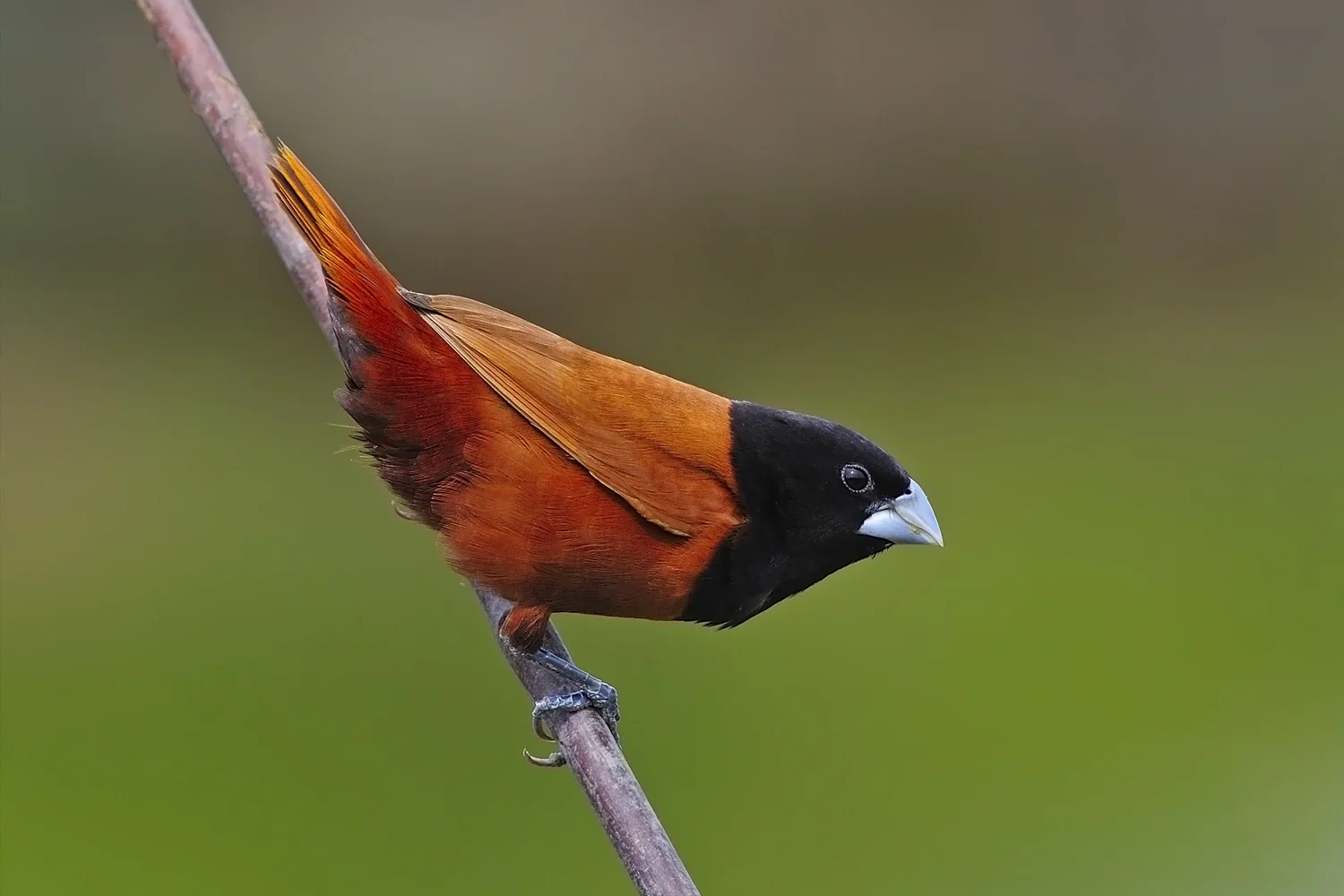
Die Kastaniennonne ist ein kleiner Vogel mit einer Körperlänge von etwa 11 bis 12 Zentimetern. Ihr markantestes Merkmal ist der starke Kontrast zwischen Körper und Kopf. Der Vogel besitzt einen tiefen, samtig schwarzen Kopf und Hals, wodurch er sich von anderen Prachtfinkenarten abhebt. Diese dunkle Haube geht in ein sattes, warmes Kastanienbraun über, das den restlichen Körper, einschließlich Flügel, Rücken und Unterseite, bedeckt. Das Gefieder ist dicht und glatt, was für ein aerodynamisches und schlankes Aussehen sorgt. Jungvögel unterscheiden sich jedoch deutlich und zeigen meist eine eher einheitliche, stumpfbraune Färbung, die während der ersten Mauser allmählich in das Erwachsenengefieder übergeht. Männchen und Weibchen sind im Allgemeinen monomorph, das heißt, sie sehen sich sehr ähnlich, obwohl manchmal subtile Unterschiede in der Intensität der kastanienbraunen Farbtöne beobachtet werden können. Ihre Schnäbel sind dick, kegelförmig und bläulich-silbern, perfekt angepasst, um Samen zu schälen. Die Beine und Füße sind dunkel, gräulich-schwarz und bieten einen starken Halt beim Sitzen auf dünnen Gras- oder Schilfhalmen. Diese auffällige Farbkombination macht die Kastaniennonne zu einem visuell ansprechenden Motiv für Naturfotografie und Feldbestimmung.
Natürlicher Lebensraum
Die Kastaniennonne bewohnt hauptsächlich tropische und subtropische Regionen Asiens, von Indien und Südostasien bis hin zu Teilen Südchinas. Es sind hochspezialisierte Vögel, die offene, feuchte Umgebungen bevorzugen. Sie begegnen ihnen häufig in nassem Grasland, Schilfbuchten, Sümpfen und an den Rändern von sumpfigen Gebieten. Da sie Samenfresser sind, findet man sie auch häufig in landwirtschaftlichen Landschaften, insbesondere auf Reisfeldern und Kulturflächen, wo Samen im Überfluss vorhanden sind. Diese Vögel sind sehr anpassungsfähig und gedeihen oft in Vorstadtgärten und Parkanlagen, die ausreichend Deckung und Nahrungsquellen bieten. Sie meiden im Allgemeinen tiefe Wälder und bevorzugen Gebiete mit viel Sonnenlicht und Zugang zu Wasser, was sowohl zum Trinken als auch für ihre täglichen Baderituale unerlässlich ist.
Ernährung
Als Mitglied der Familie der Prachtfinken ist die Kastaniennonne primär ein Granivoren. Ihre Ernährung besteht fast ausschließlich aus kleinen Samen, wobei sie eine besondere Vorliebe für Grassamen und landwirtschaftliche Getreidearten hat. In freier Wildbahn sieht man sie häufig an den Halmen hoher Gräser hängen, wo sie mit ihren kräftigen, kegelförmigen Schnäbeln geschickt Samen extrahieren. Reis ist ein Grundnahrungsmittel in ihrer Ernährung, was dazu führt, dass sie in einigen Regionen oft als landwirtschaftliche Schädlinge angesehen werden, obwohl ihr Einfluss meist lokal begrenzt ist. Gelegentlich ergänzen sie ihre Nahrung mit kleinen Insekten oder grüner Pflanzennahrung, insbesondere während der Brutzeit, wenn die nistenden Eltern und ihre heranwachsenden Küken eine höhere Proteinzufuhr benötigen. Ihre Fähigkeit, in großen Gruppen zu suchen, ermöglicht es ihnen, Nahrungsquellen in offenen Umgebungen effizient zu lokalisieren.
Brut und Nestbau
Die Brutzeit der Kastaniennonne richtet sich in der Regel nach der Verfügbarkeit von reichlich Nahrung und fällt häufig mit den Monsun- oder Regenzeiten zusammen. Diese Vögel sind für ihre aufwendigen Nistgewohnheiten bekannt. Sie bauen große, kugelförmige oder ovale Nester aus verflochtenen Gräsern, Bambusblättern und anderen faserigen Pflanzenmaterialien. Diese Nester sind geschickt in dichtem Laub, hohem Schilf oder manchmal sogar in den unteren Zweigen von Bäumen oder Sträuchern verborgen. Sowohl das Männchen als auch das Weibchen beteiligen sich am Bauprozess, was auf eine starke Paarbindung hindeutet. Ein typisches Gelege besteht aus vier bis acht kleinen, weißen Eiern. Beide Elternteile wechseln sich beim Bebrüten der Eier und beim Füttern der nesthockenden Küken nach dem Schlüpfen ab. Die Nistzeit ist eine Phase hoher Aktivität, da die Eltern häufig auf Nahrungssuche gehen müssen, um den Bedarf ihrer wachsenden Brut zu decken und das Überleben der nächsten Generation dieser widerstandsfähigen Finken zu sichern.
Verhalten
Die Kastaniennonne ist eine sehr soziale Art, die selten alleine anzutreffen ist. Sie lebt und sucht Nahrung in kleinen bis großen Schwärmen, was durch den "Viele-Augen-Effekt" einen gewissen Schutz vor Raubtieren bietet. Ihr Verhalten ist durch ständige Bewegung und leise, zwitschernde Laute gekennzeichnet, die dazu beitragen, den Schwarm bei der Nahrungssuche in dichter Vegetation koordiniert zu halten. Sie sind flinke Flieger, bevorzugen jedoch kurze, wellenförmige Flüge zwischen den Sitzplätzen. Tagsüber verbringen sie einen Großteil ihrer Zeit mit der Nahrungssuche am Boden oder an Grashalmen und betreiben oft gegenseitige Gefiederpflege, was die sozialen Bindungen innerhalb der Gruppe stärkt. Nachts ruhen sie oft gemeinsam in dichten Büschen oder Schilfgebieten, dicht aneinander gedrängt, um Körperwärme zu speichern und den Gruppenzusammenhalt aufrechtzuerhalten.
Erhaltungszustand - LC Nicht gefährdet
Die Kastaniennonne wird derzeit von der IUCN als nicht gefährdet (Least Concern) eingestuft. Ihre Populationen gelten in ihrem weithin als stabil in ihrem großen Verbreit großen Verbreitungsgebiet in Asien. Ihre Fähigkeit, sich an vom Menschen veränderte Landschaften wie landwirtschaftliche Flächen und Gärten anzupassen, hat es ihnen ermöglicht, trotz des Lebensraumverlusts in einigen Gebieten gesunde Bestandszahlen zu halten. Wie viele Wildvögel sind sie jedoch anfällig für den Verlust natürlicher Feuchtgebiete und den übermäßigen Einsatz von Pestiziden auf Nutzpflanzen. Eine laufende Überwachung ist unerlässlich, um sicherzustellen, dass ihre Lebensräume geschützt bleiben und sie weiterhin in freier Wildbahn gedeihen können.
Interessante Fakten
- Die Kastaniennonne wird aufgrund ihres markanten dunklen Kopfes manchmal auch 'Schwarzkopfnonne' genannt.
- Es sind sehr soziale Vögel, die in der Wildnis fast nie alleine angetroffen werden.
- Ihre dicken, kegelförmigen Schnäbel sind speziell dafür entwickelt, harte Grassamen zu knacken.
- Sie sind bekannt dafür, komplexe, kugelförmige Nester zu bauen, die tief im hohen Schilf verborgen sind.
- In einigen Teilen ihres Verbreitungsgebiets gelten sie als halbzahm und werden als Käfigvögel gehalten.
- Sie betreiben häufig gegenseitige Gefiederpflege, was ein Zeichen für eine starke soziale Bindung ist.
- Die Art ist ein Experte darin, sich in Lebensräumen mit dichtem, hohem Gras zurechtzufinden und dort Nahrung zu suchen.
Tipps für Vogelbeobachter
Für Vogelbeobachter, die hoffen, die Kastaniennonne zu entdecken, ist der beste Ansatz, offene, grasbewachsene Gebiete in der Nähe von Wasserquellen am frühen Morgen oder am späten Nachmittag zu besuchen. Dies sind die Zeiten, in denen die Vögel am aktivsten sind und auf Nahrungssuche gehen. Achten Sie auf Schwärme, die sich durch hohes Schilf oder über Reisfelder bewegen; ihre leisen, hohen Kontaktrufe sind oft das erste Anzeichen ihrer Anwesenheit. Die Verwendung eines Fernglases mit einem weiten Sichtfeld ist hilfreich, um große Grasflächen abzusuchen. Geduld ist der Schlüssel, da diese Vögel ständig in Bewegung sind. Wenn Sie in der Nähe eines bekannten Futterplatzes ruhig und still bleiben, wird der Schwarm seine Aktivitäten wahrscheinlich fortsetzen, was hervorragende Beobachtungsmöglichkeiten bietet. Führen Sie immer einen Feldführer mit und seien Sie darauf vorbereitet, sie von anderen ähnlichen Nonnenarten zu unterscheiden, indem Sie auf den sauberen, scharfen Kontrast zwischen ihrem schwarzen Kopf und dem kastanienbraunen Körper achten.
Fazit
Die Kastaniennonne ist ein Beweis für die Schönheit und Widerstandsfähigkeit kleiner Sperlingsvögel in den vielfältigen Landschaften Asiens. Ihre auffällige Färbung, ihre soziale Natur und ihre Anpassungsfähigkeit machen sie zu einem faszinierenden Thema für jeden, der sich für Ornithologie oder Vogelbeobachtung interessiert. Indem wir ihre spezifischen Bedürfnisse verstehen – wie die Bedeutung von Feuchtgebieten und den Zugang zu einheimischen Grassamen –, können wir die Rolle, die sie in ihren Ökosystemen spielen, besser würdigen. Ob Sie sie beobachten, wie sie ihre komplizierten Nester weben, oder einen großen Schwarm dabei zusehen, wie er sich im Einklang durch ein Feld mit reifendem Getreide bewegt, die Kastaniennonne bietet Naturfreunden eine lohnende Erfahrung. Indem wir diese Vögel weiterhin studieren und schützen, stellen wir sicher, dass auch zukünftige Generationen die Chance haben, ihre lebhafte Präsenz in der Wildnis zu erleben. Die Kastaniennonne erinnert uns daran, dass selbst die kleinsten Lebewesen einen bedeutenden Beitrag zum lebendigen Mosaik unserer natürlichen Welt leisten, und ihr fortwährendes Überleben ist eine Erfolgsgeschichte, die es durch laufende Schutzbemühungen und verantwortungsbewusste Umweltpflege zu feiern und zu schützen gilt.