
Introduction
The Bar-headed Goose (Anser indicus) is a remarkable waterfowl species renowned for its extraordinary migratory journey across the Himalayas. Often considered one of the world's highest-flying birds, this species has evolved unique physiological adaptations to thrive in oxygen-deprived, high-altitude environments.
Physical Appearance
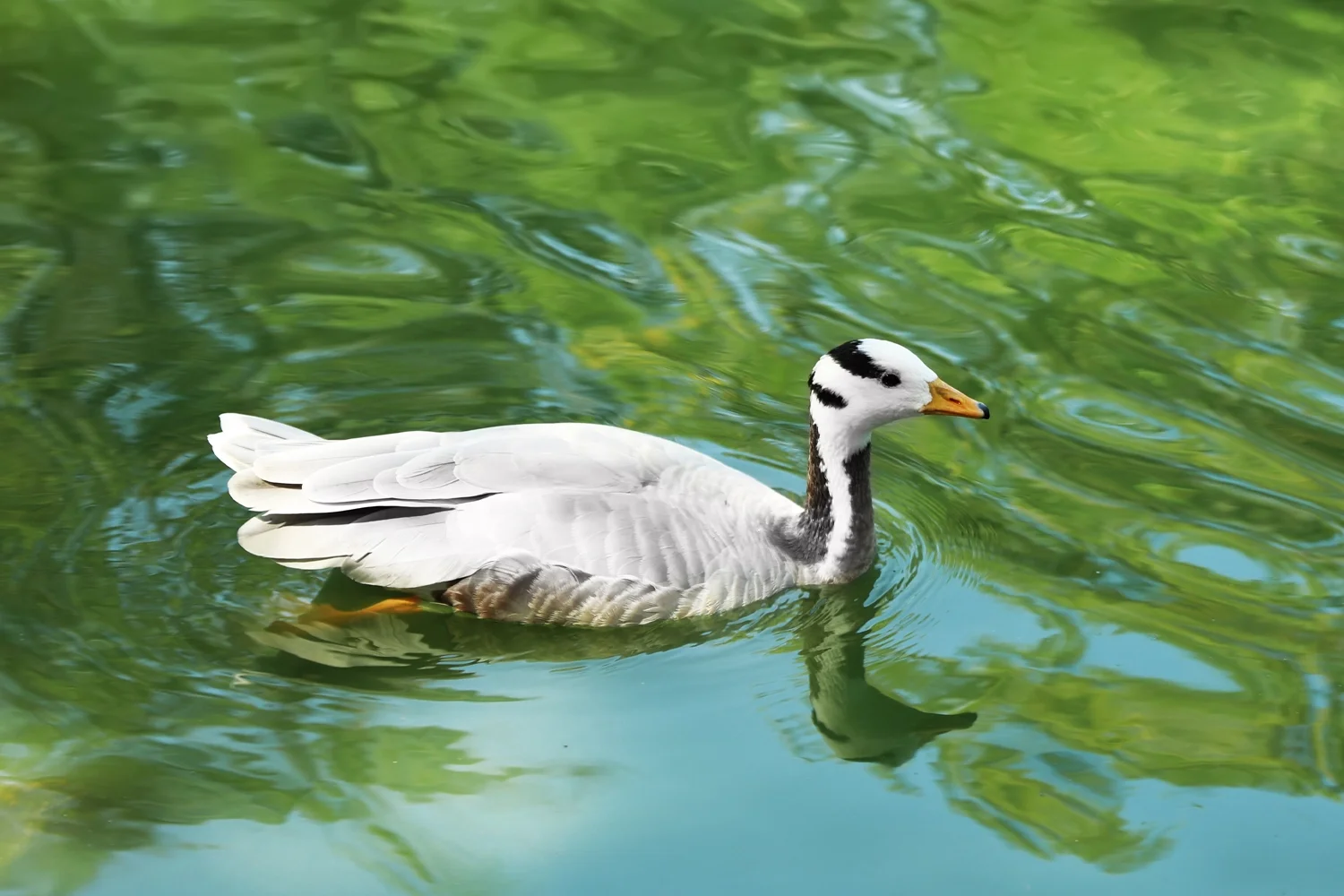
The Bar-headed Goose is a medium-sized waterfowl, typically measuring between 71 and 76 cm in length. Its plumage is primarily grey, which provides effective camouflage in rocky mountain environments. The bird is easily identified by its distinctive white head and neck, featuring two dark brown or black bars—one running across the crown and another across the back of the head—which give the species its common name.
Habitat
These geese primarily inhabit high-altitude lakes and wetlands in Central Asia, particularly in Mongolia and Western China. During their migration, they traverse the Himalayas, flying at extreme altitudes to reach their wintering grounds in the wetlands and agricultural fields of the Indian subcontinent.
Diet
The Bar-headed Goose is primarily herbivorous. Its diet consists of:
- Grasses and sedges
- Aquatic plants
- Cereal crops, including wheat and barley
- Roots and tubers
Breeding and Nesting
Breeding occurs in colonies near high-altitude lakes. They build ground nests lined with down feathers and vegetation. Females typically lay between 3 to 8 eggs, which are incubated for roughly 28 to 30 days. Both parents are involved in protecting the goslings from predators.
Behavior
The species is highly social and known for its complex V-formation flight patterns during migration. They are capable of flying at altitudes exceeding 9,000 meters, utilizing powerful chest muscles and an efficient respiratory system to manage low-oxygen conditions.
Conservation Status - LC Least Concern
The Bar-headed Goose is currently classified as Least Concern by the IUCN. While their population is stable, they face ongoing threats from habitat loss, illegal hunting, and the degradation of wetlands in their wintering territories.
Interesting Facts
- They are among the few bird species capable of flying over the summit of Mount Everest.
- Their blood has a higher affinity for oxygen compared to other goose species.
- They can complete their migration across the Himalayas in a single day.
- They are often seen foraging in large flocks in agricultural fields during winter.
Tips for Birdwatchers
To spot the Bar-headed Goose, visit wetlands in Northern India or the high-altitude lakes of Central Asia during the winter months. Use high-quality binoculars or a spotting scope, as these birds can be wary of humans. Early morning is the best time to observe them foraging in fields.
Conclusion
The Bar-headed Goose is a true marvel of the avian world. From its striking grey and white appearance to its legendary high-altitude endurance, this bird serves as a testament to nature's ability to adapt to the most extreme conditions on Earth.