
Introduction
The Chestnut Thrush (Turdus rubrocanus) is a captivating member of the Turdidae family, widely recognized for its distinctive coloration and melodic presence within the high-altitude forests of Asia. Primarily found in the Himalayas and surrounding mountain ranges, this perching bird is a classic example of the avian diversity found in temperate and subtropical forest ecosystems. As a mid-sized thrush, it plays a vital role in its environment, acting as both a seed disperser and a predator of various forest insects. Ornithologists and birdwatchers alike admire the Chestnut Thrush for its striking appearance and the elusive nature that makes spotting one a rewarding challenge. Throughout this guide, we will delve into the biological nuances, behavioral patterns, and ecological importance of this magnificent species, providing a comprehensive overview for those looking to understand more about one of the most beautiful thrushes in the Asian highlands.
Physical Appearance
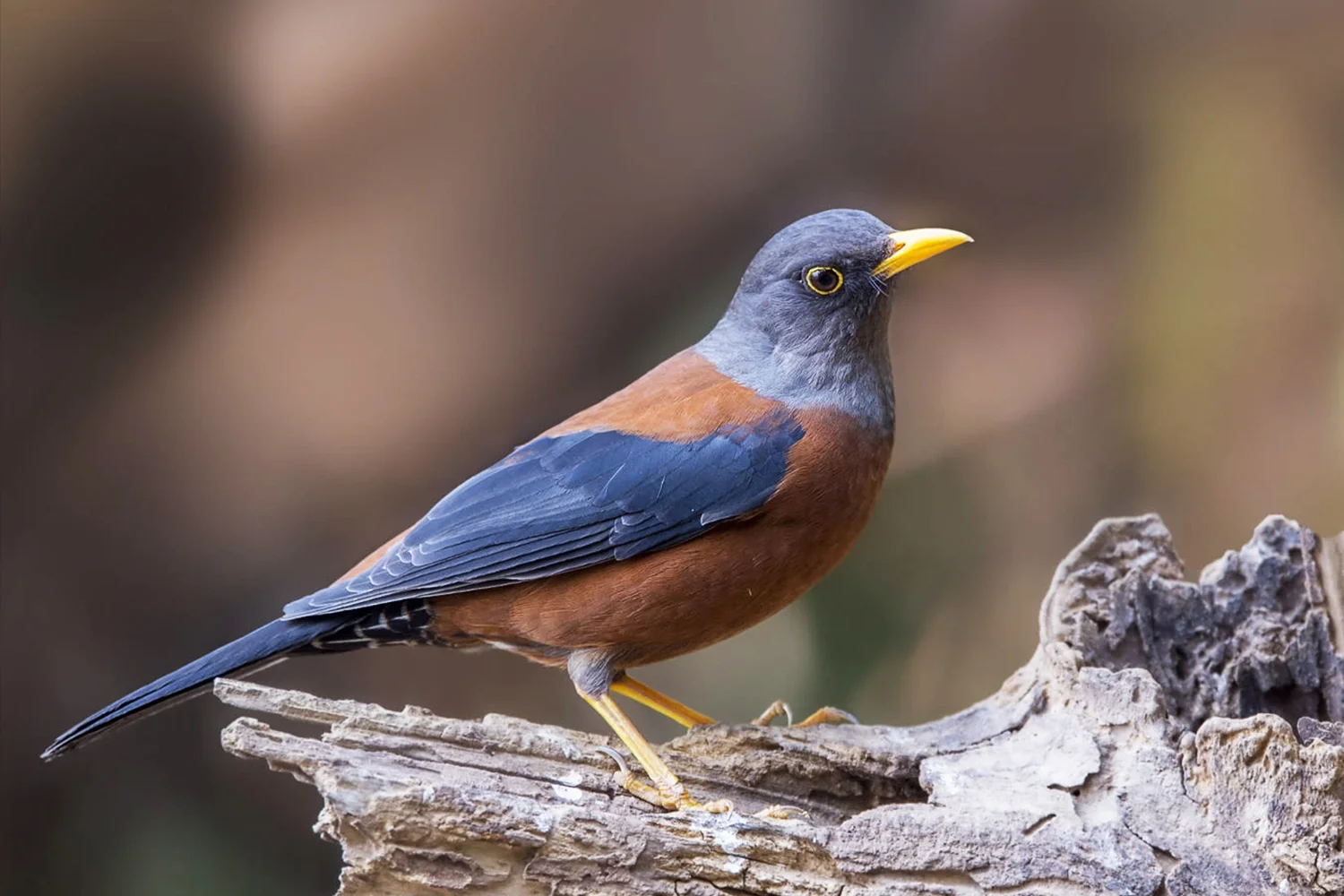
Measuring between 22 and 25 cm in length, the Chestnut Thrush possesses a sleek, compact build characteristic of the genus Turdus. Its most defining feature is the rich, vibrant chestnut hue that covers its mantle, wings, and underparts, creating a warm contrast against its darker features. The head and throat are typically a deep, contrasting black or slate-gray, which gives the bird a hooded appearance. The bill is usually yellow or orange, adding a bright pop of color to its face. The eyes are surrounded by a subtle ring, and the legs are typically brownish or yellowish. Juveniles may appear slightly duller with more streaking, helping them blend into the dappled light of the forest floor. The overall plumage is soft and dense, providing insulation against the chilly mountain air of its native range. Males and females share similar coloration, though subtle differences in intensity may occur during the breeding season, allowing for effective camouflage while foraging in the thick undergrowth.
Habitat
The Chestnut Thrush is primarily a bird of high-altitude environments, favoring temperate broadleaf, coniferous, and mixed forests. Its range spans across the Himalayas, extending from Pakistan through India, Nepal, Bhutan, and into parts of China and Southeast Asia. These birds are typically found at elevations ranging from 2,000 to 4,000 meters, where they inhabit the dense understory and forest edges. During the winter months, some populations may descend to slightly lower altitudes to escape the harshest weather, seeking out sheltered valleys and woodland areas where food remains more accessible. They are frequently spotted in areas with plenty of leaf litter, mossy branches, and dense shrubs, which provide the necessary cover for protection from avian predators and ample opportunities for foraging.
Diet
As an omnivorous species, the Chestnut Thrush maintains a varied diet that shifts depending on the seasonal availability of resources. During the warmer months, their diet is heavily supplemented by a wide array of invertebrates, including earthworms, beetles, caterpillars, and spiders, which they skillfully hunt in the leaf litter or pluck from low-hanging branches. As autumn approaches and temperatures drop, these thrushes shift their focus toward a fruit-based diet. They are particularly fond of wild berries, small drupes, and various forest fruits. This seasonal flexibility is crucial for their survival in the harsh mountain climate, allowing them to accumulate the necessary energy reserves required for winter survival or migration. Their foraging behavior involves hopping along the ground, using their bills to toss leaves and debris aside to reveal hidden prey.
Breeding and Nesting
The breeding season for the Chestnut Thrush typically occurs during the spring and early summer months, coinciding with the peak availability of insect food sources for their offspring. These birds are solitary nesters, preferring to construct sturdy, cup-shaped nests made from mud, moss, twigs, and lined with finer grasses or animal hair. The nest is usually positioned in the fork of a tree or on a sturdy branch, well-hidden within the dense foliage of the forest canopy or shrubbery. The female typically lays a clutch of 3 to 4 eggs, which are often pale blue with reddish-brown speckles. Both parents play an active role in defending the nesting territory and feeding the chicks. Once the eggs hatch, the parents work diligently to provide a steady supply of protein-rich insects to ensure the rapid growth and development of the nestlings until they are ready to fledge.
Behavior
The Chestnut Thrush is known for its shy and somewhat secretive demeanor, often preferring to remain concealed within the shadows of the forest undergrowth. While they are not overly social birds, they can sometimes be seen in loose groups during the non-breeding season, especially when food is abundant in specific fruiting trees. They possess a melodious, flute-like song that is often heard during the early morning hours in the breeding season, serving to mark territory and attract mates. When alarmed, they exhibit quick, erratic flight patterns to reach safety. Despite their reserved nature, they are highly territorial when nesting and will aggressively defend their immediate vicinity from intruders, including other thrush species or potential nest predators, showcasing a bold side to their otherwise cautious personality.
Conservation Status - LC Least Concern
Currently, the Chestnut Thrush is classified as a species of Least Concern by the IUCN. While their population appears to be stable, they are not immune to the threats posed by habitat loss and climate change. Deforestation and the degradation of high-altitude forest ecosystems in the Himalayas remain significant concerns. As a species that relies on specific forest structures for nesting and foraging, any major alteration to their mountain habitats could negatively impact their long-term survival. Continued monitoring and the protection of forest corridors are essential to ensuring that these beautiful birds continue to thrive in their native mountainous ranges.
Interesting Facts
- The Chestnut Thrush is known for its beautiful, flute-like song that echoes through the mountain mists.
- They are highly adaptable foragers, switching between insects and berries depending on the season.
- Their scientific name, Turdus rubrocanus, reflects their distinctive reddish-brown and gray coloration.
- They play a crucial role in forest health by dispersing seeds of various wild berry species.
- These birds are surprisingly hardy, capable of surviving in freezing temperatures at very high elevations.
- Unlike some migratory birds, many Chestnut Thrush populations are altitudinal migrants, moving only as far as necessary to find food.
- They are often seen flicking their tails when perched, a common behavior among many thrush species.
- Their nests are architectural marvels, reinforced with mud to withstand the winds of the high Himalayas.
Tips for Birdwatchers
For birdwatchers hoping to catch a glimpse of the elusive Chestnut Thrush, patience is the ultimate virtue. Focus your search in high-altitude, forested regions of the Himalayas during the early morning or late afternoon, when these birds are most active. Because they are shy, using high-quality binoculars or a spotting scope from a distance is recommended to avoid startling them. Pay close attention to the sound of rustling in the leaf litter, as this often gives away their presence while they are foraging. Wearing neutral-colored clothing will help you blend into the environment, increasing your chances of observing their natural behavior without intrusion. Additionally, visiting during the spring breeding season provides the best opportunity to hear their distinctive songs, which can help you pinpoint their location within dense forest patches.
Conclusion
The Chestnut Thrush (Turdus rubrocanus) stands as a testament to the incredible avian life that thrives in the world's most rugged and beautiful mountain landscapes. With its warm chestnut plumage and striking black head, it is a bird of undeniable beauty and elegance. Beyond its aesthetic appeal, this species fulfills a vital ecological role within the Himalayan forest ecosystem, contributing to seed dispersal and insect control. Understanding the needs, behaviors, and habitats of the Chestnut Thrush provides us with a window into the delicate balance of high-altitude biodiversity. As we continue to face environmental challenges, appreciating and protecting species like the Chestnut Thrush becomes increasingly important. Whether you are an avid birdwatcher traveling through the Himalayas or an enthusiast learning about global avian species from afar, the Chestnut Thrush offers a fascinating study in adaptation and survival. By valuing these birds and their habitats, we ensure that their melodic songs continue to resonate through the mountain forests for generations to come. We hope this guide has deepened your appreciation for this magnificent perching bird and encouraged you to learn more about the diverse world of thrushes.
