
Introduction
The Crimson Sunbird (Aethopyga siparaja) is a spectacular member of the Nectariniidae family, renowned for its brilliant plumage and energetic nature. As a small perching bird, it captivates bird enthusiasts across South and Southeast Asia with its metallic sheen and agile flight. Often compared to the hummingbirds of the Americas due to their shared ecological niche, these birds have evolved specialized beaks to extract nectar from tubular flowers. They serve as essential pollinators within their ecosystems, maintaining the delicate balance of tropical flora. Their presence is a hallmark of healthy, biodiverse forests and garden landscapes. Understanding the Crimson Sunbird requires a deep appreciation for their complex life cycle, striking coloration, and the specific environmental requirements that allow them to thrive. This guide provides a comprehensive look at the Aethopyga siparaja, detailing everything from their physical characteristics to their unique behavioral patterns, offering an essential resource for both amateur birdwatchers and dedicated ornithologists alike.
Physical Appearance
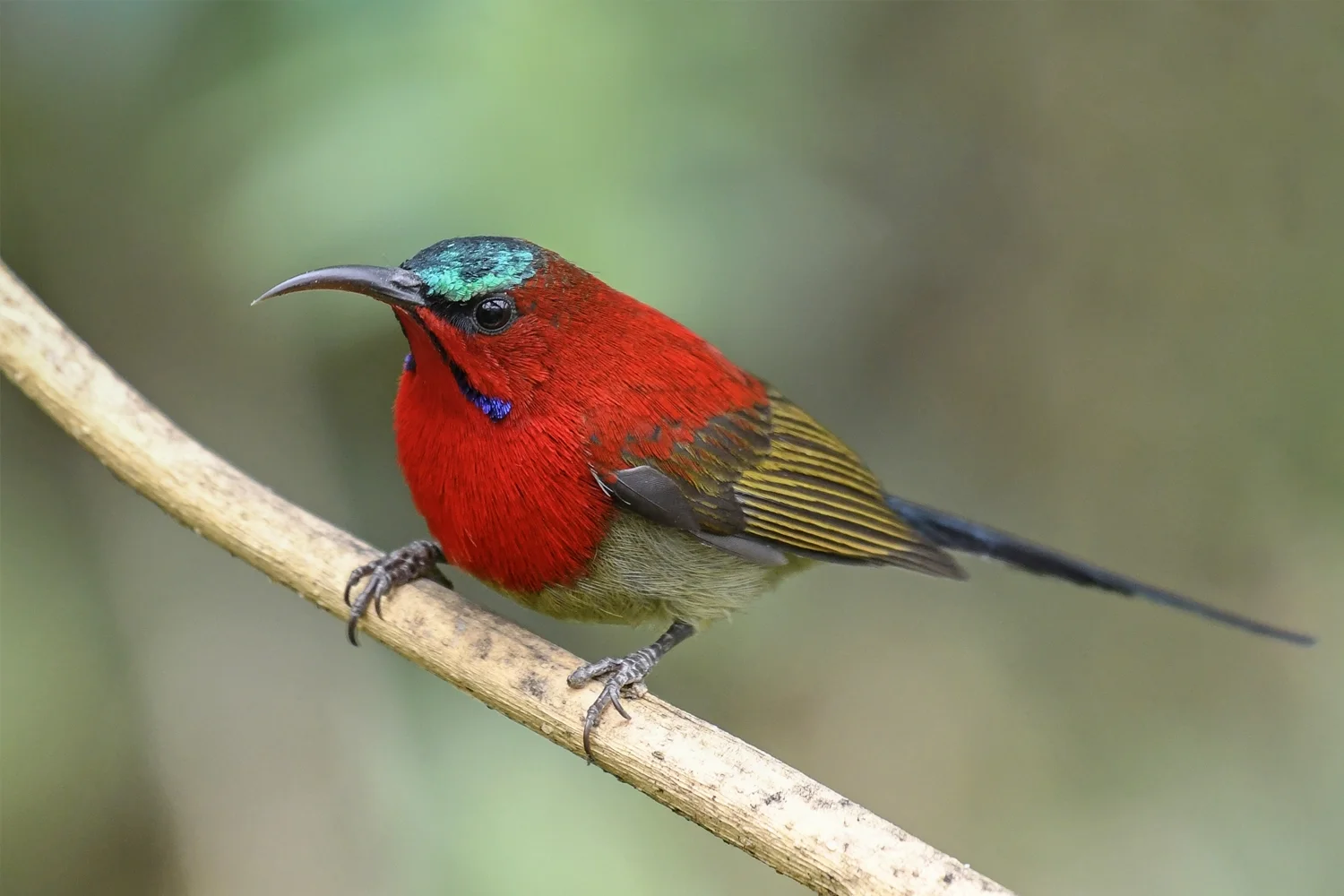
Measuring approximately 11 to 14 centimeters in length, the Crimson Sunbird is a masterpiece of avian design. The male of the species is particularly striking, boasting a vivid, deep crimson breast and mantle that catches the sunlight with a metallic luster. This primary color is beautifully contrasted by a bright yellow rump and olive-green wing coverts, which create a stunning visual profile. The male also features an elongated central tail feather that adds to its graceful appearance in flight. In contrast, the female Crimson Sunbird exhibits a more subdued plumage, primarily olive-green and yellowish, which provides excellent camouflage while nesting. Both sexes possess a long, thin, and slightly decurved bill, which is perfectly adapted for reaching deep into the corollas of nectar-rich flowers. Their small, robust feet are designed for perching on thin branches, allowing them to remain stable while feeding. The combination of iridescent feathers and delicate proportions makes them one of the most recognizable and admired birds in their natural range.
Habitat
The Crimson Sunbird is primarily found across a wide range of habitats in South and Southeast Asia, stretching from India to Indonesia. They are highly adaptable creatures that thrive in various environments, including primary and secondary tropical forests, forest edges, and mangrove swamps. Furthermore, these sunbirds have successfully integrated into human-modified landscapes, frequently appearing in well-vegetated gardens, plantations, and parks. They prefer areas with an abundance of flowering shrubs and trees, which provide a consistent food source throughout the year. Their distribution is closely tied to the availability of nectar-producing plants, making them highly mobile within their territory as they track the blooming seasons of their favorite floral species.
Diet
As specialized nectarivores, the Crimson Sunbird relies heavily on the nectar of tubular flowers for its caloric intake. They are frequently seen hovering in front of blossoms, using their long, curved beaks to probe deep into the petals. Beyond nectar, their diet is supplemented by small insects and spiders, which provide essential proteins, especially during the breeding season when they need to feed their growing chicks. This mixed diet makes them highly effective biological controllers, as they help manage insect populations in their habitat. By visiting numerous flowers daily, they perform a critical service as pollinators, facilitating the reproduction of various plant species within the forest canopy and understory.
Breeding and Nesting
The breeding season of the Crimson Sunbird is a fascinating period characterized by elaborate courtship displays. Males often perform aerial maneuvers and sing complex, high-pitched songs to attract a mate. Once a pair is formed, they collaborate to construct a sophisticated, purse-shaped nest. This nest is typically suspended from a thin, drooping branch or a large leaf, providing protection against ground-based predators. The structure is meticulously crafted from fine plant fibers, spider webs, and moss, often adorned with bits of lichen for camouflage. The female usually lays two to three eggs, which she incubates diligently. Both parents are highly protective of their nest, often aggressively defending their territory from intruders. The chicks are fed a high-protein diet of insects, ensuring they grow rapidly before fledging after about two weeks of intensive care.
Behavior
The Crimson Sunbird is exceptionally active and energetic, rarely staying still for long. They are known for their rapid, darting flights and ability to hover, much like hummingbirds, while feeding. They are generally social birds, often seen in pairs or small family groups. While they can be quite bold, especially when defending a favorite flowering tree, they are also highly territorial. Their vocalizations consist of sharp, metallic chirps and a rhythmic, high-pitched song that is often heard in the early morning. During the heat of the day, they may retreat to the shade of dense foliage, where they preen their feathers and rest before resuming their search for nectar.
Conservation Status - LC Least Concern
Currently, the Crimson Sunbird is classified as Least Concern by the IUCN. Their wide geographic distribution and ability to adapt to human-altered environments, such as gardens and plantations, have contributed to their stable population numbers. However, they are not entirely immune to threats. Habitat fragmentation, the use of pesticides in agricultural areas, and the decline of native flowering plants remain concerns. Continued monitoring of their populations and the preservation of diverse, nectar-rich habitats are essential to ensure that these vibrant birds continue to thrive in the wild for generations to come.
Interesting Facts
- The Crimson Sunbird is a vital pollinator for many species of tropical trees and shrubs.
- They possess a specialized, brush-tipped tongue designed specifically for extracting nectar.
- Unlike hummingbirds, sunbirds usually perch while feeding but can hover when necessary.
- They are known to use spider silk to bind their nest materials together for added strength.
- The male's vibrant crimson plumage is a result of structural coloration and pigments.
- They are highly intelligent and can remember the locations of the best nectar sources.
- These birds are often found in urban areas, making them a favorite for local birdwatchers.
- They play a significant role in the ecological health of forest ecosystems by controlling insect populations.
Tips for Birdwatchers
To successfully spot a Crimson Sunbird, look for areas with dense, colorful, and tubular flowers like Hibiscus or Ixora. These birds are most active during the early morning and late afternoon when they are busy foraging. A pair of high-quality binoculars is essential, as these birds are small and move very quickly. Patience is key; find a flowering tree and wait quietly nearby. Because they are territorial, they will often return to the same feeding spot repeatedly. Listen for their high-pitched, metallic call, which is often the first sign of their presence. Finally, avoid using flash photography to prevent disturbing their natural behavior, and always maintain a respectful distance to ensure they feel safe in their environment.
Conclusion
The Crimson Sunbird (Aethopyga siparaja) is more than just a beautiful sight; it is a vital contributor to the biodiversity of its habitat. Through its role as a pollinator and an insect predator, this small perching bird supports the complex web of life in the forests and gardens it inhabits. Its brilliant crimson and yellow plumage, combined with its energetic and agile nature, makes it a true gem of the avian world. For birdwatchers and nature enthusiasts, observing these creatures provides a rewarding glimpse into the intricate connections of the natural world. As we continue to urbanize and alter landscapes, it becomes increasingly important to maintain the native flora that these birds rely on for survival. By protecting their habitats and appreciating their unique behaviors, we ensure that the Crimson Sunbird continues to grace our environment with its presence. Whether you are a seasoned ornithologist or a casual observer, the Crimson Sunbird offers endless fascination and serves as a vivid reminder of the beauty found in our natural heritage. We hope this guide has inspired you to learn more about this remarkable species and to take an active interest in the conservation of the birds that share our world.