
Introduction
The Whimbrel (Numenius phaeopus) is a remarkable long-distance migratory bird that belongs to the Scolopacidae family. As a medium-sized wader, this species is widely recognized for its distinctively down-curved bill, which serves as a specialized tool for foraging in mudflats and coastal environments. Whimbrels are known for their impressive endurance, traveling thousands of miles between their Arctic breeding grounds and their wintering territories in tropical and temperate regions across the globe. Their presence is a hallmark of coastal ecosystems, where they move with purpose across tidal flats and rocky shorelines.
Understanding the life cycle of the Whimbrel provides valuable insights into the health of global wetland habitats. Because they rely on a chain of specific stopover sites during their long migrations, these birds act as bio-indicators for environmental changes. Bird enthusiasts and ornithologists alike admire the Whimbrel not only for its resilience but also for its complex vocalizations and social behaviors. This comprehensive guide explores every facet of the Whimbrel, from its unique anatomical features to the conservation challenges it faces in an increasingly fragmented world, helping you appreciate this iconic shorebird.
Physical Appearance
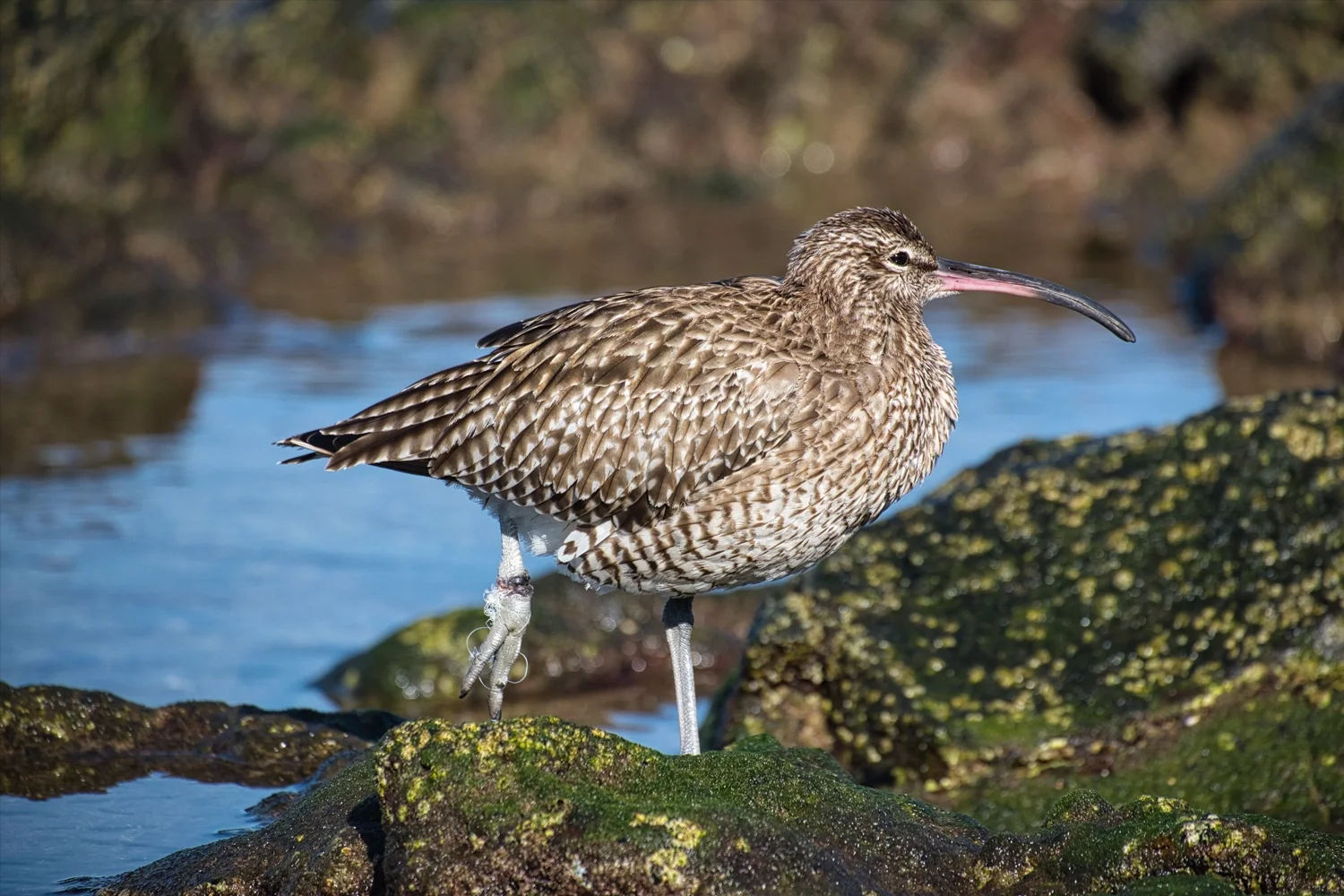
Standing at a height of 40-46 cm, the Whimbrel is a robust and easily identifiable wader. Its plumage is predominantly a mottled brown, providing excellent camouflage against the mud, sand, and rocky terrain it frequents. This brown coloration is accented by a lighter, white belly and vent area, which becomes more visible during flight. One of the most striking features of the Whimbrel is its head pattern; it displays a dark crown with a central pale stripe, flanked by distinct dark eye-stripes that give the bird a sharp, alert appearance.
The most iconic physical attribute of the Whimbrel is its long, dark, and noticeably down-curved bill. This bill is shorter and less extreme in its curve than that of its larger relative, the Eurasian Curlew. Its legs are relatively short for a wader of its size and are typically bluish-grey in color. In flight, the Whimbrel reveals a white rump and lower back, a feature that helps distinguish it from other similar species. Both males and females look relatively similar in plumage, though females may sometimes exhibit slightly longer bills. This combination of size, cryptic coloration, and specialized bill shape makes the Whimbrel a master of its coastal environment.
Habitat
The Whimbrel is a bird of open spaces, primarily occupying coastal regions throughout the year. During the breeding season, they migrate to the far northern latitudes, nesting in sub-Arctic heathlands, tundra, and open bogs where vegetation is sparse. These nesting grounds offer protection and access to seasonal insect blooms.
Outside of the breeding season, Whimbrels are classic shorebirds. They are commonly found in intertidal zones, including mudflats, sandy beaches, rocky coastlines, and salt marshes. During high tide, they often retreat to inland grassy fields or salt pans to rest. Their habitat selection is dictated by the availability of prey and the presence of safe roosting areas that are protected from predators.
Diet
The Whimbrel is an opportunistic predator with a diet that reflects the richness of its coastal habitat. Its primary food sources include small crabs, particularly fiddler crabs, which it skillfully extracts from their burrows using its curved bill. In addition to crustaceans, they consume a variety of marine worms, mollusks, and small fish found in shallow waters.
During their inland stay in breeding grounds, the Whimbrel shifts its diet to accommodate available terrestrial prey. They feed heavily on insects, such as beetles, flies, and grasshoppers, as well as berries found on the tundra. This flexibility in diet is crucial for sustaining them through the energy-demanding phases of migration and egg-laying.
Breeding and Nesting
Breeding for the Whimbrel typically occurs in the northern tundra regions from May to July. These birds are monogamous and often return to the same nesting grounds year after year. The nest is a simple, shallow depression on the ground, usually lined with lichen, moss, or dry grass, and is often situated in a slightly elevated or exposed area to provide the parents with a wide view of approaching predators.
A typical clutch consists of three to four eggs, which are incubated by both parents for approximately 27 to 28 days. Once hatched, the chicks are precocial, meaning they are able to leave the nest and begin foraging for themselves within hours, though they remain under the watchful eye of the adults. The parents are highly protective during this period, often performing distraction displays to lure potential threats away from the nest site.
Behavior
Whimbrels are highly social birds, often seen in small groups, particularly during migration and on their wintering grounds. They are known for their distinct, high-pitched, whistling calls, which are often heard before the birds are even spotted. These vocalizations play a key role in maintaining group cohesion while flying or foraging.
During the non-breeding season, they are generally wary and difficult to approach, often taking flight if disturbed. They exhibit a strong migratory instinct, flying in loose formations to cover thousands of miles. Their flight is strong and direct, characterized by steady wingbeats. When foraging, they move methodically across mudflats, probing the substrate with their sensitive, curved bills to locate hidden prey.
Conservation Status - LC Least Concern
The conservation status of the Whimbrel varies by region, but globally, the species is generally considered to be of Least Concern. However, several populations are experiencing declines due to habitat loss, pollution in coastal wetlands, and the degradation of critical stopover sites. Because they rely on specific migratory corridors, the loss of a single major staging area can have a significant impact on their survival. Conservation efforts currently focus on protecting key coastal habitats and minimizing human disturbance in nesting areas to ensure the long-term stability of their populations.
Interesting Facts
- The Whimbrel's curved bill is perfectly adapted for extracting crabs from deep burrows.
- They are known for their incredible endurance, sometimes flying non-stop for several days during migration.
- The name 'Whimbrel' is thought to be an onomatopoeic reference to their characteristic whistling call.
- During the breeding season, they exhibit aggressive territorial behavior to protect their nests.
- Whimbrels have been recorded traveling at high altitudes during their long-distance flights.
- They are among the most widespread shorebirds, found on every continent except Antarctica.
Tips for Birdwatchers
To spot a Whimbrel, the best approach is to visit coastal mudflats or sandy beaches during low tide, when the birds are actively foraging. Using a high-quality pair of binoculars or a spotting scope is essential, as they can be quite skittish and prone to flying away if they sense movement. Look for their distinct head pattern and down-curved bill against the backdrop of the shore.
Listening is just as important as looking; familiarize yourself with their signature 'pip-pip-pip' whistle. During migration seasons, check local birding reports for known stopover sites. Always maintain a respectful distance to avoid causing unnecessary stress, especially in protected areas, as these birds need to conserve energy for their arduous journeys.
Conclusion
The Whimbrel (Numenius phaeopus) stands as a testament to the wonders of avian migration and the complexity of coastal ecosystems. From its striking physical appearance, highlighted by the iconic down-curved bill, to its fascinating behavioral patterns and social structure, the Whimbrel is a bird that rewards patient observation. By understanding their specific habitat requirements and their reliance on critical stopover sites, we gain a deeper appreciation for the delicate balance of nature. Whether you are a casual birdwatcher or a dedicated ornithologist, witnessing a group of Whimbrels foraging on a windswept beach is an unforgettable experience.
As we continue to face environmental challenges, the Whimbrel serves as an important reminder of the interconnectedness of our planet. Protecting their habitats, both in the far north and along the world's coastlines, is essential for their continued success. By supporting conservation initiatives and practicing responsible birdwatching, we can ensure that future generations will also have the opportunity to marvel at these resilient travelers. The Whimbrel is more than just a shorebird; it is a symbol of the vast, migratory spirit that defines the natural world.