
Introduction
The White-throated Dipper (Cinclus cinclus) is a truly remarkable avian species that defies the typical expectations of a perching bird. While most members of its order are found in forests or open fields, this resilient bird has carved out a specialized niche in the fast-flowing, oxygen-rich mountain streams and rivers of Europe and parts of Asia. Often referred to simply as the 'dipper,' it is the only passerine bird capable of swimming and diving underwater to hunt for food. Its presence is often a vital indicator of high water quality, as these birds require clear, unpolluted streams to thrive. With a compact body and a unique set of physiological adaptations, the White-throated Dipper has fascinated ornithologists and nature enthusiasts for generations. Understanding the life cycle and behaviors of this species offers deep insight into how specialized evolution allows creatures to colonize some of the most challenging environments on Earth, turning turbulent, icy waters into a productive hunting ground.
Physical Appearance
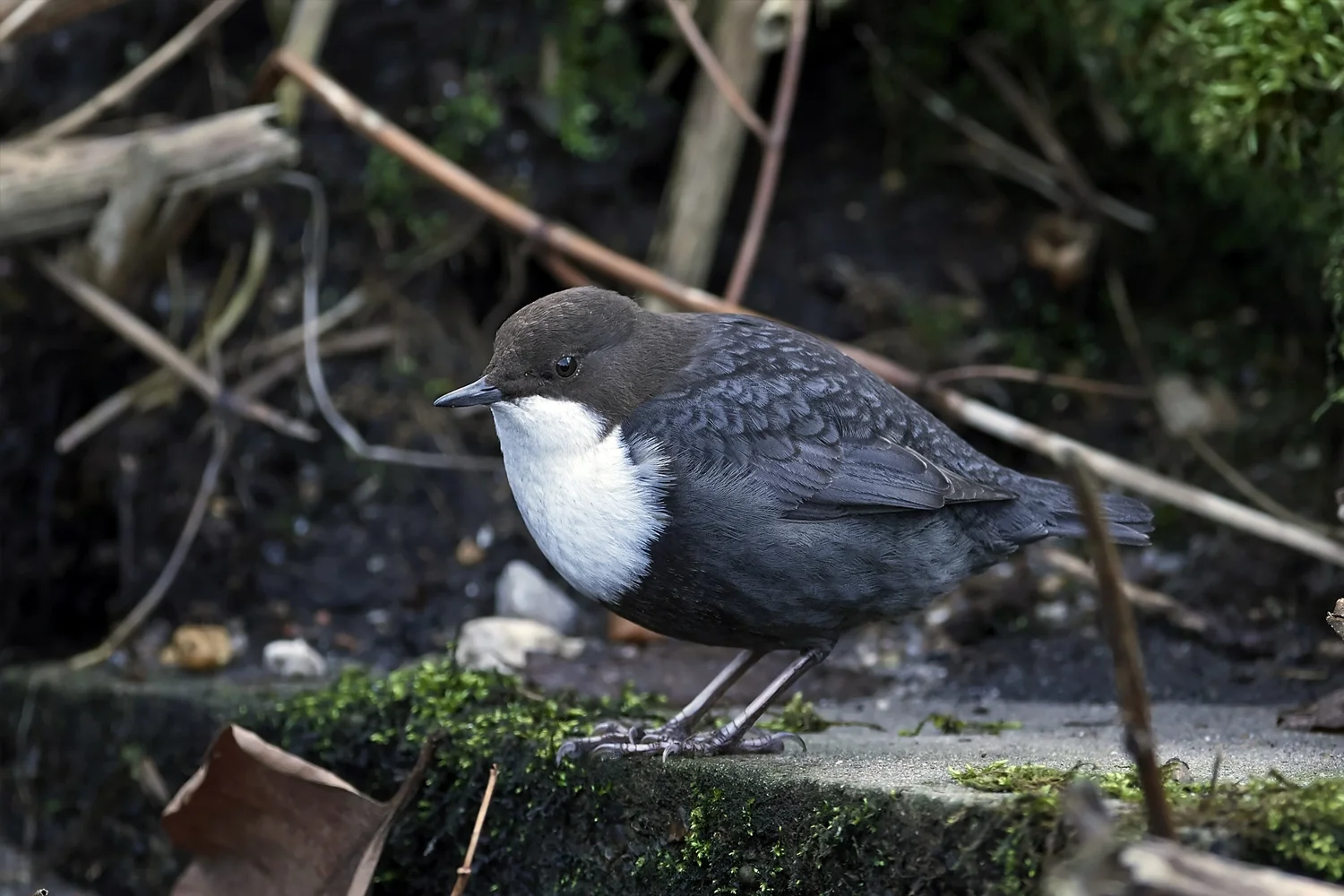
The White-throated Dipper is a small, stout bird, measuring between 17 and 20 cm in length. Its appearance is perfectly adapted for its semi-aquatic lifestyle, featuring a compact, muscular build that helps it withstand strong currents. The primary color of the adult is a rich, dark brown, which provides excellent camouflage against the wet rocks of riverbanks. A distinctive, clean white patch adorns the throat and upper breast, which serves as a visual signal during social interactions and territorial displays. The wings are short and rounded, powerful enough to propel the bird through water as if it were flying. Furthermore, the dipper possesses a thick layer of downy feathers and a large preen gland, which produces oils that help keep its plumage waterproof. Its feet are strong and equipped with sharp claws, enabling it to grip slippery, submerged rocks firmly while it searches for aquatic invertebrates. The bill is short, straight, and strong, perfectly suited for picking prey from the riverbed.
Habitat
The White-throated Dipper is exclusively tied to fast-flowing, freshwater environments. You will rarely find this bird in stagnant water or slow-moving rivers. Instead, it favors rocky mountain streams, turbulent mountain rivers, and cascading waterfalls where the water is well-oxygenated. These birds require clear water to spot their prey, which is why they are often absent from heavily silted or polluted rivers. The presence of large, moss-covered rocks within the stream is essential, as these provide the necessary platforms for the bird to 'dip' or bob its body—a behavior from which it derives its common name. During winter, if their primary stream freezes, they may move to slightly slower, ice-free sections, but they remain strictly confined to high-quality aquatic corridors throughout the year.
Diet
The diet of the White-throated Dipper consists almost entirely of aquatic macroinvertebrates. These include caddisfly larvae, mayfly nymphs, stonefly larvae, and freshwater shrimp. Occasionally, they will consume small fish or fish eggs, especially during winter months when insect populations are lower. Their hunting technique is highly specialized: they walk along the bottom of the stream against the current, using their wings to stay submerged and pushing their bodies down against the water's force. They use their sharp bills to overturn pebbles and moss to expose hidden prey. This unique foraging strategy allows them to exploit food sources that are completely inaccessible to other bird species, making them highly successful in their specific mountain stream habitats.
Breeding and Nesting
Breeding for the White-throated Dipper typically begins in early spring. These birds are fiercely territorial and will defend a stretch of the river against intruders. The nest is a large, spherical structure made of moss, grass, and leaves, lined with softer materials like hair or feathers. They are master architects, often placing their nests in sheltered spots such as crevices in rock faces, behind waterfalls, or even under bridges, ensuring they are always near running water. A typical clutch consists of 3 to 6 white eggs. Both parents are involved in the process, though the female performs the majority of the incubation, which lasts about 16 to 18 days. Once hatched, the chicks are fed by both parents, who make numerous trips underwater to bring fresh aquatic larvae to the nest. Fledging occurs after about 20 to 25 days, after which the young become remarkably adept at navigating the river currents.
Behavior
The most iconic behavior of the White-throated Dipper is its characteristic 'dipping' action. The bird repeatedly bobs its body up and down while perched on a rock, a movement that is thought to help it scan the water for movement or signal its presence to rivals. Aside from this, they are extremely bold swimmers. They do not just wade; they fully submerge and 'fly' underwater, using their wings to navigate the turbulent currents. They are generally solitary creatures, except during the breeding season. They are also known for their beautiful, complex songs, which are loud enough to be heard clearly over the roar of rushing waterfalls, a necessary adaptation for communicating in such a noisy, high-energy environment.
Conservation Status - LC Least Concern
Currently, the White-throated Dipper is classified as a species of 'Least Concern' by the IUCN. However, their populations are highly sensitive to environmental changes. Because they rely on clean, fast-flowing water, they are significant bio-indicators. Pollution, river acidification, and habitat degradation due to dam construction or water abstraction pose the greatest threats to their survival. Protecting the integrity of mountain river ecosystems is essential for ensuring that these fascinating birds continue to thrive in their natural habitats across Europe and parts of Asia.
Interesting Facts
- The dipper has a nictitating membrane (a third eyelid) that acts like a pair of goggles, allowing it to see clearly while underwater.
- They possess a high hemoglobin concentration in their blood, which allows them to store more oxygen and stay submerged for longer periods.
- Their nostrils have small flaps that automatically close when they dive, preventing water from entering their respiratory system.
- Dippers are one of the few birds that can sing throughout the winter months, even in freezing conditions.
- The bird's scientific name, Cinclus, is derived from the Greek word for a bird that wags its tail.
Tips for Birdwatchers
To spot a White-throated Dipper, you must head to the right habitat: clear, fast-flowing mountain streams or rivers with rocky beds. Patience is key; find a vantage point overlooking a stretch of river where the water moves quickly over boulders. Look for a small, dark bird perched on a rock in the middle of the stream. Use high-quality binoculars to watch for its rhythmic bobbing motion. If you stay still and quiet, you may witness the incredible sight of the bird diving headfirst into the turbulent water to forage. Early morning and late afternoon are the best times for observation. Always respect the environment and avoid disturbing nesting sites, especially during the sensitive spring breeding season.
Conclusion
The White-throated Dipper is a testament to the wonders of evolutionary adaptation. By mastering the art of foraging in fast-flowing, icy waters, it has occupied a niche that few other birds could hope to survive in. From its distinctive white-throated appearance and compact, waterproof body to its complex territorial behaviors and unique underwater 'flight,' every aspect of this bird is a marvel of biological engineering. As we continue to face global environmental challenges, the dipper serves as a crucial reminder of the importance of maintaining clean, healthy, and free-flowing river systems. It is not merely a bird to be watched, but an indicator of the vitality of our freshwater ecosystems. For any birdwatcher, catching a glimpse of a dipper standing defiantly against a roaring waterfall is an unforgettable experience. We must strive to protect the pristine mountain streams they call home, ensuring that this resilient and energetic species remains a permanent fixture of our wild landscapes for generations to come. Whether you are an experienced ornithologist or a casual nature lover, the White-throated Dipper offers endless opportunities for discovery and appreciation of the natural world.