Introduction
The Spix's Guan (Penelope jacquacu) is a fascinating member of the Cracidae family, a group of large, arboreal, and semi-terrestrial birds native to the neotropical regions of South America. Named after the German naturalist Johann Baptist von Spix, this species is a prominent inhabitant of the vast Amazon Basin. Often found in the dense canopy or foraging on the forest floor, the Spix's Guan is characterized by its vocal nature and social structure. These birds are essential components of their ecosystem, acting as significant seed dispersers for a variety of fruit-bearing trees. Despite their widespread distribution across countries like Brazil, Peru, Colombia, and Venezuela, they remain elusive to many casual observers due to their preference for dense, undisturbed primary rainforests. Understanding the life cycle, behavior, and ecological requirements of the Spix's Guan provides valuable insight into the health of the Amazonian biome. As upland ground birds that exhibit both arboreal and terrestrial traits, they represent a unique evolutionary adaptation to the complex, multi-layered environment of the tropical rainforest.
Physical Appearance
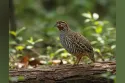
Measuring between 75 and 85 cm in length, the Spix's Guan is an impressive bird with a robust build. Its primary coloration is a rich, deep brown, which provides excellent camouflage against the dark, shadowed branches of the rainforest canopy. The plumage often features subtle bronze or olive iridescence, particularly on the wings and back, which becomes more apparent when the bird is caught in direct sunlight. A defining secondary characteristic is the presence of white or pale grey streaking, particularly around the head, neck, and chest area, which creates a striking contrast against the darker body feathers. They possess a long, broad tail that aids in balance while maneuvering through the canopy, and their legs are strong and dark, adapted for both walking on the forest floor and gripping branches. The face typically features a bare patch of skin, often reddish or bluish, and a distinct throat wattle that can be inflated during vocalizations. Their eyes are dark and expressive, set within a relatively small head that features a short, sturdy bill perfectly suited for a varied diet of fruits and plant matter.
Habitat
The Spix's Guan is primarily an inhabitant of the Amazon Basin and surrounding tropical regions. They show a strong preference for humid, lowland tropical rainforests, particularly those located near river systems or flooded forest areas known as 'varzea'. These birds are highly dependent on primary forest structures that provide a dense canopy, which offers both protection from aerial predators and a consistent supply of food. While they are classified as upland ground birds, they spend a significant portion of their time in the mid-to-high levels of the trees. They rarely venture into open or heavily degraded landscapes, making them reliable indicators of forest integrity. Their reliance on specific forest types means that habitat fragmentation poses a direct threat to their local populations, as they require large, contiguous tracts of land to forage and thrive throughout the year.
Diet
The diet of the Spix's Guan is primarily frugivorous, meaning it relies heavily on a wide variety of rainforest fruits. They are known to visit fruiting trees in small family groups, often stripping branches of berries, figs, and other soft fruits. In addition to fruit, their diet is supplemented by buds, flowers, and tender leaves, providing them with essential nutrients and minerals. Occasionally, they may consume insects or small invertebrates, especially during the breeding season when protein requirements for developing chicks increase. As foragers, they are methodical, moving slowly through the canopy or walking carefully on the forest floor to pick up fallen fruit. By consuming a wide range of seeds and fruits, they play a critical role in forest regeneration through seed dispersal, as many of the seeds they ingest pass through their digestive system unharmed, often far from the parent tree.
Breeding and Nesting
Breeding for the Spix's Guan is typically synchronized with the local wet season, which ensures an abundance of food for the developing chicks. They are monogamous birds that maintain strong pair bonds. The nesting process is quite secretive; they construct a bulky, platform-style nest composed of twigs, leaves, and moss, usually hidden high in the dense foliage of a tree or within a tangle of vines. The female typically lays a small clutch of two to three large, white or cream-colored eggs. Incubation is primarily performed by the female, although the male remains nearby to defend the territory and provide warnings of potential predators. Once the chicks hatch, they are precocial, meaning they are relatively well-developed and capable of following the parents shortly after leaving the nest. Both parents participate in protecting the young until they reach independence, teaching them how to forage and navigate the complex forest structure safely.
Behavior
Spix's Guans are highly social birds, often observed in small groups or family units. They are perhaps best known for their vocalizations, which are loud, guttural, and sometimes piercing calls that can be heard echoing through the forest at dawn and dusk. These calls serve to maintain group cohesion and establish territorial boundaries against other groups. Despite their size, they are surprisingly agile, capable of powerful, short-burst flights to move between trees. When threatened, they often freeze to remain undetected or retreat deeper into the foliage. They exhibit a curious mix of arboreal and terrestrial behavior; while they are adept at climbing branches, they frequently descend to the ground to forage, showing a cautious demeanor as they scan their surroundings for terrestrial predators like ocelots or tayras.
Conservation Status - LC Least Concern
Currently, the Spix's Guan is categorized as a species of Least Concern by the IUCN, primarily due to its wide distribution across the Amazon Basin. However, this status is somewhat deceptive, as their populations are declining in areas suffering from heavy deforestation and illegal hunting. Because they are relatively large birds, they are often targeted by local hunters for food. Furthermore, their strict dependence on primary rainforest makes them highly vulnerable to habitat loss. Conservation efforts focus on protecting large, contiguous forest reserves and regulating hunting practices within indigenous territories to ensure that these unique birds continue to thrive in their natural environment.
Interesting Facts
- They are known for their distinct, loud 'croaking' calls that define the soundscape of the Amazon.
- They act as 'gardeners' of the forest by dispersing seeds over long distances.
- Spix's Guans have a long, flexible tail that acts like a rudder during flight.
- Despite being large birds, they can be remarkably quiet when they need to avoid predators.
- They are closely related to other cracids like curassows and chachalacas.
- They possess a unique throat wattle that vibrates to amplify their vocalizations.
Tips for Birdwatchers
For birdwatchers hoping to spot the Spix's Guan, patience and early mornings are essential. These birds are most active at dawn, when their vocalizations are most frequent. Focus your search near river banks or areas with fruiting trees, as these are prime feeding locations. Using high-quality binoculars is a must, as the dense canopy can make spotting them difficult, even if you can hear them. Move slowly and quietly, as they are alert to any sudden movements or noises. If you find a fruiting tree, remain nearby for a while; the birds often return to the same tree repeatedly. Hiring a local guide who knows the specific territories of these birds can significantly increase your chances of a successful sighting while ensuring you respect the delicate forest environment.
Conclusion
The Spix's Guan (Penelope jacquacu) is a quintessential representative of the Amazonian rainforest's avian diversity. With its striking brown plumage, distinct vocalizations, and vital role as a seed disperser, it serves as a living testament to the complexity of the South American wilderness. While they are currently holding their ground in terms of population numbers, the encroachment of deforestation and the pressure of hunting remind us that no species is truly immune to the impacts of human activity. For birdwatchers and nature enthusiasts, encountering a Spix's Guan in the wild is a rewarding experience that offers a glimpse into the intricate social dynamics and survival strategies of tropical birds. Protecting the primary forests they call home is not merely about saving one species, but about preserving the entire ecological network that supports them. By supporting conservation initiatives and practicing responsible wildlife observation, we can ensure that the loud, characteristic calls of the Spix's Guan continue to echo through the canopy of the Amazon for generations to come. Their presence is a sign of a healthy, functioning ecosystem, and their future remains inextricably linked to our commitment to environmental stewardship.