Sarus Crane - Complete Information in English

Sarus Crane Information
Basic Information about Sarus Crane
| Size in CM | 156-180 cm |
| Size in Inch | 61-71 Inch |
| Primary color | gray |
| Secondary color | red (Bird may have more colors) |
Sarus Crane - Common Names in Different Languages
| Language | Name |
|---|---|
| bengali | দেশি সারস |
| bhojpuri | सारस |
| gujarati | સારસ |
| hindi | सारस |
| malayalam | സാരസ കൊക്ക് |
| marathi | सारस क्रौंच |
| nepali | सारस |
| tamil | சாரசு கொக்கு |
Introduction to the Sarus Crane
The Sarus crane (Antigone antigone) is the tallest flying bird in the world, reaching heights of up to 1.8 meters (5 ft 11 in). Known for its striking appearance, the Indian Sarus crane is a significant symbol of endangered species conservation. Found across parts of the Indian Subcontinent, Southeast Asia, and Australia, these birds inhabit wetlands and areas rich in agricultural fields. Revered in Indian culture as symbols of marital fidelity, they have captivated the attention of conservationists and bird watchers alike.
Their habitats range from marshes and large rivers to seasonally flooded forests and Eucalyptus-dominated grasslands. Sarus cranes form lifelong bonds, often observed in pairs engaging in elaborate courtship displays such as loud trumpeting calls, leaps, and dance-like movements. Despite being globally threatened, careful assessments have shown some population recovery in India, owing to the species' adaptability to agricultural landscapes and the increase in artificial water bodies.
Physical Appearance:
- Size: 152–180 cm (5–6 ft) in height; wingspan 220–250 cm (87–98 in).
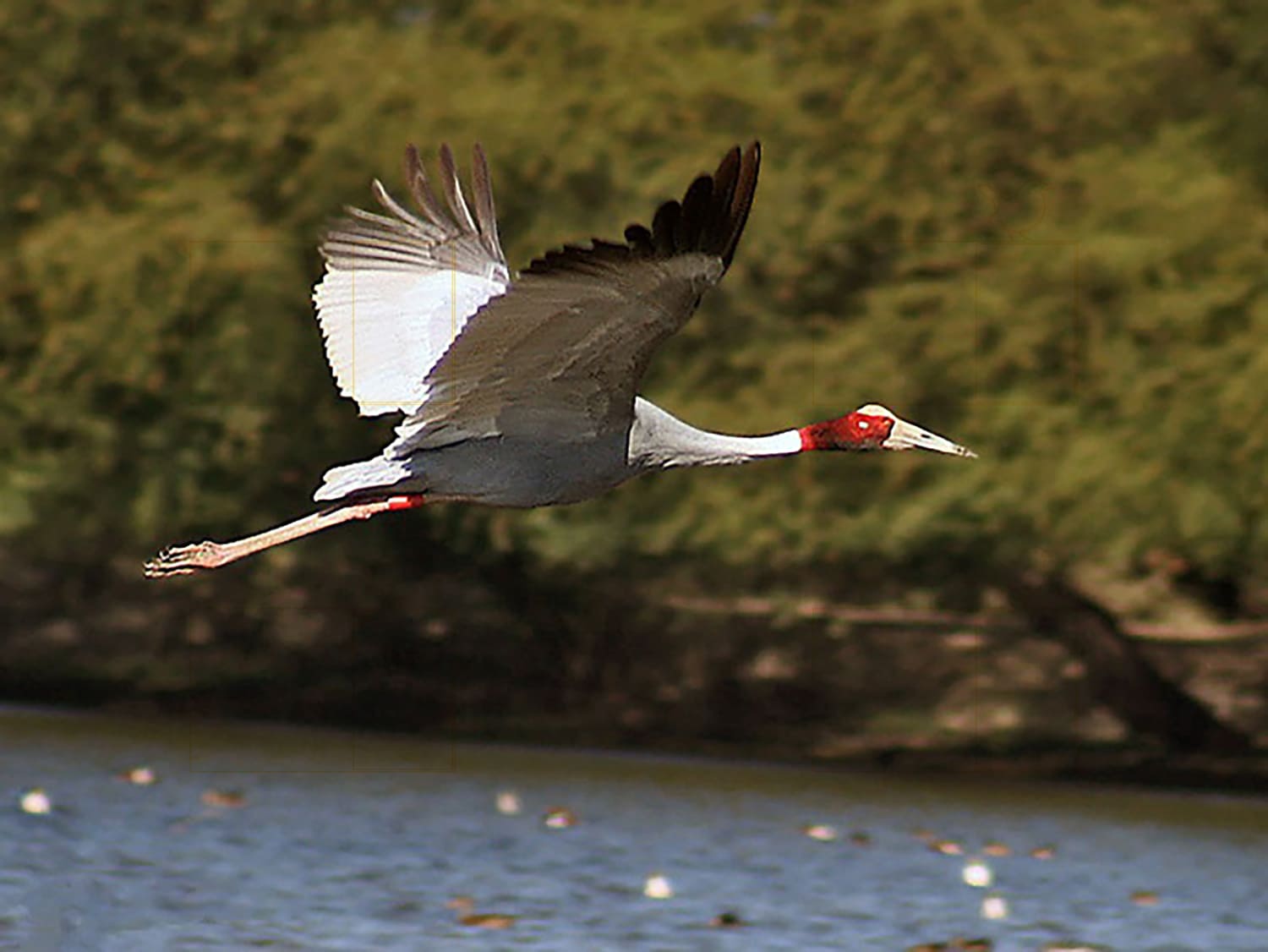
- Coloration: Predominantly grey with a bare red head and upper neck.
- Beak: Long and pale grey.
- Legs: Long, slender, and reddish-orange.
- Juvenile: Rusty-buff feathering with a duller reddish head and neck.
Habitat:
- Preferred Habitat: Wetlands, marshes, flooded fields, and shallow water bodies.
- Geographical Range: India, Nepal, Southeast Asia, and Northern Australia.
Diet:
- Common Food Items: Insects (especially grasshoppers), aquatic plants, fish, frogs, crustaceans, and seeds.
- Feeding Behavior: Forages in wetlands and agricultural fields by probing soil and shallow waters.
Breeding and Nesting:
- Breeding Season: Primarily during the monsoon season in India.
- Nest: Large circular platforms made of reeds and grasses, built in shallow water.
- Eggs: Typically 1–2 eggs are laid per clutch.
- Pair: Forms long-lasting pair bonds and shows strong territorial behavior.
Behavior:
Sarus cranes are known for their courtship displays, characterized by synchronized trumpeting, dancing, and bowing. These displays strengthen the pair bond and are a unique spectacle for bird watchers. As non-migratory birds, they defend their territories year-round and engage in cooperative parenting. Their loud trumpeting calls serve as a means of communication and territorial defense.
Despite their size, these cranes are graceful fliers. In flight, their black primaries contrast with the rest of the grey wings. Juveniles, while less vibrant, gradually attain the distinctive appearance of adults over time.
Conservation Status:
- Global Status: Listed as Vulnerable by the IUCN.
- Threats:
- Habitat loss due to urbanization and industrialization.
- Changes in farming practices and wetland degradation.
- Human disturbance and hunting in certain regions.
- Conservation Efforts:
- Community-based conservation programs in India.
- Habitat restoration and wetland preservation projects.
- Awareness campaigns to highlight their ecological significance.
Sarus Crane: Interesting Facts:
- The Sarus crane is revered in Indian mythology and is considered a symbol of marital fidelity.
- It holds the record as the tallest flying bird, with an impressive height of nearly 6 feet.
- Sarus cranes are known to mourn the loss of their mates, often refusing to eat.
Tips for Birdwatchers:
Observing Sarus cranes in their natural habitat is an unforgettable experience. Here are some tips for birdwatchers:
- Visit wetlands and agricultural fields during the breeding season to witness their courtship displays.
- Maintain a respectful distance to avoid disturbing their activities.
- Carry binoculars or a spotting scope for better viewing.
- Document sightings and contribute to citizen science initiatives to support conservation efforts.
Conclusion:
The Sarus Crane is a fascinating species that embodies grace, resilience, and beauty. As the tallest flying bird, it plays a crucial role in wetland ecosystems, serving as an indicator of ecological health. However, threats like habitat loss and climate change pose significant challenges to its survival. Efforts to conserve wetlands and protect these cranes must be intensified to ensure they continue to thrive in their natural habitats. Let us cherish and protect these majestic birds for generations to come.
Distribution Map

Frequently Asked Questions (FAQs) About Sarus Crane
sarus crane name in bengali?
The Bengali name for Sarus Crane is দেশি সারস
sarus crane name in bhojpuri?
In bhojpuri, sarus crane is called सारस
sarus crane name in gujarati?
The word for sarus crane in gujarati is સારસ
sarus crane name in hindi?
The hindi name for sarus crane is सारस
sarus crane name in malayalam?
The malayalam name for sarus crane is സാരസ കൊക്ക്
sarus crane name in marathi?
The marathi name for sarus crane is सारस क्रौंच
sarus crane name in nepali?
The nepali name for sarus crane is सारस
sarus crane name in tamil?
The tamil name for sarus crane is சாரசு கொக்கு