Introduction
The White Stork (Ciconia ciconia) is a majestic large bird belonging to the stork family, Ciconiidae. Renowned for its iconic presence in folklore and its incredible long-distance migrations, this species serves as a symbol of nature's beauty across Europe, Africa, and Asia.
Physical Appearance
The White Stork is a visually striking bird with several distinguishing features:
- Size: Adults typically measure between 100–125 cm in length.
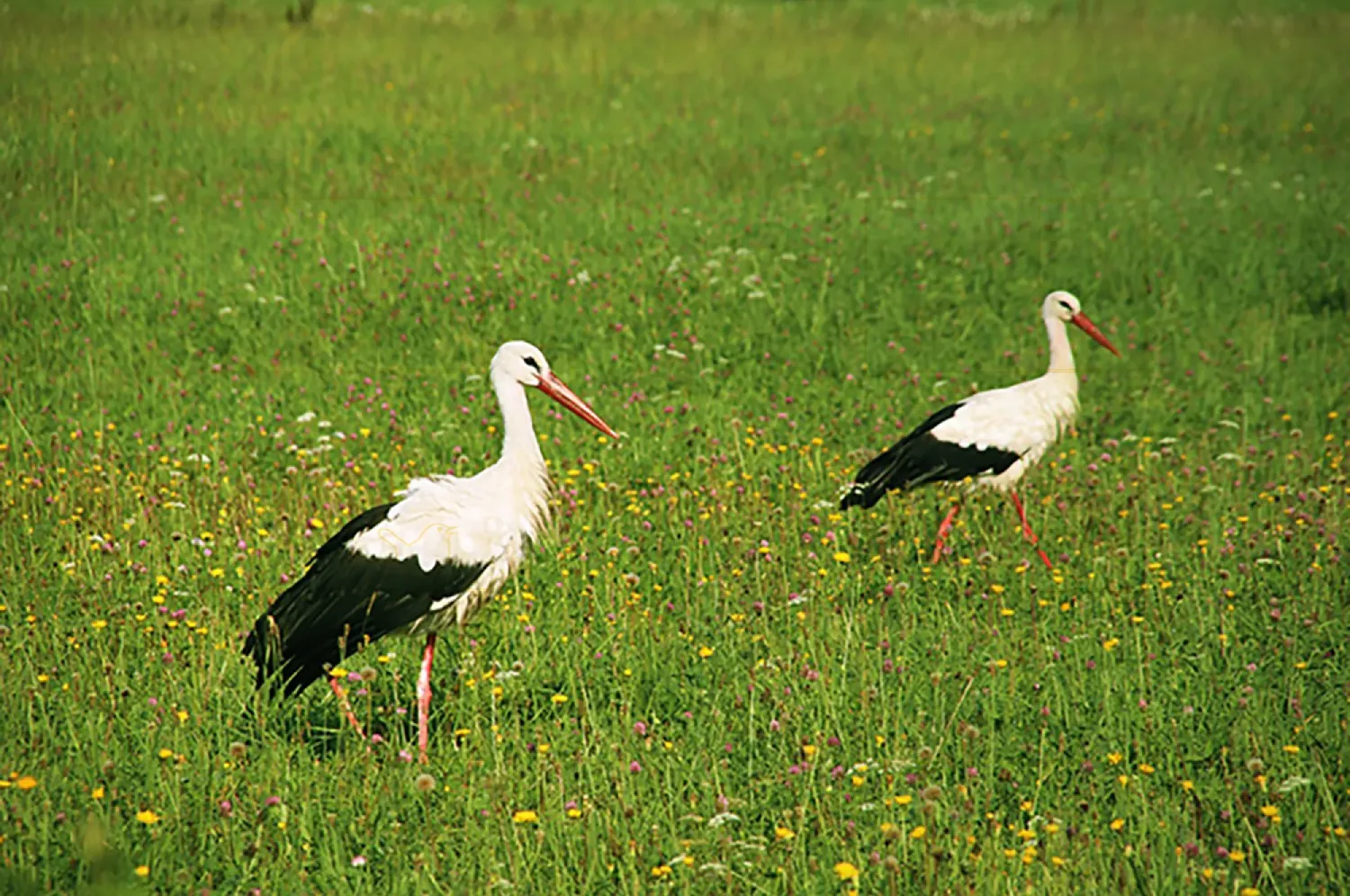
- Plumage: Most of the body is covered in pure white feathers, contrasted by black feathers on the wings.
- Beak and Legs: Adults possess long, pointed red beaks and long red legs.
- Wingspan: They boast an impressive wingspan ranging from 155 to 215 cm, which is essential for soaring.
Habitat
White Storks are commonly found in grasslands, damp ploughed fields, and fallow lands. They prefer open areas that provide easy access to prey. While they can be seen in flocks, they are often found stalking deliberately through moist or dry ground. Their breeding grounds span across Europe, northwestern Africa, and southwestern Asia.
Diet
As carnivores, White Storks consume a wide variety of animal prey. Their diet includes:
- Insects and invertebrates
- Fish and amphibians
- Reptiles
- Small mammals and occasionally small birds
They hunt by stalking through low vegetation or searching in shallow water.
Breeding and Nesting
White Storks are monogamous breeders, though they do not necessarily pair for life. Both the male and female participate in building a large nest made of sticks, which is often reused and expanded over several years. A typical clutch consists of four eggs, which are incubated by both parents for approximately 33–34 days. The young remain in the nest for about two months before fledging.
Behavior
These birds are generally shy and difficult to approach. They are master gliders, relying on warm air thermals to soar during their long-distance migrations. To avoid the lack of thermals over water, they famously detour around the Mediterranean Sea, traveling via the Levant or the Strait of Gibraltar to reach their wintering grounds in Africa or the Indian subcontinent.
Conservation Status
The White Stork is currently rated as Least Concern by the IUCN. Although they suffered significant declines in the 19th and early 20th centuries due to industrialization and changes in farming, modern conservation and reintroduction programs have successfully brought breeding populations back to many parts of Europe.
Interesting Facts
- The White Stork is the primary inspiration for the famous legend that storks deliver newborn babies to their parents.
- They are long-distance migrants, with some individuals traveling from Northern Europe all the way to South Africa.
- Their massive nests are so large and stable that they often host a diverse range of mites and even other small bird species.
- Unlike many birds, White Storks do not have a syrinx (vocal organ) and communicate primarily by loudly clattering their bills.
Tips for Birdwatchers
- Look for them in open agricultural landscapes or wetlands during the spring and summer months.
- Observe from a distance using binoculars, as they are wary of humans and may fly away if approached too closely.
- Scan high structures like chimneys, church towers, and utility poles, which are favorite nesting sites in many European villages.
- Watch for their distinct soaring flight pattern, where they keep their necks fully extended.
Conclusion
The White Stork is an extraordinary species that bridges continents through its migration and connects cultures through its legends. By protecting their wetland and grassland habitats, we ensure that these iconic birds continue to return to our skies every year.