Introduction
The yellow-eyed babbler (Chrysomma sinense) is a charming passerine bird native to the diverse landscapes of South and Southeast Asia. While its name suggests a connection to the Old World babbler family, it is taxonomically closer to parrotbills and Sylvia warblers within the Sylviidae family.
Physical Appearance
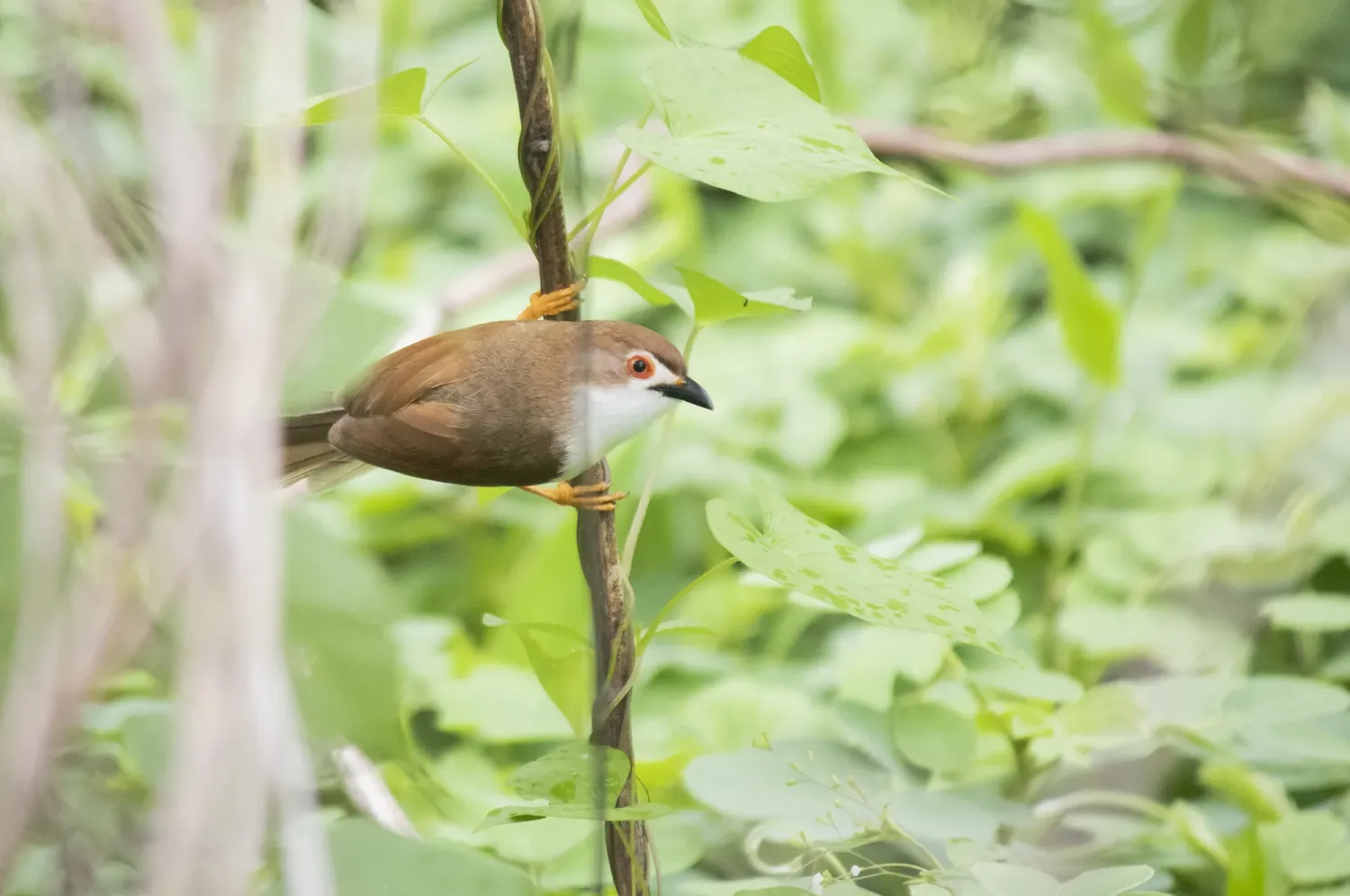
This bird measures approximately 18 cm in length. It is characterized by:
- Plumage: A warm brown upper body with cinnamon-colored wings and a whitish buff underside.
- Head Features: Distinctive white lores and supercilium, contrasted by a sharp black beak.
- Eyes: A prominent orange-yellow eye ring in adults, which gives the species its common name.
- Tail: A long, graduated tail where the central feathers are nearly twice as long as the outer ones.
Habitat
The yellow-eyed babbler thrives in tall grass, thorny scrub, and bushes. Its range spans from Pakistan and India to China and Vietnam. It is commonly found in:
- Dry and wet grassy regions.
- Farmland and shrublands.
- Lower hills up to an elevation of 1200 meters.
Diet
The diet of the yellow-eyed babbler is primarily insectivorous, but it is also known to supplement its nutrition with floral sources. Its main food items include:
- Insects and larvae found within thick vegetation.
- Flower nectar, which it consumes occasionally.
Breeding and Nesting
While specific nesting habits can vary by region, they typically build their nests in thick bushes or tall grass to protect their young from predators. Both parents are often involved in the care and protection of the brood.
Behavior
These birds are generally active and can be seen foraging in small groups. They are known for their skulking behavior in dense grass, though they occasionally emerge to sing from the tops of bushes. The sexes are indistinguishable in the field, making their social interactions even more intriguing to observe.
Conservation Status
The yellow-eyed babbler is currently listed as Least Concern on the IUCN Red List. This status is attributed to its wide distribution range across Asia and its stable population trends.
Interesting Facts
- Despite its name, it is more closely related to parrotbills than to typical Old World babblers.
- The color of their nostrils can help identify subspecies; for example, the nasale subspecies in Sri Lanka has black nostrils, while others have yellow.
- The species exhibits clinal variation, meaning their physical appearance changes gradually across their geographic range.
Tips for Birdwatchers
If you are looking to spot a yellow-eyed babbler, keep these tips in mind:
- Search in open scrublands and reed beds rather than dense forests.
- Listen for their distinct calls, which often reveal their presence before they are seen.
- Use high-quality binoculars to catch a glimpse of the striking orange-yellow eye ring.
Conclusion
The yellow-eyed babbler is a testament to the avian diversity of the Asian grasslands. With its unique taxonomic history and striking facial features, it remains a favorite for birdwatchers and researchers alike. Protecting its grassland and scrub habitats is key to ensuring this species continues to thrive.