
مقدمة
يُعد صقر الحوام طويل الساق (Buteo rufinus) واحداً من أكثر الطيور الجارحة مهابة وقوة في المناظر الطبيعية الشاسعة عبر أوراسيا وشمال إفريقيا. كعضو في فصيلة البازية، يشتهر هذا الطائر الجارح بامتداد جناحيه المثير للإعجاب وطبيعته القابلة للتكيف بشكل كبير، مما يسمح له بالازدهار في بيئات متنوعة تتراوح من السهوب القاحلة إلى سلاسل الجبال الصخرية. غالباً ما يتم الخلط بينه وبين قريبه، الحوام الشائع، إلا أن الحوام طويل الساق أكبر حجماً بشكل ملحوظ ويظهر سمات سلوكية مميزة تميزه. ينجذب علماء الطيور ومراقبو الطيور على حد سواء لهذا النوع بسبب أنماط طيرانه الرشيقة ومكانته كمفترس من الدرجة الأولى داخل نظامه البيئي. عبر التاريخ، لوحظت هذه الطيور وهي تحلق عالياً مستفيدة من التيارات الحرارية، ماسحة التضاريس أدناه ببصر حاد، في انتظار اللحظة المثالية للانقضاض على فريستها. إن فهم دورة حياة، والدور البيئي، والتكيفات البيولوجية الفريدة لـ Buteo rufinus يوفر رؤية عميقة لصحة الموائل المفتوحة التي يتخذها موطناً له. ومع استمرار تغير المناخ والتوسع البشري في تغيير نطاقاتها التقليدية، أصبح دراسة هذا الطائر الجارح الرائع أكثر حيوية من أي وقت مضى لجهود الحفاظ على التنوع البيولوجي العالمي.
المظهر الجسدي
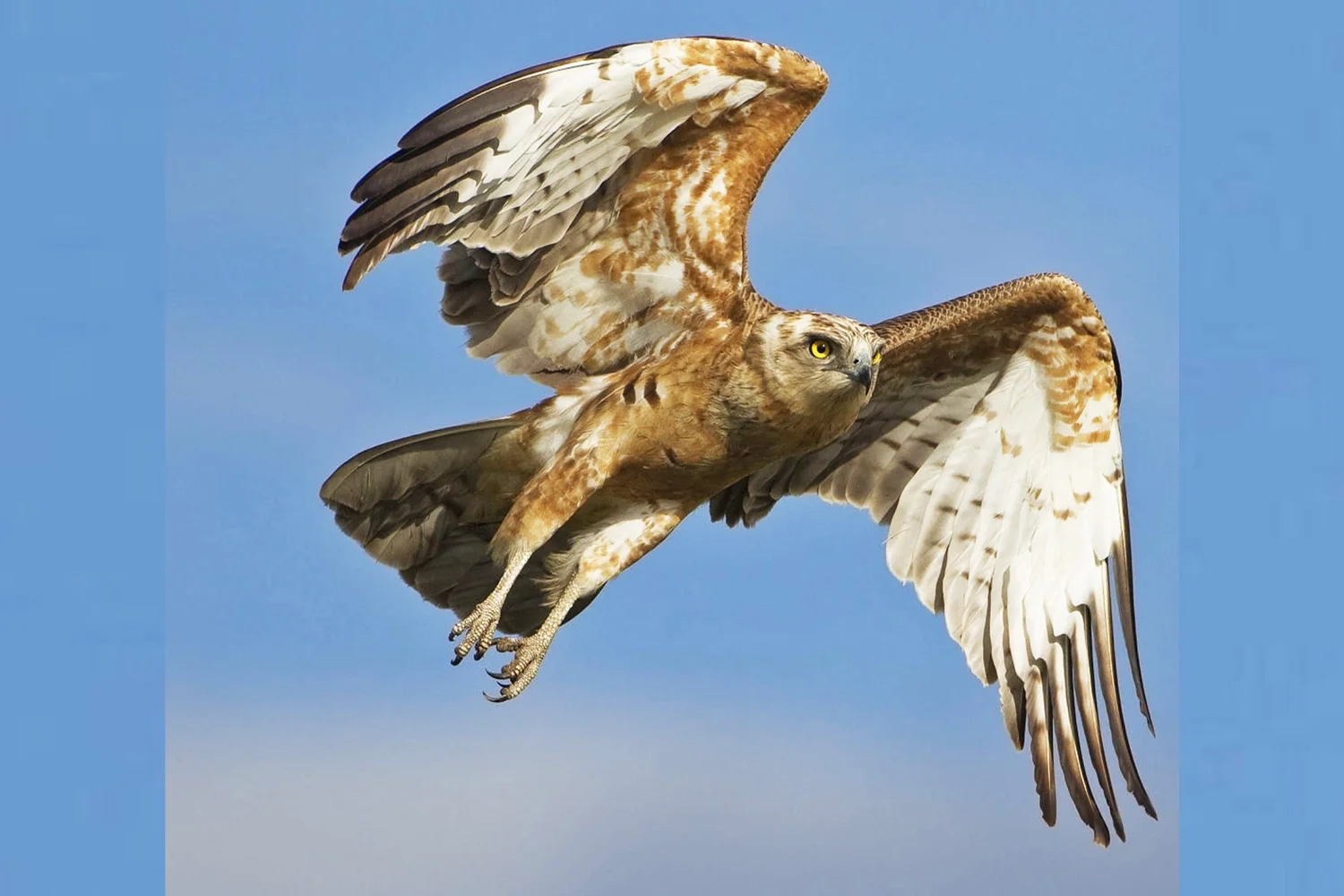
يصل طول صقر الحوام طويل الساق إلى 50-65 سم، وهو طائر جارح قوي وضخم يلفت الانتباه في الميدان. يتميز مظهره بريش لافت للنظر يعرض عادةً لوناً بنيًا ترابياً غنياً كأساس، يتناقض بجمال مع درجات كريمية أو صفراء باهتة على الأجزاء السفلية والأجنحة. إحدى أكثر السمات تحديداً لهذا النوع، كما يوحي اسمه، هي أرجله الطويلة والصفراء بشكل ملحوظ، والتي تكون غير مغطاة بالريش حتى الرسغ، وهو تكيف يساعد على الأرجح في تبديد الحرارة والحركة عبر التضاريس الوعرة والجافة. غالباً ما يكون الرأس باهتاً، وأحياناً يبدو أبيض تقريباً، مما يخلق تبايناً حاداً مع صدره الداكن المخطط. أثناء الطيران، يكشف الحوام طويل الساق عن نمط مميز، مع وجود بقع داكنة عند مفاصل الرسغ للأجنحة وذيل بني محمر يفتقر إلى التخطيط المميز الذي يظهر في أنواع الحوام الأخرى. أجنحته عريضة ومستديرة، مما يسمح بالتحليق بكفاءة، بينما منقاره حاد ومعقوف ومصمم بشكل مثالي لتمزيق جلود وريش فرائسه المتنوعة. إن الجمع بين حجمه المثير للإعجاب وأنماط ألوانه المميزة يجعله موضوعاً رائعاً لتحديد الهوية.
الموطن الطبيعي
يعتبر صقر الحوام طويل الساق ساكناً جوهرياً للمناظر الطبيعية المفتوحة والقاحلة وشبه القاحلة. يتواجد بشكل شائع في مناطق السهوب الواسعة، وشبه الصحاري الصخرية، وسفوح الجبال. على عكس الطيور الجارحة التي تعيش في الغابات، يفضل هذا الطائر الجارح المساحات المفتوحة الواسعة حيث يمكنه الاستفادة من التيارات الهوائية الصاعدة للتحليق لفترات طويلة دون استهلاك الكثير من الطاقة. يمتد توزيعها من جنوب شرق أوروبا عبر آسيا الوسطى وإلى أجزاء من شمال إفريقيا. غالباً ما يتم رصدهم وهم يجثمون على نقاط مراقبة عالية مثل أعمدة الكهرباء، أو النتوءات الصخرية، أو الأشجار المنعزلة، التي يحافظون منها على رؤية واسعة لمناطق صيدهم. يرتبط تفضيل التضاريس الجافة والصخرية بحاجتهم إلى مواقع تعشيش على المنحدرات أو السواتر الترابية شديدة الانحدار، والتي توفر الأمان من الحيوانات المفترسة الأرضية وسهولة الوصول إلى الأراضي العشبية الغنية بالفرائس.
النظام الغذائي
بصفته مفترساً عالي الكفاءة، يمتلك صقر الحوام طويل الساق نظاماً غذائياً متنوعاً وانتهازياً. تتكون مصادره الغذائية الأساسية من الثدييات الصغيرة، وخاصة القوارض مثل السناجب الأرضية، وفئران الحقل، والهامستر، والجربوع. تعتبر هذه الثدييات ضرورية لبقاء الحوام، خاصة خلال موسم التكاثر عندما تكون هناك حاجة إلى طعام عالي البروتين لنمو الصغار. بالإضافة إلى الثدييات الصغيرة، من المعروف أنها تصطاد الزواحف، بما في ذلك السحالي والثعابين، وأحياناً الطيور الصغيرة إلى متوسطة الحجم. في حالات نادرة، إذا كان الغذاء شحيحاً، قد تأكل الحشرات أو حتى الجيف. تتضمن استراتيجية صيدها مزيجاً من تكتيكات "الجلوس والانتظار"، حيث تراقب الأرض من جثم مرتفع، والبحث النشط، حيث تحلق على ارتفاعات منخفضة لمفاجأة الفرائس غير الحذرة. تسمح لهم هذه المرونة الغذائية بالبقاء في البيئات القاسية حيث قد تكافح الحيوانات المفترسة الأخرى للعثور على تغذية كافية.
التكاثر والتعشيش
يبدأ موسم تكاثر صقر الحوام طويل الساق عادة في أوائل الربيع، مع ارتفاع درجات الحرارة وزيادة توافر الفرائس. تشتهر هذه الطيور بعروضها الجوية المذهلة، التي تتضمن الطيران الحلزوني على ارتفاعات عالية، والمطاردة، ومناورات تشابك المخالب. إنها طيور أحادية الزوج وغالباً ما تعود إلى نفس موقع التعشيش عاماً بعد عام. أعشاشها عبارة عن هياكل ضخمة مبنية من العصي والأغصان والنباتات الجافة، وعادة ما تقع على حواف المنحدرات العالية، أو الصخور الوعرة، أو في بعض المناطق، الأشجار العالية أو حتى الهياكل التي صنعها الإنسان مثل أبراج الكهرباء. تضع الأنثى عادةً ما بين بيضتين إلى أربع بيضات، يتم احتضانها لمدة شهر تقريباً. يشارك كلا الوالدين في رعاية الصغار؛ تبقى الأنثى في العش لحماية الصغار، بينما يتولى الذكر المسؤولية الأساسية للصيد وتوفير الغذاء. بمجرد أن يكتسي الصغار بالريش، عادة بعد 40 إلى 50 يوماً، يظلون معتمدين على الوالدين لعدة أسابيع بينما يصقلون مهاراتهم في الطيران والصيد.
السلوك
صقر الحوام طويل الساق هو طائر انفرادي في المقام الأول، على الرغم من أنه قد يُرى في أزواج خلال موسم التكاثر. إنه سيد التحليق الحراري، حيث يقضي ساعات في الدوران عالياً فوق الأرض مع إبقاء أجنحته في شكل حرف 'V' طفيف. هذا السلوك ليس مجرد تقنية لتوفير الطاقة، بل هو أيضاً وسيلة فعالة للغاية لمسح مناطق واسعة بحثاً عن الحركة. على الرغم من أنها صامتة عموماً، إلا أنها يمكن أن تكون صاخبة خلال موسم التكاثر، حيث تصدر صرخة حادة تشبه المواء يتردد صداها عبر المناظر الطبيعية المفتوحة. خلال فصل الشتاء، تهاجر بعض المجموعات في الأجزاء الشمالية من نطاقها جنوباً للعثور على مناخات أكثر دفئاً مع وفرة أكبر في الغذاء، بينما يظل البعض الآخر مستقراً إذا سمحت البيئة بذلك. إنها إقليمية وستدافع بقوة عن مواقع تعشيشها ضد الطيور الجارحة الأخرى أو المتسللين، مما يظهر طبيعتها الشرسة والحامية.
حالة الحفظ - LC غير مهدد
تم إدراج صقر الحوام طويل الساق حالياً كنوع 'غير مهدد' من قبل الاتحاد الدولي لحفظ الطبيعة (IUCN)، ويرجع ذلك إلى حد كبير إلى توزيعه الجغرافي الواسع وأعداد سكانه المستقرة نسبياً. ومع ذلك، هذا لا يعني أنها خالية تماماً من التهديدات. لا يزال فقدان الموائل بسبب الزراعة المكثفة، واستنزاف مجموعات الفرائس من خلال استخدام المبيدات الحشرية، والصيد غير القانوني أو التسمم مخاوف مستمرة. بالإضافة إلى ذلك، فإن ميلها للتعشيش على خطوط الكهرباء يزيد من خطر التعرض للصعق الكهربائي. تركز جهود الحفظ المستمرة على حماية مواقع منحدرات التعشيش الخاصة بها وتعزيز ممارسات إدارة الأراضي المستدامة في مناطق السهوب لضمان بقاء مجموعات الثدييات الصغيرة التي تعتمد عليها وفيرة.
حقائق مثيرة للاهتمام
- صقر الحوام طويل الساق هو أكبر أنواع الحوام في جنس Buteo.
- من المعروف أنها إقليمية للغاية وستدافع عن أعشاشها ضد النسور الأكبر بكثير.
- اسمها العلمي، 'rufinus'، يشير إلى اللون البني المحمر أو 'الصدئي' لذيلها.
- تلعب دوراً حاسماً في السيطرة على أعداد القوارض، حيث تعمل كمكافحة طبيعية للآفات للزراعة المحلية.
- على عكس العديد من الطيور الجارحة الأخرى، فهي مرتاحة بشكل ملحوظ للتعشيش على الهياكل التي صنعها الإنسان مثل أبراج النقل.
- تمتلك بصراً حاداً بشكل استثنائي، قادراً على رصد قارض صغير من على بعد أكثر من كيلومتر.
- يُظهر النوع تبايناً كبيراً في الريش، حيث تبدو بعض الأفراد أغمق بكثير من غيرها.
نصائح لمراقبي الطيور
بالنسبة لمراقبي الطيور الذين يأملون في إلقاء نظرة على صقر الحوام طويل الساق، فإن أفضل استراتيجية هي التوجه إلى المناظر الطبيعية المفتوحة أو الجبلية أو شبه الصحراوية خلال الأشهر الأكثر دفئاً. أحضر منظاراً عالي الجودة أو تلسكوباً، حيث غالباً ما يتم رصد هذه الطيور على مسافات كبيرة أثناء تحليقها عالياً فوق التضاريس. ركز بحثك على الجثم العالية مثل أعمدة الهاتف أو الأشجار المنعزلة، وهي نقاط مراقبة مفضلة. الصباح الباكر هو أفضل وقت للمراقبة، حيث تكون الطيور أكثر نشاطاً أثناء البحث عن الطعام. الصبر هو المفتاح؛ راقب السماء بحثاً عن صورتها الظلية المميزة واستمع لنداء المواء الخاص بها. إذا كنت في منطقة جبلية، افحص وجوه المنحدرات بحثاً عن أعشاش عصي كبيرة. حافظ دائماً على مسافة محترمة لتجنب إزعاجها، خاصة خلال موسم التعشيش الحرج، واستخدم كاميرا ذات عدسة تليفوتوغرافية طويلة لالتقاط جمالها دون التسبب في توتر.
خاتمة
يعد صقر الحوام طويل الساق (Buteo rufinus) طائراً جارحاً رائعاً حقاً يجسد مرونة وجمال النظم البيئية المفتوحة التي يسكنها. من مكانته الجسدية المثيرة للإعجاب وريشه البني والكريمي المميز إلى استراتيجيات الصيد المتطورة وسلوكيات التكاثر المعقدة، يعد هذا الطائر الجارح شهادة على عجائب التطور. كما استكشفنا، فإن دوره كمفترس علوي حيوي للحفاظ على توازن بيئته، مما يساعد في تنظيم أعداد القوارض ودعم الصحة العامة للسهوب والمناظر الطبيعية الصخرية. بينما يتمتع النوع حالياً بحالة حفظ مستقرة، تذكرنا التحديات التي يفرضها التنمية البشرية والتغير البيئي بأننا يجب أن نظل يقظين في جهودنا لحماية موائلها. يلعب مراقبو الطيور والباحثون وعشاق الطبيعة جميعاً دوراً في مراقبة والدعوة للبقاء المستمر لهذا الطائر الجارح المهيب. من خلال فهم تاريخ الحياة والاحتياجات البيئية لصقر الحوام طويل الساق، يمكننا تقدير الروابط المعقدة التي تدعم عالمنا الطبيعي بشكل أفضل. سواء كان يحلق عالياً فوق ممر جبلي أو يجثم بثبات على خط كهرباء، يستمر صقر الحوام طويل الساق في إثارة الرهبة والفضول لدى كل من لديه امتياز مواجهته في البرية، ليكون رمزاً قوياً للجمال البري غير المروض للقارة الأوراسية.