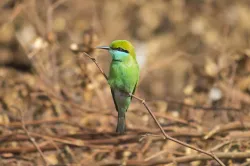
The Bank Myna, scientifically known as Acridotheres ginginianus, is a fascinating member of the starling family, Sturnidae. Widely recognized for its distinct appearance and social nature, this perching bird is primarily found across the Indian subcontinent. Often confused with its more common cousin, the Common Myna, the Bank Myna possesses unique characteristics that set it apart, particularly in its coloration and nesting preferences. These birds are highly adaptable, frequently seen in urban environments, agricultural landscapes, and near water bodies where they forage in small to large groups. As a gregarious species, the Bank Myna plays a significant role in its local ecosystem by controlling insect populations and participating in seed dispersal. Understanding the life cycle, behaviors, and ecological requirements of the Bank Myna provides valuable insights into the biodiversity of Asian avian species. Whether you are an amateur birdwatcher or an ornithology enthusiast, the Bank Myna offers a compelling subject for study due to its complex social structures and resilient nature in human-dominated landscapes.