
Introduction
The Black-tailed Godwit (Limosa limosa) is a large, elegant shorebird known for its impressive migratory journeys and striking appearance. As a member of the sandpiper family, this wader is a favorite among birdwatchers across Europe, Africa, and Asia due to its distinctive silhouette and vocal nature.
Physical Appearance
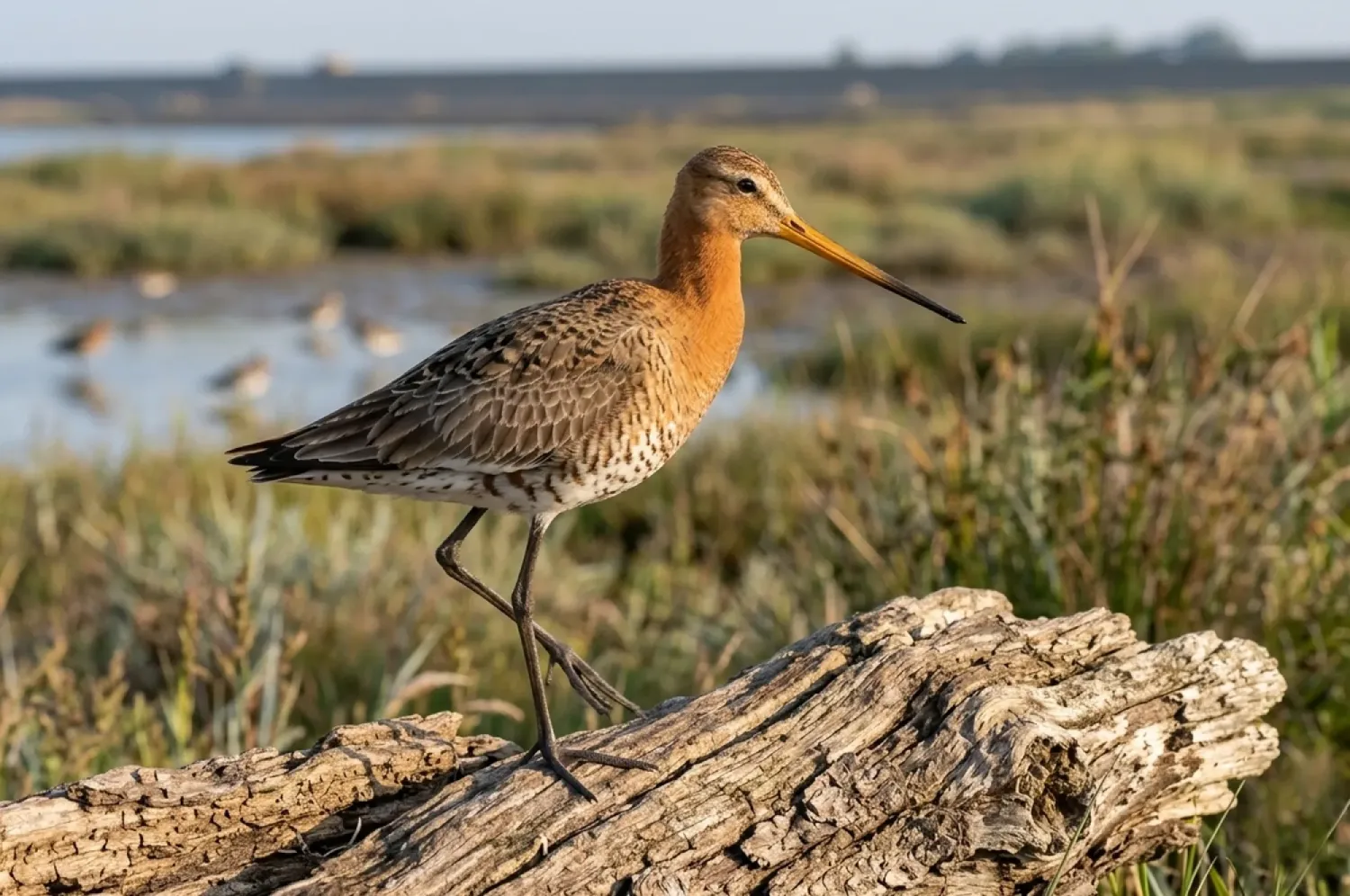
Measuring between 36-44 cm with a wingspan of up to 75 cm, the Black-tailed Godwit features a long, straight bill and long dark legs. During the breeding season, adults display a vibrant orange-brown plumage on their head, neck, and chest. In flight, they reveal a bold white wing bar and a distinctive black band at the end of their white tail, which gives them their name.
Habitat
Black-tailed Godwits typically inhabit wetlands, muddy estuaries, and damp grasslands. During the breeding season, they prefer fens, moors, and raised bogs with short vegetation. During migration and winter, they are frequently found in coastal lagoons, saltmarshes, and even flooded agricultural fields.
Diet
Their diet primarily consists of invertebrates such as earthworms, dragonflies, and beetles. In coastal areas, they use their sensitive bills to probe the mud for mollusks and crustaceans. They are also known to consume plant material, including seeds and rice, in agricultural areas during the winter months.
Breeding and Nesting
These birds often nest in loose colonies to provide better protection against predators. The nest is a shallow scrape on the ground, carefully hidden in tall grass or vegetation. A typical clutch consists of 3-5 olive-green eggs, which are incubated by both parents for approximately 22 to 24 days.
Behavior
Black-tailed Godwits are highly social and often form large, dense flocks outside of the breeding season. They are known for their probing feeding technique, where they walk steadily while rhythmically pushing their bills into the substrate. They are also extremely vocal, especially when defending their nesting territories from intruders.
Conservation Status - NT Near Threatened
The Black-tailed Godwit is currently classified as Near Threatened on the IUCN Red List. The species faces significant challenges due to habitat loss, the drainage of wetlands for agriculture, and the intensification of farming practices which can destroy nesting sites.
Interesting Facts
- They can migrate thousands of miles between their breeding grounds in Northern Europe and wintering sites in Sub-Saharan Africa.
- The long bill of the godwit is highly sensitive at the tip, allowing it to feel for prey deep underground without seeing it.
- The Icelandic subspecies (L. l. islandica) is known to be slightly smaller and darker than the European subspecies.
- They are celebrated as the national bird of the Netherlands, where a significant portion of the European population breeds.
Tips for Birdwatchers
- Look for them in estuaries and mudflats during low tide when they are most active in feeding.
- Use a spotting scope to observe the intricate patterns of their breeding plumage from a distance without disturbing them.
- Listen for their loud, rhythmic 'wicka-wicka-wicka' call during the spring months.
- Visit managed wetland nature reserves, which often provide hides for close-up viewing of these waders.
Conclusion
The Black-tailed Godwit is a remarkable species that serves as a key indicator of the health of our wetland ecosystems. By supporting conservation efforts and protecting their vital habitats, we can ensure that these majestic migratory birds continue to grace our landscapes for generations to come.