
Introduction
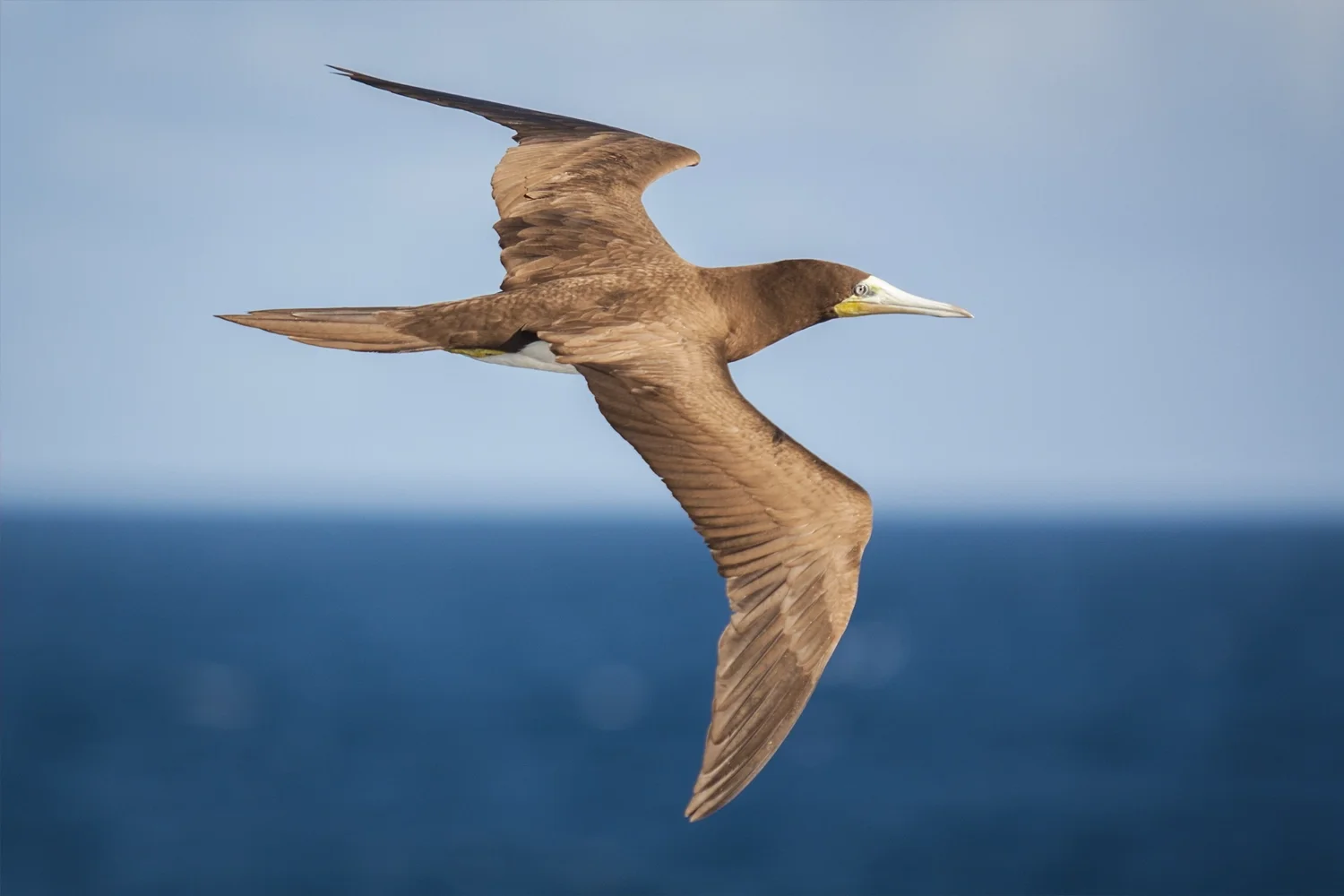
The Brown Booby (Sula leucogaster) is a fascinating species of seabird belonging to the Sulidae family. Known for its agile flight and impressive diving capabilities, this bird is a common sight in tropical and subtropical marine environments across the globe.
Physical Appearance
The Brown Booby is a medium-to-large seabird, typically measuring between 64 and 85 cm in length. Its plumage is characterized by a striking contrast: the head, neck, and upper parts are a rich, chocolate brown, while the underbelly and undersides of the wings are a clean white. They possess strong, pointed bills and webbed feet that aid in their specialized hunting techniques.
Habitat
These seabirds are primarily found in tropical and subtropical oceans. They prefer nesting on offshore islands, rocky outcrops, and coastal cliffs. During the day, they are frequently spotted far out at sea, often perching on floating debris or buoys when not actively hunting.
Diet
The Brown Booby is a piscivore, feeding primarily on small schooling fish and squid. They are highly skilled hunters that employ plunge-diving, dropping from significant heights into the water to snatch prey with precision.
Breeding and Nesting
Brown Boobies are colonial nesters. They typically build simple nests on the ground, often using twigs, leaves, and debris found on the island floor. Both parents share the responsibility of incubating the one or two eggs laid, as well as feeding the chicks once they hatch.
Behavior
These birds are known for their strong, direct flight and their ability to stay at sea for extended periods. Unlike some other seabirds, they are not strictly pelagic and often return to land or structures to roost. They are generally social birds that interact frequently within their breeding colonies.
Conservation Status - LC Least Concern
The Brown Booby is currently listed as Least Concern by the IUCN. While their populations are generally stable, they face ongoing threats from habitat destruction on nesting islands, pollution, and the depletion of local fish stocks due to commercial overfishing.
Interesting Facts
- The name 'Booby' comes from the Spanish word 'bobo,' meaning 'stupid' or 'clown,' due to their lack of fear toward humans.
- They are incredibly fast divers, sometimes plunging into the water at speeds exceeding 60 mph.
- Brown Boobies are known to steal food from other seabirds, a behavior known as kleptoparasitism.
- They have specialized air sacs under their skin that cushion the impact when they hit the water during a dive.
Tips for Birdwatchers
To spot a Brown Booby, head to coastal areas in tropical regions or take a boat tour near known nesting islands. Bring high-quality binoculars to watch them from a distance, as they can be easily disturbed. Look for their distinct brown-and-white color pattern against the blue ocean or perching on navigational buoys.
Conclusion
The Brown Booby is a remarkable example of evolutionary adaptation to marine life. By understanding their behaviors and respecting their habitats, birdwatchers can continue to enjoy the spectacle of these agile hunters for generations to come.