
Introduction
The Andaman Crake (Rallina canningi) is a fascinating and elusive species of bird belonging to the Rallidae family. Endemic to the Andaman Islands in India, this bird is highly sought after by ornithologists and birdwatchers due to its secretive nature and restricted range. Living primarily in the dense undergrowth, it remains one of the most enigmatic residents of the island's tropical forests.
Physical Appearance
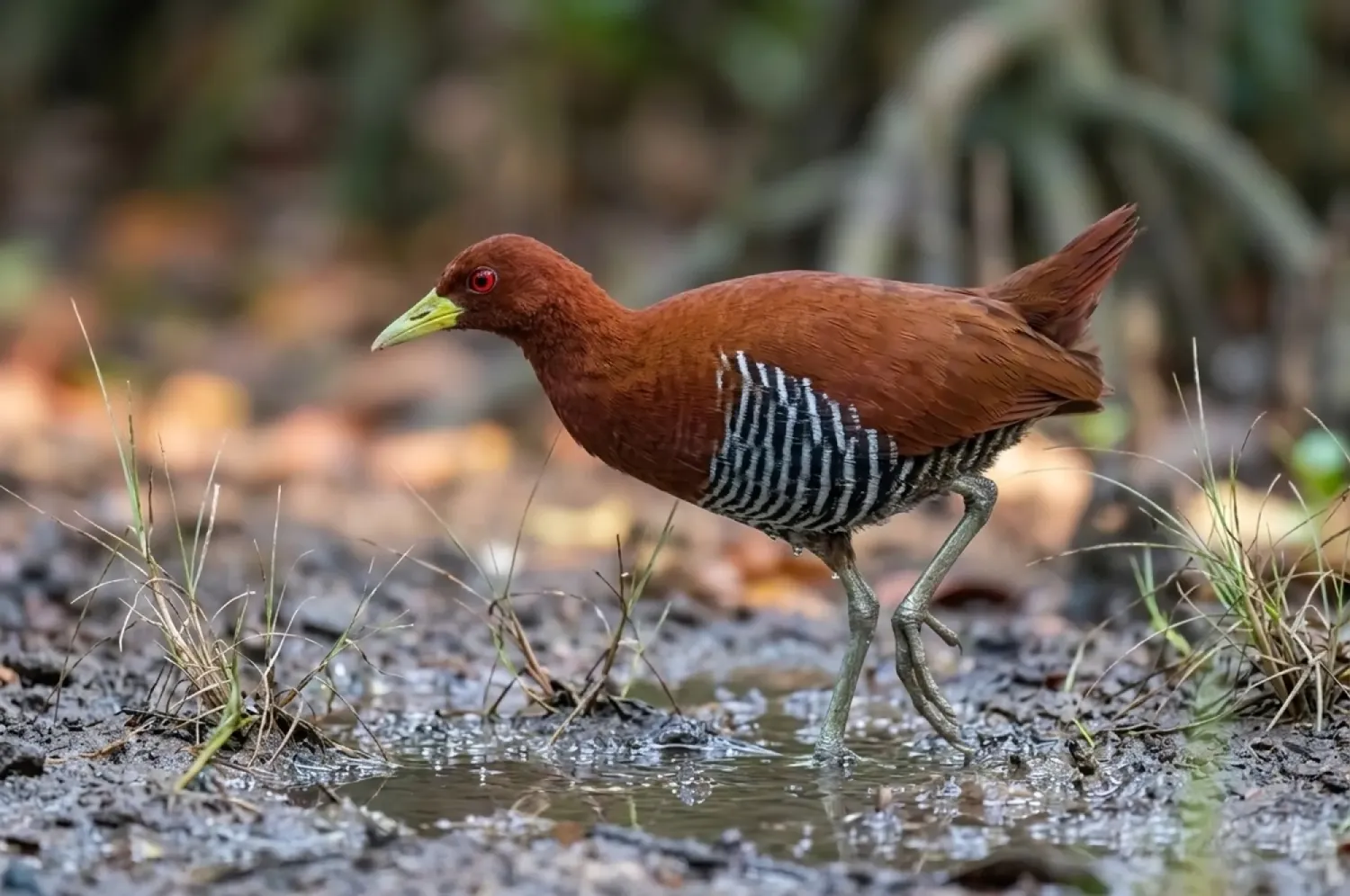
The Andaman Crake is a medium-sized bird, measuring between 25 and 28 cm in length. Its plumage is strikingly elegant, characterized by a dominant chestnut coloration that covers much of its body. This is complemented by subtle grey tones, often found around the head, neck, or underparts, which provide excellent camouflage against the forest floor and leaf litter.
Habitat
This species is primarily an upland ground bird. It prefers dense, humid evergreen forests and is frequently found in areas with thick undergrowth, near small streams, or in marshy patches within the forest interior. It rarely ventures into open spaces, relying on the dense vegetation for protection from predators.
Diet
Like most members of the crake family, the Andaman Crake is an omnivore with a preference for protein-rich food found on the forest floor. Its diet typically includes:
- Small invertebrates such as earthworms and snails
- Various insects and their larvae
- Seeds and fallen fruits found in the leaf litter
Breeding and Nesting
The breeding habits of the Andaman Crake remain relatively understudied due to its secretive behavior. However, it is believed that they build simple, cup-shaped nests hidden deep within dense vegetation or at the base of trees. They likely breed during the monsoon season when food sources are most abundant.
Behavior
The Andaman Crake is primarily crepuscular, being most active during the dawn and dusk hours. It is a shy and elusive bird that is more often heard than seen. When disturbed, it prefers to run into thick cover rather than taking flight, showcasing its adaptation as a ground-dwelling species.
Conservation Status - LC Least Concern
The Andaman Crake is currently classified as Near Threatened. Its population is primarily threatened by habitat loss due to deforestation, human encroachment, and the introduction of invasive species on the Andaman Islands. Protecting its remaining forest habitat is critical for the long-term survival of this species.
Interesting Facts
- The Andaman Crake is endemic to the Andaman Islands, meaning it is found nowhere else on Earth.
- Despite its name, it is not a strong flier and spends the vast majority of its life on the ground.
- It is considered a 'specialty' bird for international birdwatchers visiting the Andaman archipelago.
- The species was named after Lord Canning, the former Governor-General of India.
Tips for Birdwatchers
To spot an Andaman Crake, patience is key. Focus your efforts in the early morning or late evening. Move slowly and silently through the forest, keeping your eyes fixed on the ground level. Utilizing a high-quality pair of binoculars and listening for their distinct calls will significantly increase your chances of a successful sighting.
Conclusion
The Andaman Crake is a true jewel of the Andaman Islands. While its shy nature makes it a challenge to observe, the effort required to find this chestnut-colored upland bird is highly rewarding. Through continued conservation efforts and habitat protection, we can ensure that this unique species continues to thrive in its natural forest home.
