
Introduction
The Chukar (Alectoris chukar) is a robust and distinctive member of the partridge family. As a premier upland ground bird, it is highly regarded for its hardiness and striking appearance. Originally native to Eurasia, it has been successfully introduced to various parts of North America and other regions, thriving in challenging, arid landscapes.
Physical Appearance
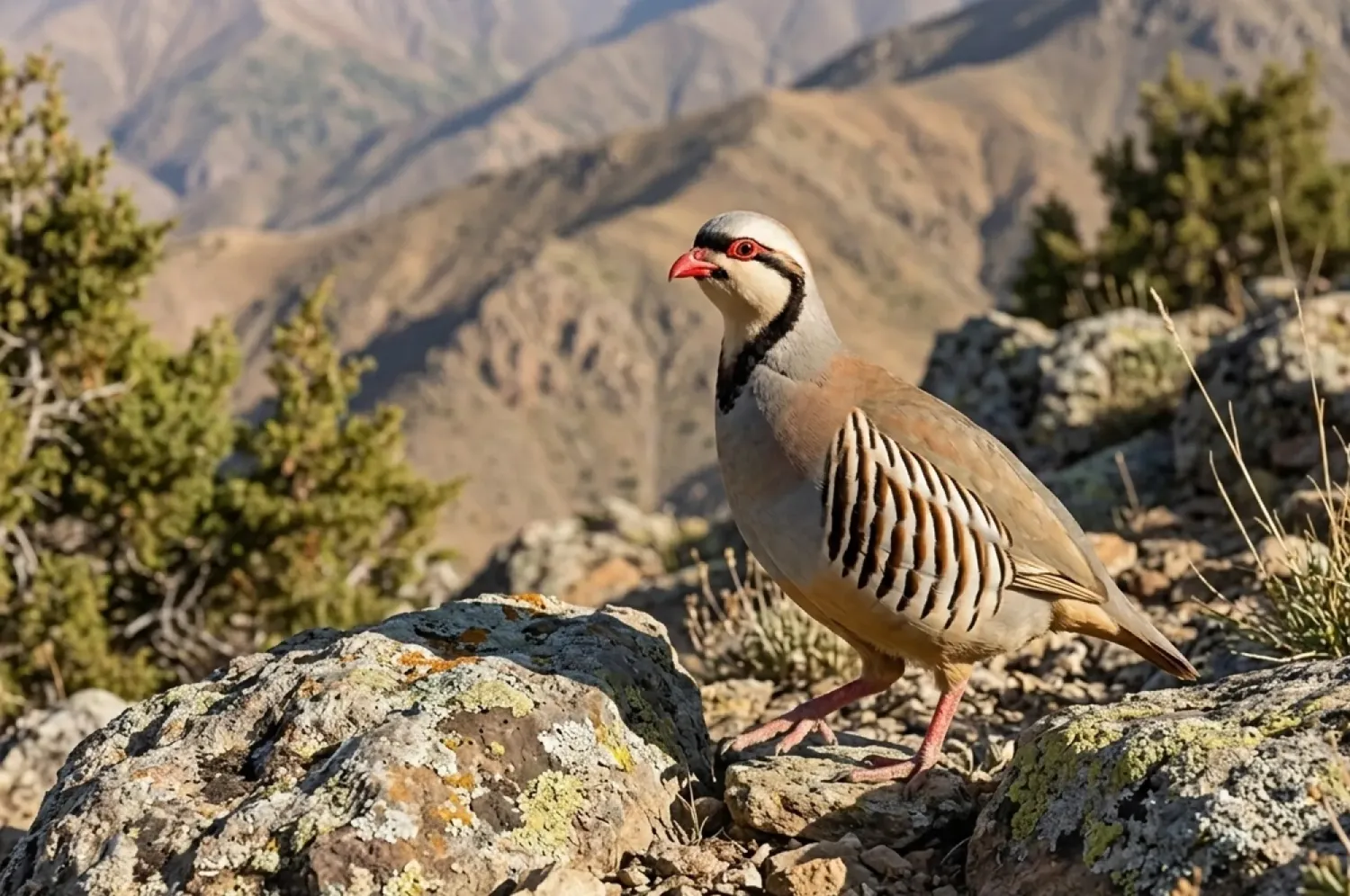
The Chukar is a medium-sized bird, typically measuring between 32-35 cm in length. Its plumage is characterized by a primary color of grey on the back and breast, complemented by secondary brown tones on the wings and upper parts. One of its most striking features is the bold black band that runs across the forehead, through the eyes, and down the neck, encircling a light-colored throat. Additionally, it displays bold vertical black-and-white barring on its flanks.
Habitat
Chukars are masters of rugged environments. Their preferred habitats include:
- Rocky hillsides and steep mountain slopes.
- Arid canyons and ravines.
- Open grasslands with minimal tree cover.
- High-altitude desert scrublands.
Diet
As foragers, Chukars have a varied diet that changes with the seasons. They primarily consume:
- Seeds from a variety of grasses and weeds.
- Green leaves and succulent shoots.
- Berries and small fruits.
- Insects, such as grasshoppers and beetles, particularly during the breeding season.
Breeding and Nesting
Chukars are ground-nesting birds. The female typically creates a shallow scrape in the ground, often hidden under a shrub or tucked against a rock for protection. The nest is lined with dry grass and feathers. They are known for laying large clutches, often ranging from 10 to 20 eggs, which are incubated for about 22 to 25 days.
Behavior
These birds are highly social and are usually found in groups known as coveys. When threatened, a Chukar’s first instinct is to run uphill with surprising speed rather than take flight. If forced to fly, they take off with an explosive burst of wings. They are also very vocal, known for the repetitive 'chu-kar, chu-kar' call from which their name is derived.
Conservation Status - LC Least Concern
The Chukar is currently classified as Least Concern by the IUCN. They have stable populations and are quite resilient, often expanding their range in areas where they have been introduced for hunting and conservation purposes.
Interesting Facts
- The Chukar is the national bird of Pakistan, where it is a symbol of intense love in local folklore.
- They can survive in extremely dry climates by obtaining moisture from the vegetation they eat.
- Chukars were first introduced to North America in the late 1800s to provide a challenging game bird for hunters.
- They are capable of living at elevations as high as 4,000 meters above sea level.
Tips for Birdwatchers
If you are looking to spot a Chukar in the wild, keep these tips in mind:
- Listen first: Their loud, cackling calls are often easier to hear than the birds are to see.
- Scan the rocks: Use binoculars to scan rocky outcrops and ridgelines early in the morning.
- Check water sources: In very dry areas, they may congregate near springs or small pools during the heat of the day.
- Look up: Remember that they prefer running uphill, so look higher than you might expect on steep slopes.
Conclusion
The Chukar (Alectoris chukar) is a fascinating upland ground bird that embodies the spirit of the wilderness. With its elegant grey and brown plumage and its ability to thrive in the harshest terrains, it remains a highlight for birdwatchers and nature enthusiasts worldwide.