
Introduction
The Common Woodpigeon (Columba palumbus) is the largest and most widespread pigeon species found across Europe and parts of Asia. As a member of the Columbidae family, this robust bird is a familiar sight in both rural landscapes and urban gardens, known for its distinctive cooing call and rapid, clattering flight.
Physical Appearance
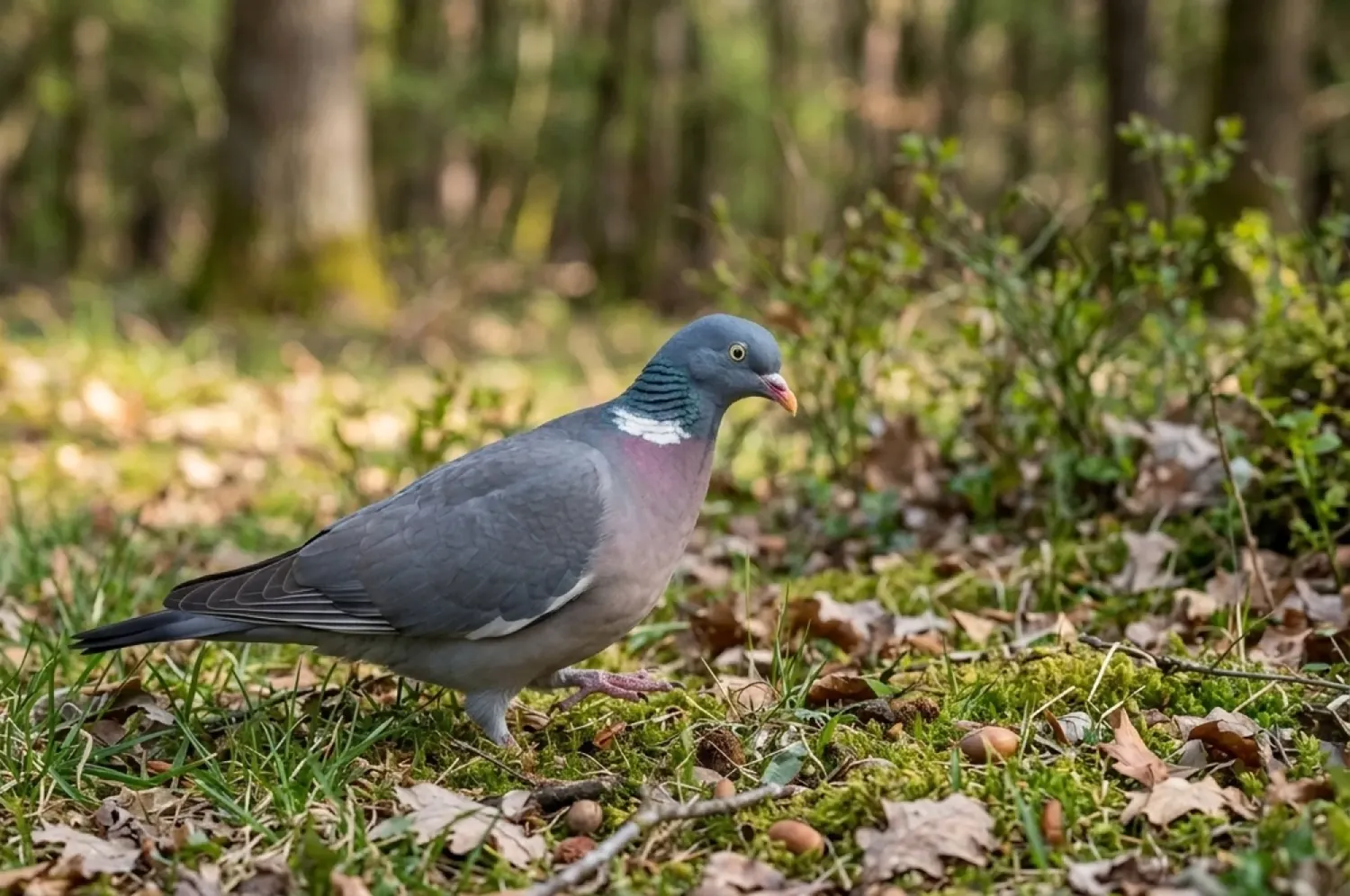
The Common Woodpigeon is a substantial bird, measuring between 38-44 cm in length. Its plumage is primarily grey, providing excellent camouflage against tree branches. Key identifying features include a conspicuous white patch on the neck and white wing bars that become highly visible when the bird is in flight. Its chest features a subtle pinkish tint, and it possesses a small, yellow-tipped beak.
Habitat
These birds are highly adaptable and thrive in a variety of environments. They are commonly found in:
- Dense woodlands and forests
- Agricultural farmland and hedgerows
- Public parks and suburban gardens
- Orchards and city centers with mature trees
Diet
The Common Woodpigeon is primarily herbivorous. Its diet consists mainly of:
- Seeds and cereal crops
- Leafy greens and vegetables like kale or sprouts
- Berries and fruits
- Buds and young shoots
Breeding and Nesting
Breeding typically occurs between April and September. They construct flimsy, platform-style nests made of twigs, usually placed high in the fork of a tree. They typically lay a clutch of two white eggs, which are incubated by both parents.
Behavior
Woodpigeons are social birds often seen in large flocks outside of the breeding season. They are known for their perching habits and their characteristic 'clapping' wing display during courtship flights. They are wary birds, often taking flight at the slightest sign of danger.
Conservation Status - LC Least Concern
The Common Woodpigeon is classified as Least Concern by the IUCN. Their population is stable and widespread due to their ability to exploit human-modified landscapes and agricultural resources.
Interesting Facts
- The Common Woodpigeon is the largest species of pigeon found in Europe.
- They can consume large amounts of agricultural crops, sometimes making them unpopular with farmers.
- Their wings make a loud, clapping sound when they take off, which serves as an alarm signal to other birds.
- They are capable of breeding multiple times throughout a single year if food supplies are abundant.
Tips for Birdwatchers
To spot a Woodpigeon, look for their white wing patches while they are in flight. Using binoculars in woodland fringes or quiet park corners during the early morning is the best way to observe their natural behavior without startling them.
Conclusion
The Common Woodpigeon is a fascinating and resilient species that has successfully adapted to human environments. Whether you are an experienced ornithologist or a casual backyard birdwatcher, the presence of these birds adds a classic charm to the avian landscape.