
Introduction
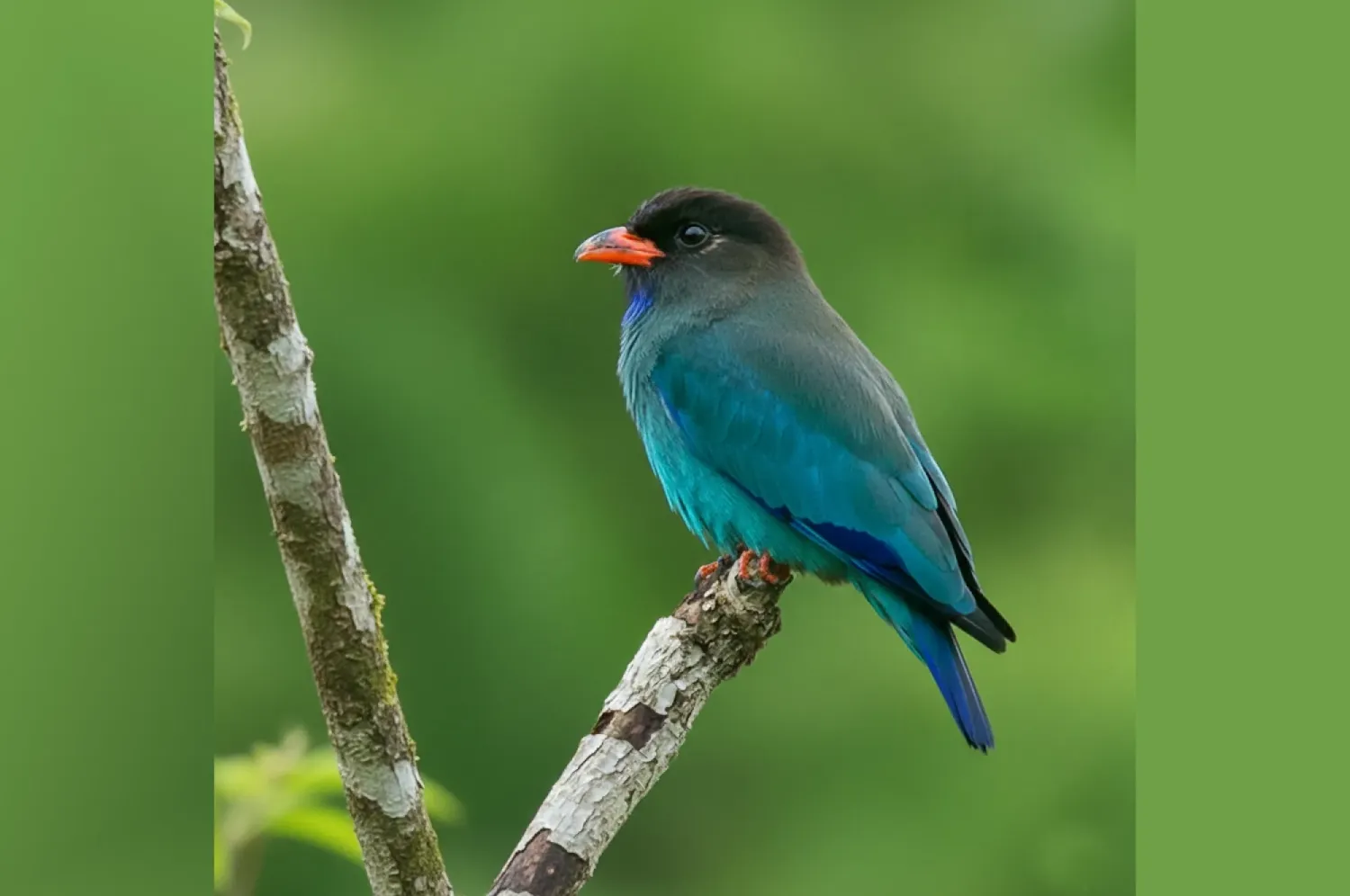
The Oriental Dollarbird (Eurystomus orientalis) is a captivating member of the roller family, renowned for its distinctive appearance and agile hunting prowess. Named for the unique blue, coin-shaped spots on its wings, this bird is a widespread species found across a vast range from Australia to Japan and India. Its striking green and blue plumage makes it a memorable sight for birdwatchers and nature enthusiasts alike.
Physical Appearance
The Dollarbird is a medium-sized bird, typically measuring between 28-28 cm in length. Its most striking features are its vibrant coloration, predominantly a deep green body with flashes of brilliant blue on its wings, particularly noticeable during flight. These blue patches are the origin of its 'dollar' name, resembling coins. It possesses a robust build characteristic of aerial insectivores.
Habitat
The Oriental Dollarbird prefers open woodlands, forest edges, and cultivated areas with scattered tall trees. It is most commonly observed singly, maintaining a distinctive upright silhouette on a bare branch high in a tree. From these prominent perches, it maintains a vigilant watch, perfectly positioned to survey its surroundings for prey. This habit of returning to the same perch after a short flight is a key characteristic of its territorial and hunting behavior.
Diet
Dollarbirds are almost exclusively insectivorous, with their diet consisting predominantly of flying insects. They are expert aerial hunters, employing a 'sallying' technique where they launch themselves from a conspicuous perch to capture insects mid-air. After a successful pursuit, they skillfully return to their original vantage point. While aerial hunting is their primary method, there have been rare observations of Dollarbirds feeding on grasshoppers on the ground, though this is considered uncommon.
Breeding and Nesting
Information regarding the breeding and nesting habits of the Oriental Dollarbird was not provided in the source material.
Behavior
The behavior of the Oriental Dollarbird is largely centered around its hunting strategy. It exhibits a characteristic upright silhouette while perched, making it easily identifiable. From this high perch, it actively hawks for insects, performing swift and agile aerial maneuvers to capture its prey. A notable behavioral trait is its tendency to return to the same perch after a brief hunting sortie, demonstrating efficiency and territorial familiarity. They are generally seen singly, reinforcing their solitary hunting approach.
Conservation Status - LC Least Concern
Information regarding the conservation status of the Oriental Dollarbird was not provided in the source material.
Interesting Facts
The Oriental Dollarbird belongs to the roller family, known for their colorful plumage and acrobatic flight displays.
Its common name, "Dollarbird," comes from the distinctive blue, coin-shaped spots visible on its wings during flight.
This species has an incredibly wide distribution, found across a vast geographical range from Australia to Japan and India.
It was originally described in the genus Coracias before being reclassified.
Historically, the broad-billed roller and the azure dollarbird were sometimes considered subspecies of the Oriental Dollarbird.
It has several alternate names, including Asian dollarbird, dark roller, dollar roller, eastern broad-billed roller, and oriental broad-billed roller.
Tips for Birdwatchers
To spot the elusive Oriental Dollarbird, focus your search in open woodlands or areas with tall, isolated trees. Look for a bird with a distinct upright posture perched high on a bare branch. Their vibrant green and blue plumage, especially the blue wing patches during flight, are key identification features. Observe their hunting technique: they will sally out to catch insects in mid-air and often return to the same perch. Listen for their distinctive calls, which can help locate them before you see them.
Conclusion
The Oriental Dollarbird stands out as a truly unique and beautiful avian species. With its striking green and blue plumage, distinctive blue wing 'dollars,' and masterful aerial hunting skills, it is a fascinating bird to observe. Its widespread presence across Asia and Australia makes it an accessible subject for birdwatchers, offering a glimpse into the specialized world of rollers. Understanding its habits and habitat enhances the appreciation for this remarkable aerial predator.