
Introduction
The Eurasian Sparrowhawk (Accipiter nisus) is a small, agile bird of prey that has successfully adapted to a variety of environments across Europe and Asia. Known for its incredible speed and maneuverability, this raptor is a master of surprise, often catching its prey in dense vegetation or even residential gardens. As a member of the Accipiter genus, it is designed for short, explosive bursts of speed rather than long-distance soaring. While it is often feared by smaller garden birds, the sparrowhawk plays a critical role in the ecosystem by controlling populations of common songbirds. Its presence is often a sign of a healthy, diverse environment. Despite their secretive nature, these birds have become a familiar sight in suburban areas, where they capitalize on the abundance of prey found at bird feeders. Understanding the life and habits of the Eurasian Sparrowhawk provides a fascinating glimpse into the predatory dynamics of the avian world, highlighting the evolutionary adaptations that allow such a specialized hunter to thrive in close proximity to humans.
Physical Appearance
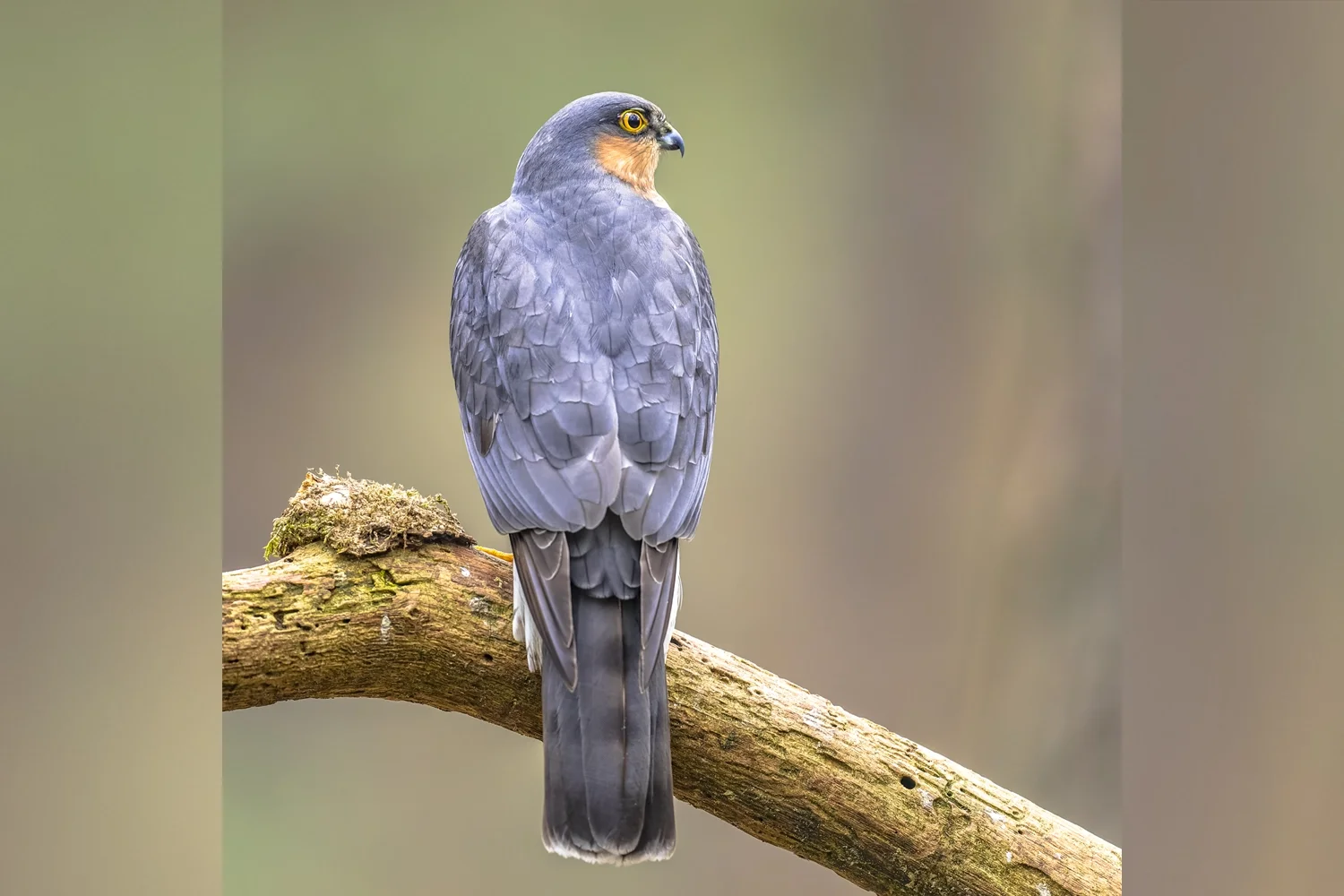
The Eurasian Sparrowhawk exhibits a distinct sexual dimorphism, meaning males and females differ significantly in size and coloration. Typically, the Eurasian Sparrowhawk measures between 28 and 41 cm in length. Males are smaller, featuring slate-grey upperparts and white underparts with fine orange-brown barring. Their eyes are a striking orange-yellow, and they possess a greyish crown. In contrast, females are significantly larger and heavier, often appearing about 25% larger than their male counterparts. They display a more subdued, brownish-grey plumage on their backs, while their underparts are marked with darker, more pronounced greyish-brown bars. Both sexes share a long, rounded tail and short, broad wings, which are essential adaptations for navigating through dense woodland undergrowth. The bird's bill is sharp and hooked, perfectly suited for tearing into prey, while their long, yellow legs and needle-sharp talons are specialized tools for securing and killing their targets. The contrast between their grey and white feathers provides excellent camouflage when perched in trees, making them difficult to spot until they make their move.
Habitat
The Eurasian Sparrowhawk is highly versatile in its habitat selection, though it shows a strong preference for woodland areas. They thrive in both coniferous and deciduous forests, where the complex structure of the canopy and understory provides the perfect cover for their ambush-style hunting. However, they are far from limited to remote wilderness. In recent decades, these raptors have increasingly colonized suburban and urban environments. Parks, cemeteries, and residential gardens with mature trees have become favored hunting grounds, primarily because these areas often attract large numbers of small birds. As long as there is sufficient tree cover for nesting and a steady supply of prey, the sparrowhawk can adapt to almost any environment, demonstrating remarkable flexibility for a specialized predator.
Diet
As an opportunistic predator, the Eurasian Sparrowhawk feeds almost exclusively on small birds. Their diet consists of common species such as sparrows, tits, finches, and thrushes. Because they are designed for agility, they rely on the element of surprise rather than high-speed chases. They will often sit motionless on a low branch, waiting for an unsuspecting bird to land nearby, before launching a sudden, rapid pursuit through the foliage. Males, being smaller, tend to hunt smaller birds, while females are capable of taking down larger prey like pigeons or jays. This size difference allows a pair to occupy the same territory without competing directly for the same resources, which is an efficient evolutionary strategy for maximizing survival.
Breeding and Nesting
Breeding season for the Eurasian Sparrowhawk typically begins in the spring. These birds are highly territorial, and pairs often perform elaborate aerial displays to reinforce their bond and defend their chosen nesting site. The nest itself is a platform constructed from twigs and sticks, usually hidden deep within the canopy of a tree, often close to the trunk for added protection. The female typically lays between 4 and 6 eggs, which she incubates for approximately 33 days. During this period, the male takes on the responsibility of providing food for the female. Once the chicks hatch, they are highly dependent on their parents for several weeks. The male continues to deliver food to the nest, while the female tears the prey into small, manageable pieces for the growing brood. Fledging occurs at about 25 to 30 days, though the young birds remain dependent on their parents for a short while longer as they learn the complex skills required to hunt for themselves.
Behavior
The behavior of the Eurasian Sparrowhawk is defined by its elusive and stealthy nature. They are notoriously difficult to track, as they prefer to stay within the shadows of tree lines and hedges. When they are not hunting, they spend much of their time perched quietly, scanning the surroundings for movement. They are not known for soaring high like buzzards; instead, they prefer short, flapping flights that allow them to dive into dense cover. During the breeding season, they become more vocal and active, often engaging in "skydancing" maneuvers. They are solitary creatures by nature, only interacting with others of their species during the courtship phase and while raising their young.
Conservation Status - LC Least Concern
The Eurasian Sparrowhawk is currently listed as a species of Least Concern by the IUCN. Historically, their populations suffered significant declines due to the widespread use of organochlorine pesticides, which caused eggshell thinning and reproductive failure. However, following the ban of these harmful chemicals in the mid-20th century, the species has made a remarkable recovery across Europe. Today, they are widespread and common, benefiting from the abundance of prey in human-modified landscapes. They remain protected under various national and international wildlife laws, ensuring that their populations stay stable in the face of ongoing environmental changes.
Interesting Facts
- The female Eurasian Sparrowhawk is significantly larger than the male, a trait known as reversed sexual dimorphism.
- They are capable of flying through dense thickets at high speeds without colliding with branches.
- Sparrowhawks are often responsible for the "alarm calls" heard from garden birds when a predator is nearby.
- They have a very high metabolism and need to hunt multiple times throughout the day to survive.
- The sparrowhawk was once persecuted by gamekeepers who considered them a threat to game bird populations.
- Despite their fearsome reputation, they are shy birds that rarely approach humans.
Tips for Birdwatchers
If you want to observe a Eurasian Sparrowhawk, patience is your greatest asset. Instead of actively searching for them, try to observe the behavior of smaller birds in your garden. If you notice a sudden, panicked silence or an intense flock of birds scattering in all directions, a sparrowhawk is likely nearby. Look for a grey, fast-moving silhouette darting between tree branches or sitting motionless on a low-hanging limb. Binoculars are essential for spotting them in the shadows of the canopy. Early morning and late afternoon are the best times to see them, as these are their peak hunting hours. Remember to remain very still and quiet, as these birds have excellent vision and will quickly retreat if they detect movement or human presence.
Conclusion
In conclusion, the Eurasian Sparrowhawk (Accipiter nisus) is a masterful predator that has successfully carved out a niche in both wild and urban environments. Its evolution into a specialized bird-hunter has made it one of the most efficient raptors in the Northern Hemisphere. From its distinct physical appearance, where the male and female differ in size and color, to its stealthy hunting tactics and complex nesting habits, the sparrowhawk is a captivating subject for any ornithologist or bird enthusiast. While they were once misunderstood and persecuted, they are now widely appreciated as a vital component of a healthy ecosystem, helping to maintain the balance of bird populations. By learning to recognize their behaviors and respecting their role in the natural world, we can better appreciate the presence of these magnificent hunters. Whether you are a casual garden observer or a dedicated birdwatcher, encountering a Eurasian Sparrowhawk is always a thrilling experience. Their resilience in the face of past environmental threats serves as a success story for conservation, reminding us of the importance of protecting the habitats that support such specialized and agile species. As they continue to thrive in our neighborhoods, the sparrowhawk remains a symbol of the wild, untamed nature that persists even in the heart of our modern world.