
Introduction
The Brahminy Starling (Sturnia pagodarum), also commonly known as the Brahminy Myna, is a distinctive and elegant member of the starling family. Widely recognized for its unique crest and buff-colored plumage, this bird is a familiar sight across the Indian subcontinent, often found bridging the gap between wild landscapes and human settlements.
Physical Appearance
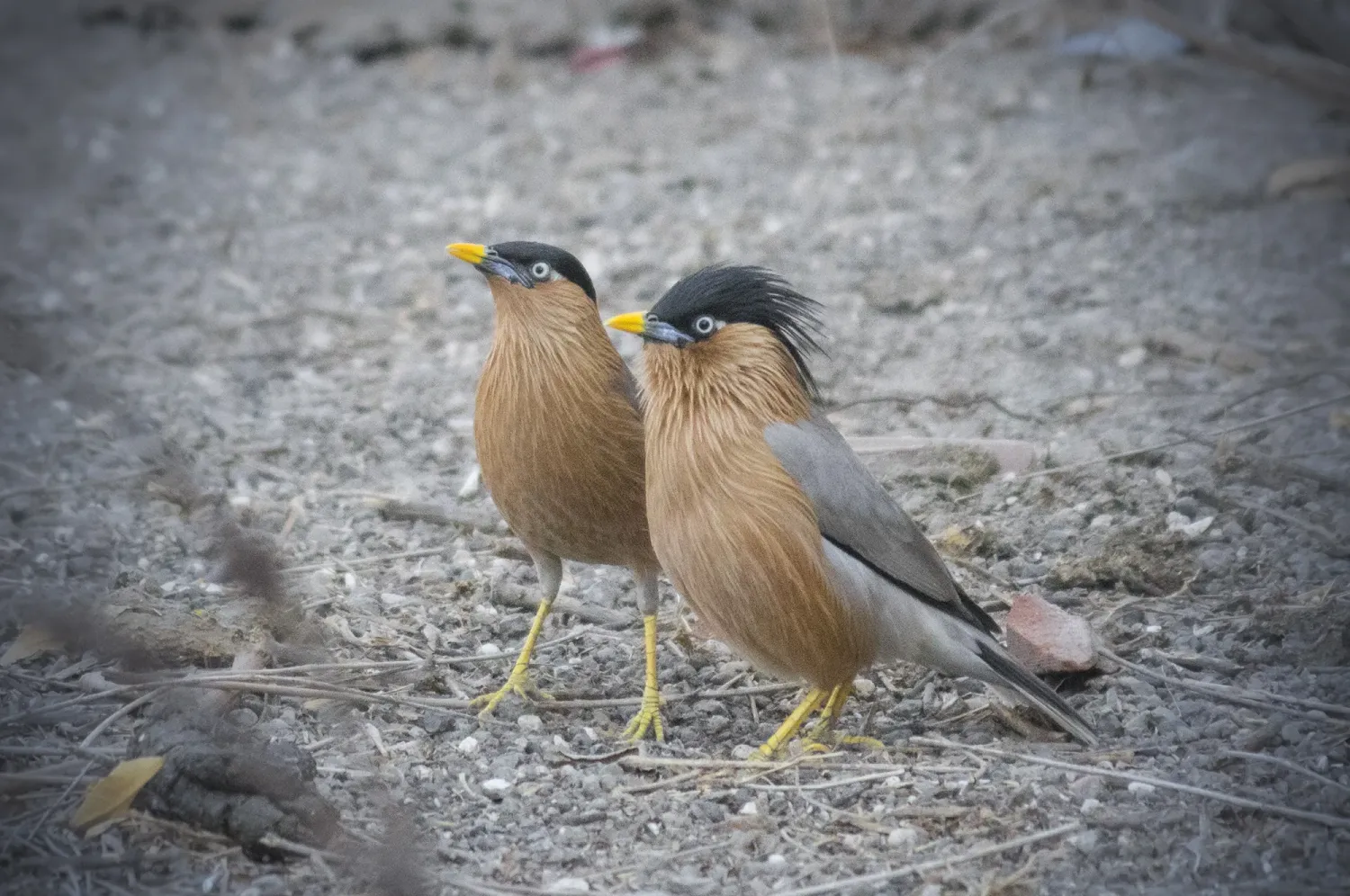
Measuring approximately 21 cm, the Brahminy Starling is easily identified by its striking features:
- Plumage: The body is a soft, pale buff creamy color, contrasted by a black cap with a loose, wispy crest.
- Bill: The bill is bright yellow with a characteristic bluish base.
- Eyes: It features a pale iris and a noticeable bluish patch of skin surrounding the eye.
- Wings and Tail: The black primary wing feathers lack white patches, though the outer tail feathers are tipped with white.
- Sexual Dimorphism: Adult males generally sport a more prominent crest and longer neck hackles than females.
- Juveniles: Younger birds appear duller in color with a browner cap.
Habitat
The Brahminy Starling is highly adaptable and prefers dry open country and lowlands. Its typical habitats include:
- Open deciduous forests and scrublands.
- Cultivated lands and agricultural fields.
- Areas near human habitations and old buildings.
- Waterlogged areas and marshes where foraging is abundant.
Diet
This species is an omnivore with a broad and opportunistic diet. Its primary food sources include:
- Insects: Grasshoppers, crickets, cockroaches, termites, bugs, butterflies, moths, and caterpillars.
- Invertebrates: Spiders, snails, and earthworms.
- Plant Matter: A variety of fruits and berries, as well as flower parts and nectar.
Breeding and Nesting
Brahminy Starlings typically nest in tree cavities or holes in walls and buildings. They are known to be opportunistic nesters, often utilizing man-made structures like temple pagodas, which has influenced their scientific nomenclature.
Behavior
These birds are social and are often seen in pairs or small groups. They are frequently observed foraging on the ground or perching prominently on trees and buildings. Their behavior is characterized by their comfort around human activity, often living in close proximity to villages and urban centers.
Conservation Status - LC Least Concern
The Brahminy Starling is currently categorized as Least Concern. It maintains a large range and a stable population, thanks in part to its ability to thrive in human-modified environments.
Interesting Facts
- The species name pagodarum refers to the bird's habit of frequenting temple pagodas in southern India.
- Unlike many other starlings, the Brahminy Starling does not have white patches on its wings, which is a key identification mark during flight.
- The male's crest is not just for show; it is more developed than the female's and is used in social displays.
Tips for Birdwatchers
To find a Brahminy Starling, visit open scrublands or old architectural sites in South Asia. They are particularly active near water sources or damp fields during the early morning. Look for the distinct black crest and listen for their complex, liquid calls.
Conclusion
The Brahminy Starling is a fascinating example of avian adaptability. With its sophisticated buff plumage and bold black crest, it remains one of the most charismatic birds for enthusiasts to observe in both wild and urban settings.