Introduction
The Eurasian Spoonbill (Platalea leucorodia), also known as the common spoonbill, is a majestic wading bird belonging to the ibis and spoonbill family, Threskiornithidae. Known for its distinctive bill and elegant stature, it is a key species in wetland ecosystems across Eurasia and Africa.
Physical Appearance
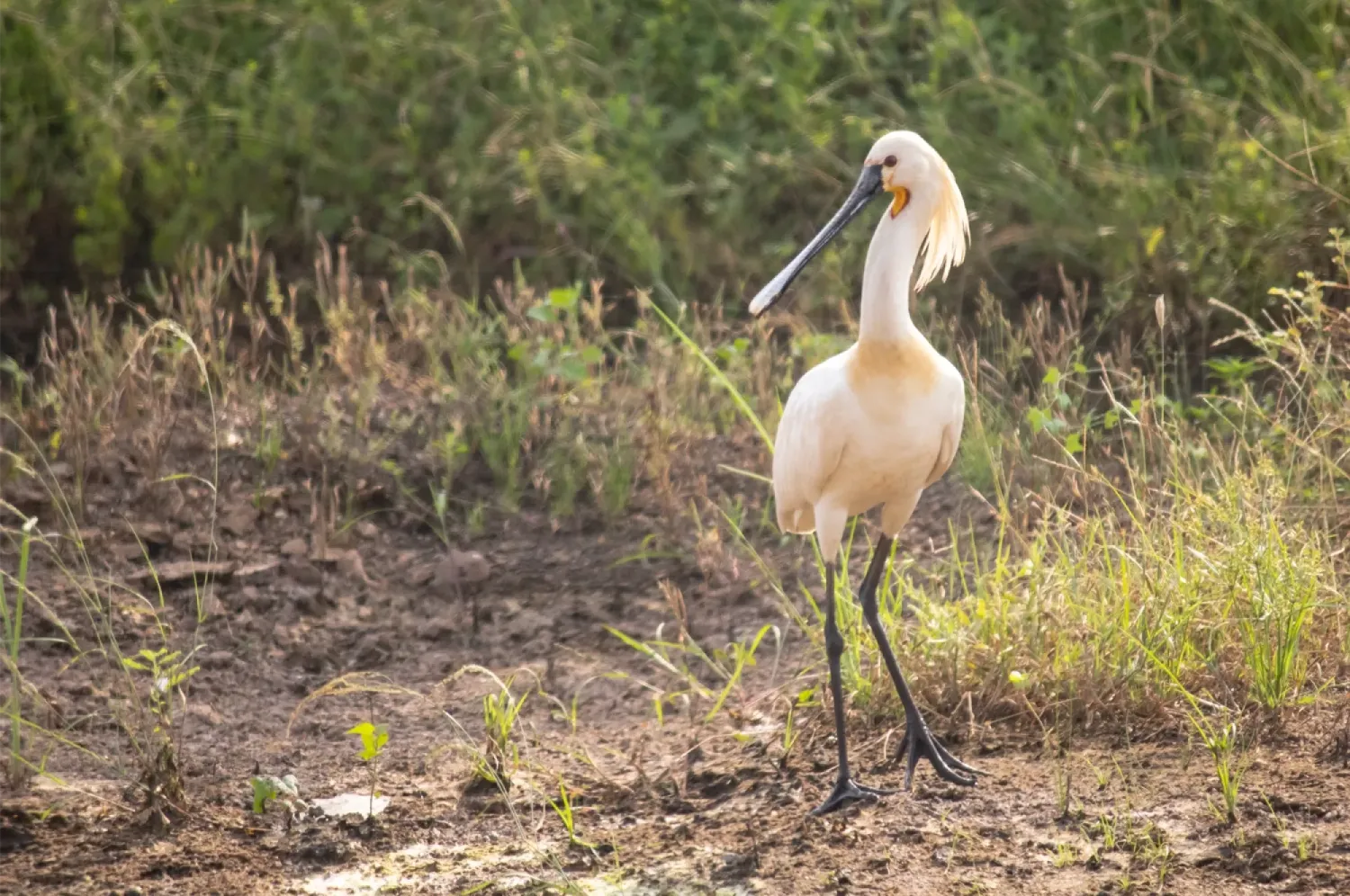
The Eurasian Spoonbill is a large bird, typically measuring between 80-90 cm in length. Its plumage is primarily white, though adults often develop a yellow patch at the base of the neck during the breeding season. Its most striking feature is the long, black, spatula-shaped bill, which often features a yellow tip.
Habitat
These birds show a strong preference for extensive shallow wetlands with muddy, clay, or fine sandy beds. Their diverse habitats include:
- Freshwater, brackish, or saline marshes and rivers.
- Flooded areas and mangrove swamps.
- Reedbeds and islands for nesting.
- Sheltered marine habitats like deltas, estuaries, and coastal lagoons during winter.
Diet
The Eurasian Spoonbill is a carnivore that feeds on a variety of aquatic life. Its diet includes:
- Aquatic insects, mollusks, and crustaceans.
- Worms, leeches, and newts.
- Frogs, tadpoles, and small fish up to 15 cm long.
- Occasional fragments of algae or aquatic plants, often ingested accidentally.
Breeding and Nesting
Breeding usually occurs in colonies. They prefer nesting on islands or within dense emergent vegetation like reedbeds. Nests may also be found in scattered trees or shrubs, particularly willow, oak, or poplar species, to stay safe from predators.
Behavior
The Eurasian Spoonbill is known for its unique feeding method. It wades through shallow water, swinging its bill from side to side in a wide arc to filter out prey. They are social birds, often seen foraging or nesting in groups alongside other wading species.
Conservation Status - LC Least Concern
While currently listed as a species of Least Concern globally, the Eurasian Spoonbill remains vulnerable to habitat loss, pollution, and the drainage of wetlands. Protection of their breeding sites and wintering coastal lagoons is vital for their continued survival.
Interesting Facts
- The genus name Platalea is Latin for "broad," describing the shape of its bill.
- In England, it was historically known as the "shovelard," a name now associated with the Northern Shoveler duck.
- The specific name leucorodia comes from the Greek words for "white" and "heron."
- Their bill is highly sensitive, allowing them to detect prey by touch in murky water.
Tips for Birdwatchers
To spot a Eurasian Spoonbill, head to coastal estuaries or shallow marshes during the early morning. Look for their characteristic "sweeping" motion in the water. Bringing a pair of binoculars will help you spot the subtle yellow breeding plumage and the unique tip of the bill from a distance.
Conclusion
The Eurasian Spoonbill is a remarkable example of specialized evolution. Whether you call it a shovelard or Platalea leucorodia, this white and yellow wader remains one of the most iconic and fascinating sights in the world's wetlands.