
Introduction
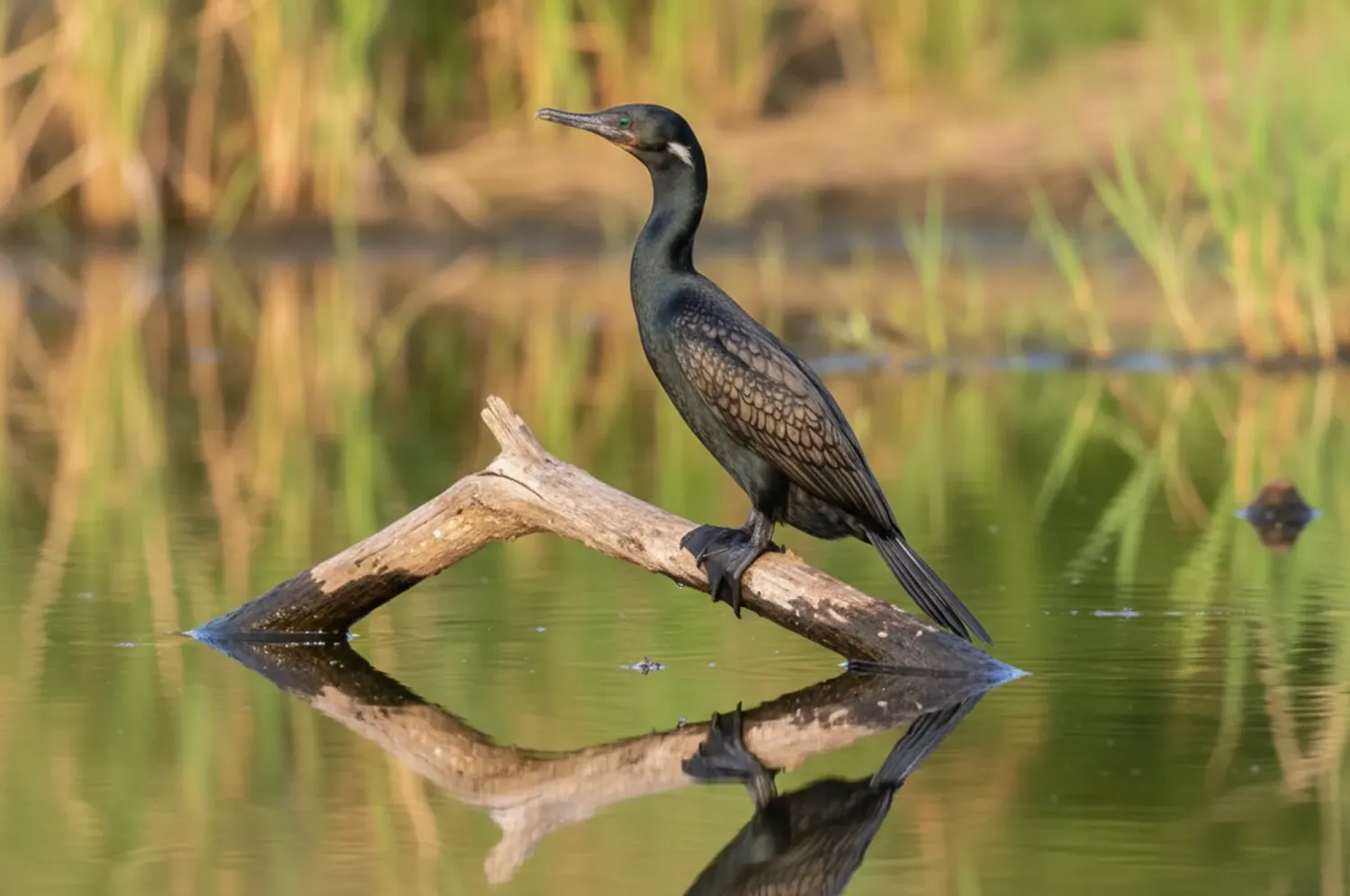
The Indian Cormorant, also known as the Indian Shag (Phalacrocorax fuscicollis), is a prominent member of the cormorant family. Found primarily across the inland waters of the Indian Subcontinent, this gregarious bird is a fascinating subject for bird enthusiasts and researchers alike.
Physical Appearance
Measuring approximately 63 cm in length, the Indian Cormorant features a sleek, dark plumage. It is distinguished by its striking blue eyes, a small head with a characteristic sloping forehead, and a long, narrow bill that ends in a sharp, hooked tip. These features help differentiate it from the similar-sized Little Cormorant.
Habitat
This species thrives in a variety of aquatic environments. Its primary habitats include:
- Large freshwater wetlands and marshes.
- Estuaries and brackish tidal creeks.
- Mangrove swamps.
Diet
The diet of the Indian Cormorant consists mainly of fish. It is a highly skilled hunter that feeds primarily through pursuit-diving, using its streamlined body to chase prey underwater. Interestingly, they often forage in well-coordinated groups to increase their hunting efficiency.
Breeding and Nesting
Indian Cormorants typically breed in colonies, often alongside other water birds like herons and storks. They build nests made of sticks, usually placed on trees standing in or near water. The breeding season often coincides with the monsoon, ensuring an ample food supply for the chicks.
Behavior
The Indian Cormorant is a gregarious species, often seen in large flocks. They are frequently observed perched on rocks or branches with their wings spread out to dry—a common behavior among cormorants since their feathers are not fully waterproof, which aids in diving but requires drying time afterward.
Conservation Status - LC Least Concern
Currently, the Indian Cormorant is categorized as Least Concern by the IUCN. While their populations are generally stable, they remain dependent on the preservation of healthy wetland ecosystems and clean water sources.
Interesting Facts
- They are expert divers, capable of staying underwater for significant periods to catch fish.
- Unlike many other water birds, they have striking blue irises.
- They are known for their social hunting techniques, driving fish into shallower waters.
- The "shag" name is often used interchangeably with cormorant in various regions.
Tips for Birdwatchers
To spot an Indian Cormorant, visit large inland water bodies during the early morning or late afternoon. Look for their distinctive sloping forehead and hooked bill. They are most easily photographed when they are drying their wings on sun-exposed perches.
Conclusion
The Indian Cormorant is a vital part of the Indian Subcontinent's aquatic biodiversity. From its unique physical traits like the blue eye to its complex social hunting behaviors, it remains a captivating species for anyone interested in the natural world.
