
Introduction
The Great Cormorant (Phalacrocorax carbo) is a widespread and highly adaptable member of the cormorant family. Known for its impressive diving skills and distinct silhouette, this large seabird is a common sight across various aquatic environments worldwide.
Physical Appearance
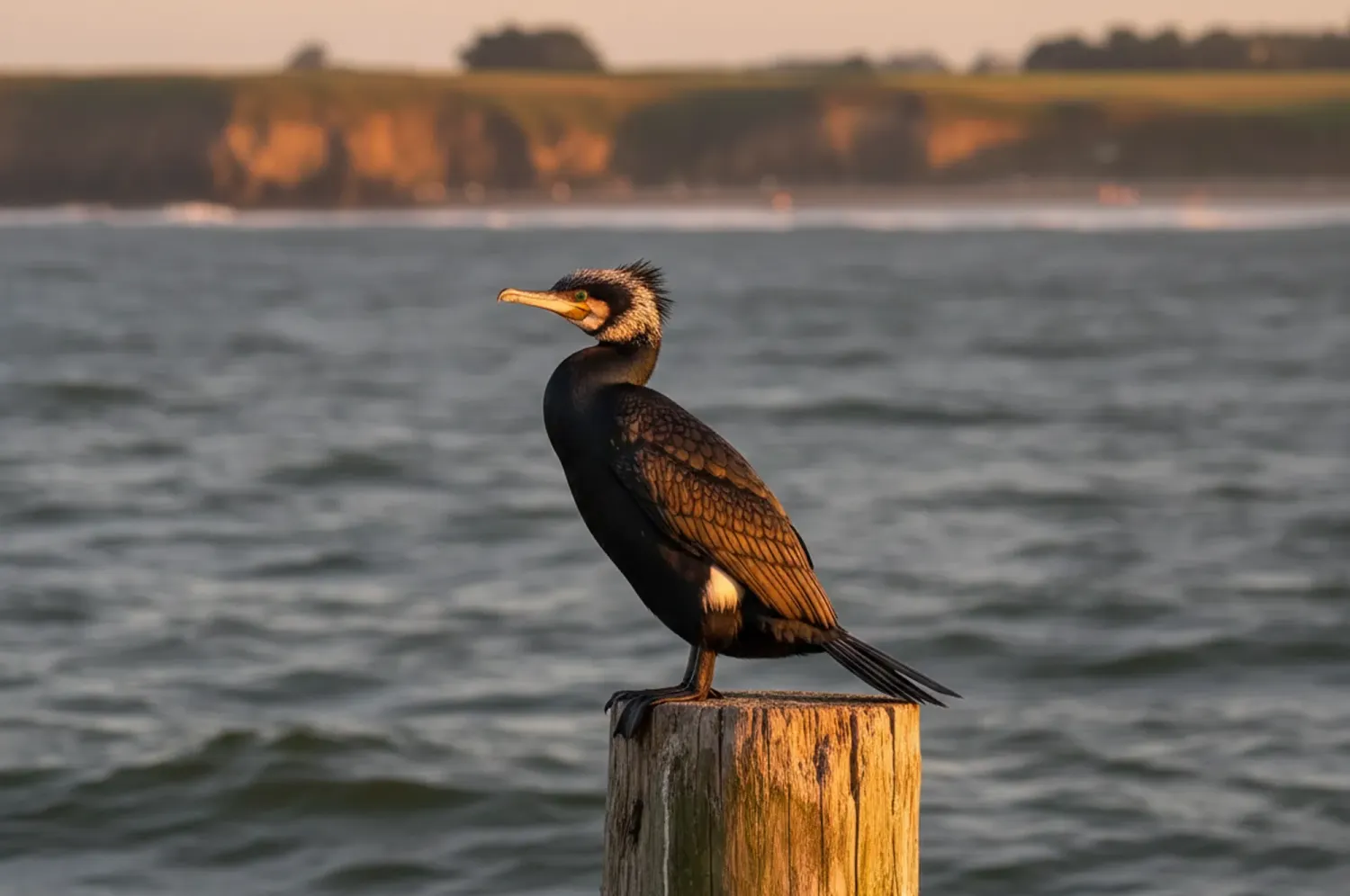
This large black bird typically measures between 80-100 cm in length with a massive wingspan of approximately 150 cm. It weighs around 4 kg and is characterized by its longish tail and a vibrant yellow throat-patch. During the breeding season, adults are easily identified by their prominent white thigh patches.
Habitat
The Great Cormorant is found in diverse environments, including coastal waters, saltpans, reservoirs, and large inland lakes and rivers. While they are often seen hunting singly or in small groups, they gather in large numbers to breed and frequently roost communally during the winter months.
Diet
Great Cormorants feed mainly on numerous kinds of fishes. When fishing in freshwater, their diet becomes more opportunistic, consuming crustaceans, amphibians, and insects. They are particularly known for bringing prey to the surface to swallow it.
Breeding and Nesting
The Great Cormorant breeds mainly on coasts, nesting on cliffs or in trees. They are social breeders that gather in large colonies. Their nesting habits are flexible, allowing them to utilize various landscapes depending on the region.
Behavior
These birds are expert divers that can reach considerable depths, though they often prefer feeding in shallow water. A common sight is a cormorant spending significant time subduing slippery prey, like eels, to position them correctly for swallowing. They are also known for their characteristic wing-drying posture after swimming.
Conservation Status - LC Least Concern
The Great Cormorant is currently widespread and is generally categorized as a species of Least Concern. Their ability to adapt to both saltwater and freshwater habitats has allowed their populations to remain stable in many regions.
Interesting Facts
- They can weigh up to 4 kg, making them one of the heavier diving birds.
- Their wingspan reaches up to 150 cm.
- Adults develop distinct white thigh patches specifically for the breeding season.
- They are often seen eating eels, which requires specialized handling before swallowing.
- Despite being seabirds, they are equally at home in large inland rivers and reservoirs.
Tips for Birdwatchers
To spot a Great Cormorant, visit coastal cliffs or large inland reservoirs. Look for their distinct black profile perched on rocks or wooden posts. Using binoculars, you can often observe them diving and resurfacing with fish, or drying their wings in the sun.
Conclusion
The Great Cormorant is a fascinating and resilient predator of the waterways. Its presence across coastal and inland habitats makes it a staple of the avian world, showcasing remarkable adaptation and hunting prowess.
