
Introduction
The Indian Golden Oriole (Oriolus kundoo) is one of the most visually striking members of the Oriolidae family. Often mistaken for its European cousin, this species is a distinct, non-migratory resident of the Indian subcontinent and parts of Central Asia. Known for its brilliant, sun-drenched yellow plumage and contrasting black markings, this bird is a favorite among ornithologists and amateur birdwatchers alike. As a quintessential perching bird, it spends much of its life high in the canopy, making its presence known through its melodic, flute-like calls that echo through forests, orchards, and urban parks. Despite its popularity, there is much to learn about its complex social structure and ecological importance. This guide explores the life cycle, habitat requirements, and behavioral nuances of this magnificent avian species, providing a comprehensive overview for anyone looking to understand the beauty of the Indian Golden Oriole in its natural environment.
Physical Appearance
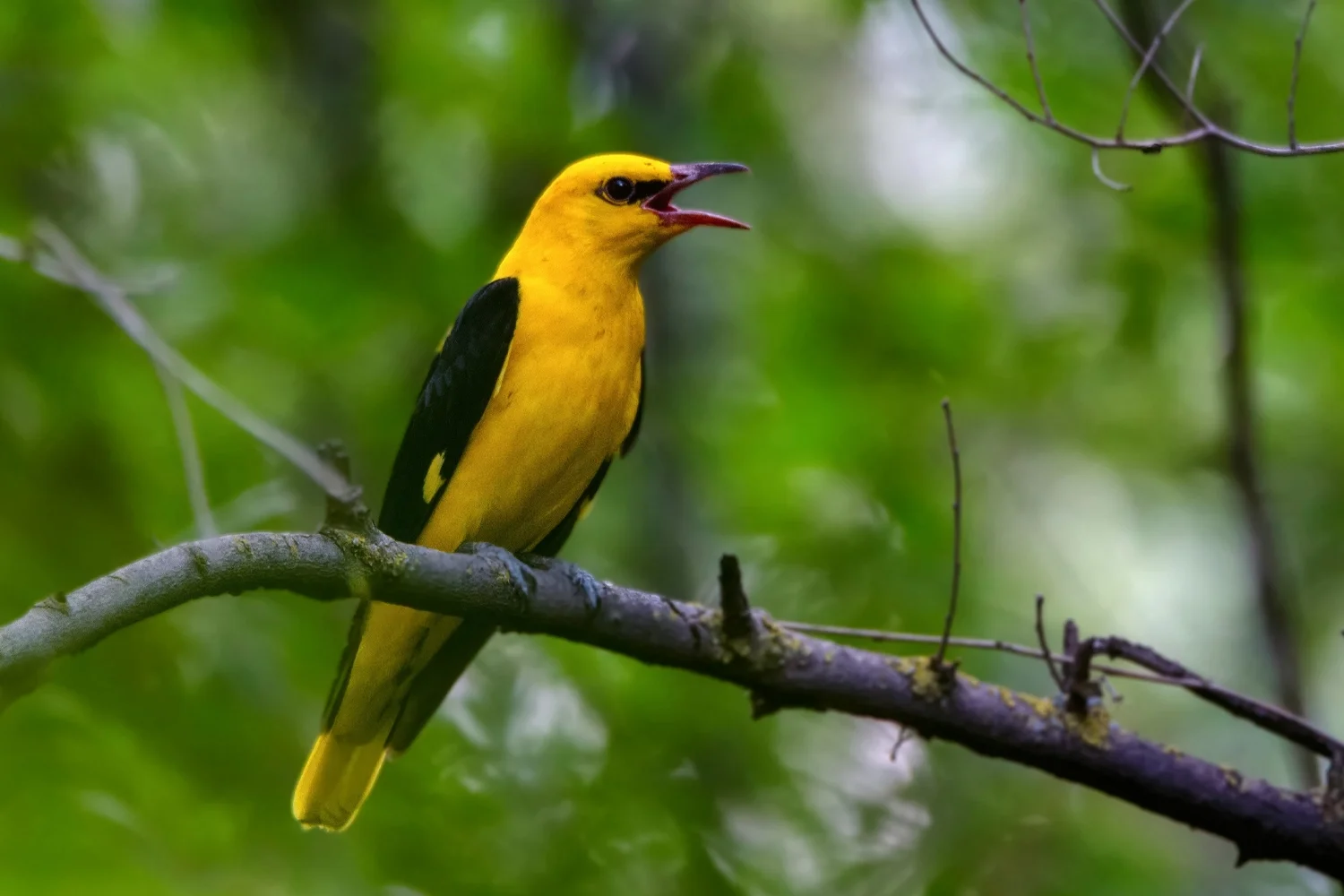
Measuring approximately 24 to 25 centimeters in length, the Indian Golden Oriole is a medium-sized bird that commands attention with its vibrant color palette. The primary color of the male is a deep, saturated golden-yellow, which creates a sharp contrast against its secondary color, black. The wings are predominantly black with a distinct yellow patch, and the tail feathers also feature black and yellow markings. Perhaps the most iconic feature of the male is the bold black eye stripe that extends from the bill to the eye, giving it a masked appearance. Females and juveniles exhibit a slightly duller, more olive-yellow plumage with streaks on the underparts, serving as an evolutionary adaptation for camouflage while nesting. The bill is strong, pinkish-red, and slightly hooked, perfectly adapted for its varied diet. Its legs are slate-grey, providing a sturdy grip as it navigates the complex architecture of trees and shrubs within its diverse range.
Habitat
The Indian Golden Oriole is highly adaptable, inhabiting a wide range of environments across its distribution. It prefers well-wooded areas, including deciduous forests, semi-evergreen forests, and open woodlands. Beyond dense forests, this species is frequently found in man-made landscapes such as orchards, mango groves, large gardens, and tree-lined avenues in urban areas. They are canopy-dwellers, rarely descending to the ground except to bathe or occasionally forage. Their preference for lush, foliage-rich environments provides them with both the food resources they require and the necessary cover to hide from predators. As urbanization expands, the Indian Golden Oriole has shown a remarkable ability to coexist with human development, provided there is enough mature tree cover to support their nesting and feeding activities.
Diet
As an omnivorous species, the Indian Golden Oriole possesses a varied diet that changes depending on the availability of seasonal resources. Its primary food sources include a wide array of insects, such as caterpillars, beetles, and small larvae, which provide essential proteins. However, the Oriole is also highly fond of fruits and berries, playing a crucial role in seed dispersal within its ecosystem. They are particularly attracted to figs, berries of the banyan tree, and nectar from various flowering trees. During the warmer months, they are often seen visiting nectar-rich blossoms, contributing to pollination. Their strong, slightly hooked bill allows them to efficiently pick insects from leaves or pierce the skin of ripe fruits, making them opportunistic foragers that thrive in nutrient-rich canopy environments.
Breeding and Nesting
The breeding season of the Indian Golden Oriole typically coincides with the arrival of the monsoon, usually between April and August. During this time, the male performs elaborate courtship displays to attract a mate, often involving aerial chases and distinctive vocalizations. Both the male and female participate in the construction of a unique, cup-shaped nest. The nest is a masterpiece of avian engineering, woven from strips of bark, grass, and spider silk, typically suspended in the fork of a high tree branch. The female usually lays two to three eggs, which are creamy white with reddish-brown spots. Both parents share the responsibility of incubating the eggs and feeding the chicks, demonstrating a high level of parental investment that ensures the survival of their offspring in the competitive canopy environment.
Behavior
Indian Golden Orioles are generally solitary or found in pairs, rarely forming large flocks. They are known for their territorial nature, especially during the breeding season, when males will aggressively defend their nesting sites from intruders. Their flight pattern is strong and undulating, characterized by rapid wingbeats followed by glides. One of the most fascinating aspects of their behavior is their vocalization; they possess a repertoire of flute-like whistles that are both melodic and far-reaching. They are shy and elusive birds, often heard before they are seen, as they prefer to remain hidden within the dense leaves of the canopy. Their ability to remain motionless for long periods makes them masters of stealth, allowing them to avoid detection by potential predators while keeping a watchful eye on their surroundings.
Conservation Status - LC Least Concern
Currently, the Indian Golden Oriole is classified as a species of 'Least Concern' by the IUCN. Their population remains stable across their extensive range, largely due to their ability to adapt to human-altered landscapes like parks and gardens. However, they are not immune to the threats of habitat fragmentation and the loss of mature trees, which are essential for their nesting. Conservation efforts should focus on preserving native tree species and maintaining canopy cover in both urban and rural areas to ensure these birds continue to thrive in the wild for generations to come.
Interesting Facts
- The Indian Golden Oriole is famous for its flute-like, melodious song.
- They are known to be highly beneficial to farmers as they eat large quantities of harmful insects.
- The nest of an Oriole is so well-built that it can withstand strong monsoon winds.
- Unlike many other birds, the Indian Golden Oriole is a non-migratory resident in most of its range.
- They are often referred to as 'mango birds' in some parts of India because they are frequently seen in mango orchards.
- The black eye-stripe is much more prominent in males than in females.
- They play an essential role in forest regeneration through seed dispersal.
Tips for Birdwatchers
For birdwatchers hoping to spot the Indian Golden Oriole, patience is the most important tool. Because they prefer to stay in the upper canopy, using a high-quality pair of binoculars is essential. Look for them during the early morning hours when they are most active and vocal. Listening for their distinct, flute-like whistle is the best way to locate them before you try to spot their bright yellow plumage against the green leaves. Early summer is the best time for observation, as the birds are more active during their breeding season. Visit areas with large, mature trees like banyan or mango groves, as these are their preferred feeding grounds. Avoid sudden movements, as these birds are naturally shy and will quickly retreat into deeper cover if they feel threatened.
Conclusion
In conclusion, the Indian Golden Oriole (Oriolus kundoo) is a magnificent example of the biodiversity found within the Indian subcontinent. With its vibrant golden plumage and complex social behaviors, it serves as a reminder of the intricate beauty found in our natural world. Whether they are seen flitting through a dense forest or perched in a city park, these birds contribute significantly to the health of their ecosystems through insect control and seed dispersal. As we continue to urbanize, the survival of species like the Indian Golden Oriole depends on our ability to integrate nature into our landscapes. By protecting their habitats and appreciating their presence, we ensure that the melodic calls of this 'golden' bird continue to grace our mornings. Whether you are an experienced ornithologist or a casual nature enthusiast, taking the time to observe and learn about this species offers a rewarding connection to the wild. The Indian Golden Oriole is truly a treasure of the canopy, worthy of our admiration and protection.
