
Introduction
The Black-hooded Oriole (Oriolus xanthornus) is a stunning member of the family Oriolidae, widely celebrated for its vibrant plumage and melodic vocalizations. Found primarily across the tropical regions of southern Asia, from India and Sri Lanka to parts of Southeast Asia, this bird is a quintessential representative of the perching bird order. Known for its high-contrast appearance, the Black-hooded Oriole is a familiar sight in gardens, orchards, and open woodlands. Unlike many other oriole species that are migratory, the Black-hooded Oriole is largely resident throughout its range, meaning bird enthusiasts have the opportunity to observe these beautiful creatures year-round. They are often spotted flitting between tree canopies, where their bright yellow feathers catch the sunlight, making them a favorite subject for wildlife photographers and amateur birdwatchers alike. Understanding the ecology of this species provides a fascinating glimpse into the biodiversity of Asian forest ecosystems.
Physical Appearance
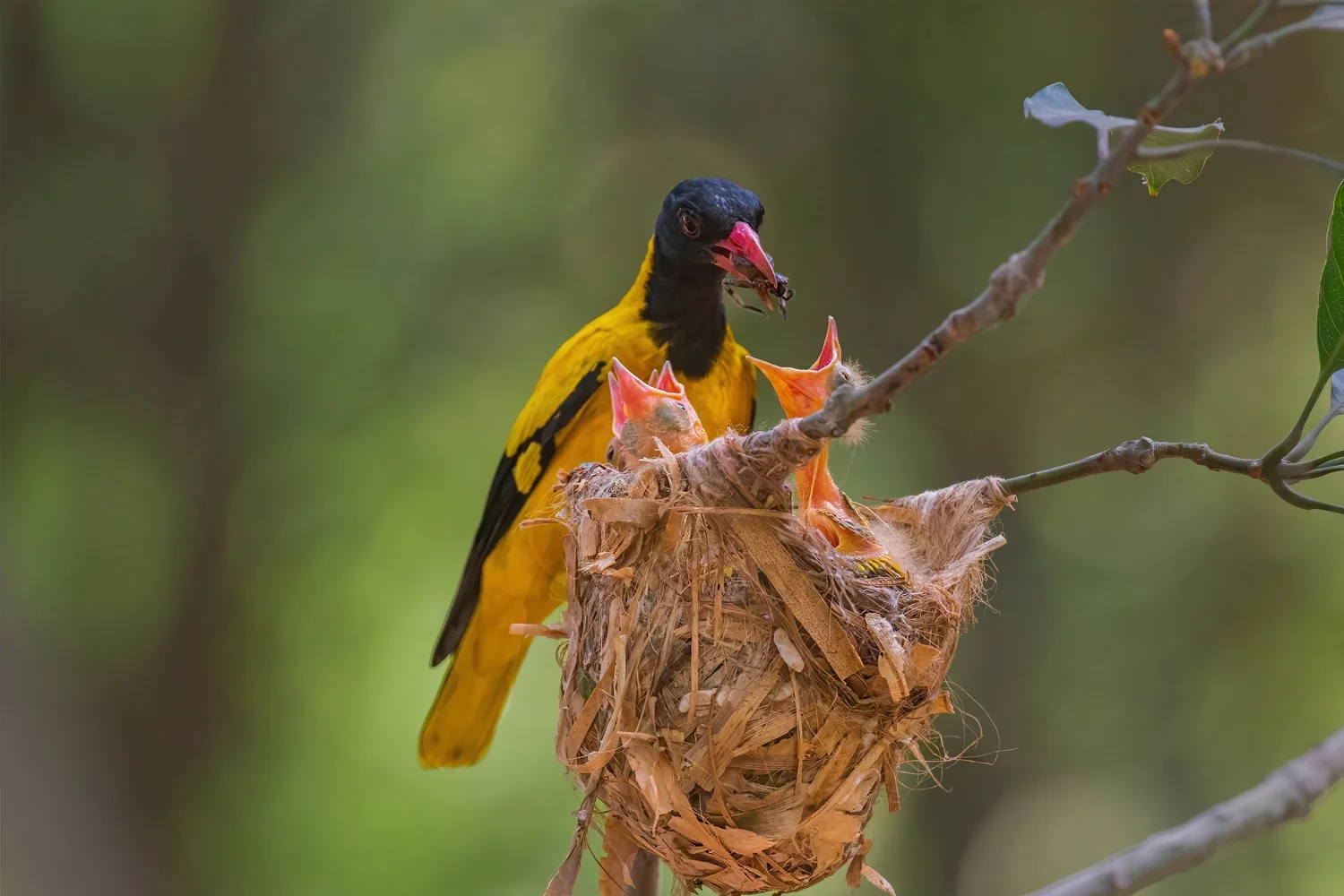
The Black-hooded Oriole is a medium-sized passerine, typically measuring between 23 and 25 centimeters in length. Its most defining physical characteristic is the striking contrast between its primary yellow body and a solid, jet-black hood that covers the head and throat. The eyes are generally a deep, reddish-brown, which stands out against the dark hood, while the bill is a strong, pinkish-flesh color, perfectly adapted for foraging. The wings are predominantly yellow with distinct black primary feathers and a black patch on the wing coverts. The tail is also yellow with black feathers, providing a flash of color during flight. Juveniles and females often display slightly duller colors compared to the mature males, with streaks on the underparts that help them blend into the foliage, a necessary adaptation for protection against predators in the dense canopy. Their streamlined body and powerful wings allow for agile, undulating flight patterns as they navigate through the branches of tall trees.
Habitat
The Black-hooded Oriole is highly adaptable, inhabiting a wide variety of environments across its expansive range. They are most commonly found in open woodlands, deciduous forests, and forest edges. However, their presence is not limited to wild areas; they are frequently seen in cultivated landscapes, including fruit orchards, large gardens, and even urban parks with mature trees. They prefer areas with a diverse canopy structure, which provides both protection and ample foraging opportunities. Because they are arboreal, they rarely descend to the ground, preferring to remain in the upper levels of the foliage where they can easily spot food and avoid terrestrial threats. Their ability to thrive in human-modified landscapes makes them one of the most visible birds in many Asian suburban regions.
Diet
As an omnivorous species, the Black-hooded Oriole maintains a varied and nutritious diet. Their primary food sources include a wide array of fruits, berries, and small insects. They are particularly fond of figs and nectar-rich flowers, which they consume with enthusiasm. When hunting for insects, they are quite agile, plucking caterpillars, beetles, and other small invertebrates from leaves and branches. This insectivorous behavior makes them beneficial to local ecosystems, as they help control populations of pests in fruit-bearing trees. During the breeding season, they may consume more protein-rich insects to support the growth of their chicks. Their strong bills are well-suited for both crushing soft fruit and snatching up agile prey with precision, demonstrating their versatile foraging strategies.
Breeding and Nesting
The breeding season for the Black-hooded Oriole typically aligns with the onset of the monsoon or the warmer spring months, depending on the geographic location. They are highly skilled nest builders, constructing deep, cup-shaped nests that are suspended from the fork of a tree branch, usually high above the ground. The nest is meticulously woven using grass, plant fibers, thin twigs, and sometimes spider silk to provide structural integrity. Both the male and female participate in the construction process and the subsequent care of the eggs. A typical clutch consists of two to three white or cream-colored eggs with dark spots. Incubation is shared by both parents, and once the chicks hatch, both adults work tirelessly to feed the nestlings a constant supply of insects and fruits until they are ready to fledge.
Behavior
The Black-hooded Oriole is known for its shy yet vocal nature. While they are often heard before they are seen, their calls are loud, fluting, and highly melodic, which serve to mark their territory and communicate with mates. They are generally solitary or found in pairs, though they may occasionally join mixed-species foraging flocks. They are agile fliers, moving swiftly between branches with a characteristic undulating flight. During the breeding season, males become more territorial and may engage in aggressive displays to defend their chosen nesting site. Despite their bright colors, they can be surprisingly difficult to spot when they remain still within the dense green foliage of the canopy, showcasing their remarkable ability to camouflage themselves despite their vivid plumage.
Conservation Status - LC Least Concern
Currently, the Black-hooded Oriole is classified as Least Concern on the IUCN Red List. Their population is considered stable due to their wide geographic distribution and their ability to adapt to human-modified habitats like gardens and agricultural lands. While they do not face immediate extinction threats, they are sensitive to large-scale habitat loss caused by deforestation and the excessive use of pesticides. Protecting mature fruit trees and maintaining green corridors in urban areas remains vital to ensuring that these birds continue to thrive. Conservation efforts should focus on preserving existing forest patches and promoting bird-friendly gardening practices to support their long-term survival in an ever-changing landscape.
Interesting Facts
- The Black-hooded Oriole is often confused with the Eurasian Golden Oriole, though the black hood is a unique identifier.
- They are known to be important seed dispersers for many native fruit trees.
- Their song is often described as a series of clear, fluting whistles that can carry over long distances.
- Despite their bright colors, they are masters of stealth and can hide effectively in plain sight.
- They do not migrate, making them a permanent resident in their natural range.
- Their nests are so well-built that they can withstand heavy tropical rains.
- They are highly territorial and will chase away other birds that approach their nesting site.
- The name 'Oriole' is derived from the Latin 'aurum', meaning gold, referring to their brilliant yellow feathers.
Tips for Birdwatchers
For birdwatchers hoping to spot the Black-hooded Oriole, the best strategy is to listen for their distinct, melodic calls during the early morning hours when activity is at its peak. Since they prefer the canopy, focus your binoculars on the tops of fruiting trees such as figs or banyan trees. Patience is key; keep your movements minimal and avoid sudden noises to prevent startling them. Using a high-quality pair of binoculars or a spotting scope will help you appreciate the intricate details of their black-and-yellow feathers. If you are birding in a garden, consider planting native fruit-bearing shrubs to attract them to your area. Patience and persistence are the hallmarks of successful observation, so take your time and enjoy the rewarding experience of spotting this magnificent bird in its natural environment.
Conclusion
The Black-hooded Oriole is a true gem of the avian world, capturing the hearts of birdwatchers with its radiant yellow plumage and its enchanting, fluting song. As a versatile species, it bridges the gap between wild forest ecosystems and the human-dominated landscapes of modern Asian cities. Its presence is an indicator of a healthy, functioning environment, reflecting the richness of the biodiversity it inhabits. By understanding its complex behaviors, its dietary needs, and its nesting habits, we gain a deeper appreciation for the delicate balance of nature. Whether you are an experienced ornithologist or a casual observer, the Black-hooded Oriole offers a fantastic opportunity to engage with the natural world. As we continue to urbanize, the survival of such species depends on our commitment to preserving green spaces and maintaining the ecological integrity of their habitats. Let us cherish these birds not only for their beauty but for the vital roles they play as pollinators and seed dispersers in our environment. With careful observation and environmental stewardship, the Black-hooded Oriole will continue to grace our canopies for generations to come, reminding us of the enduring beauty of the natural world.
