
Introduction
The Indian Peafowl (Pavo cristatus) is one of the most recognizable and magnificent birds in the world. As the National Bird of India, it is deeply rooted in the mythology and folklore of the region. This superb bird is considered sacred by many and has been protected for centuries due to its immense beauty and cultural significance.
Physical Appearance
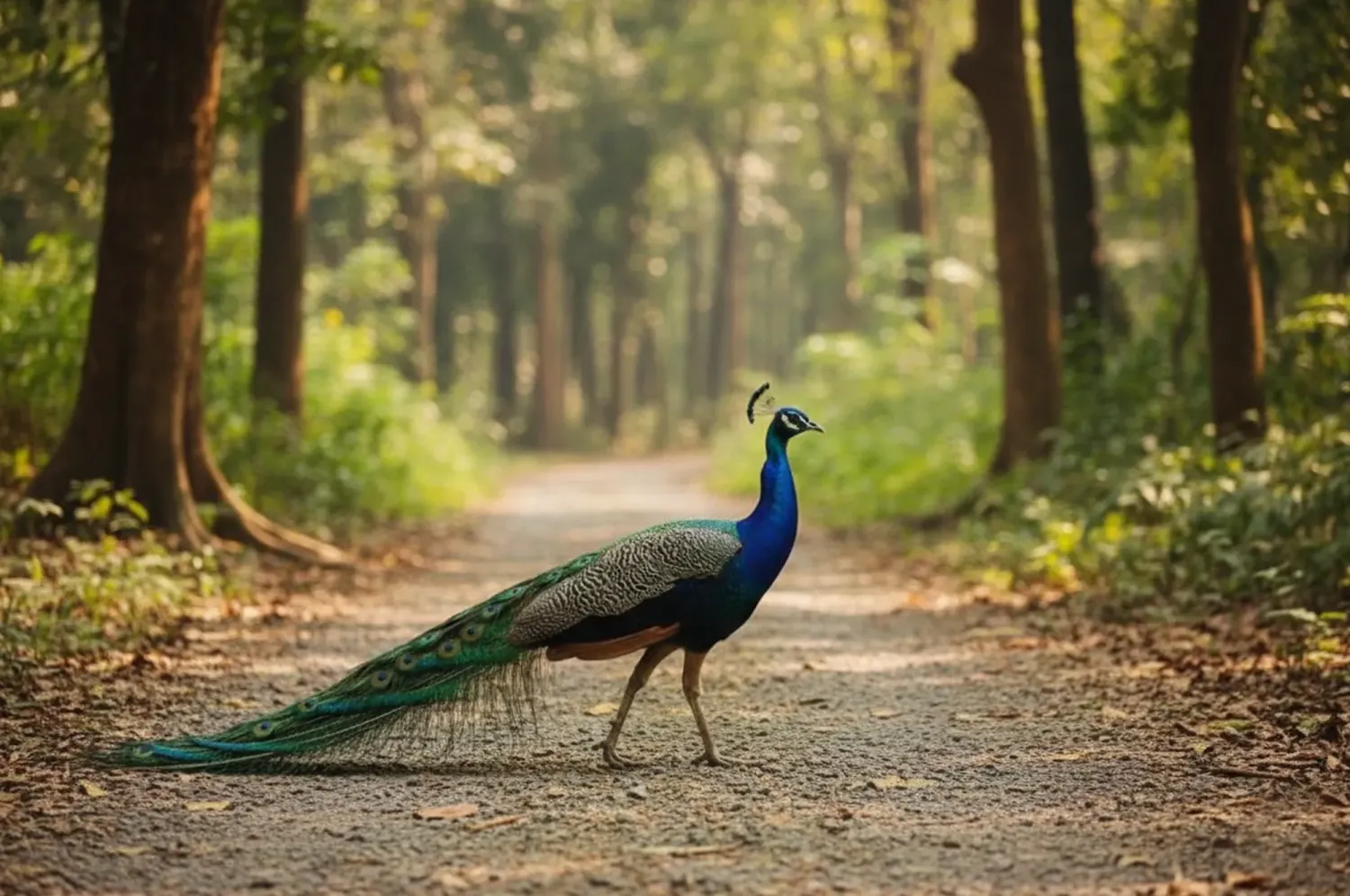
There is a distinct size difference between the sexes; the male (peacock) ranges from 180cm to 230cm, while the female (peahen) is much smaller at 90cm to 100cm. The adult male features a glossy cobalt-blue head, neck, and breast, with a spectacular train of elongated uppertail coverts adorned with ornamental eye-spots. The female is primarily brownish with a glossy green neck and white underparts. Both sexes possess a fan-shaped crest on their heads.
Habitat
The Indian Peafowl thrives in various environments, showing a preference for:
- Open forests with riparian undergrowth.
- Wooded areas along streams and water sources.
- Moist and dry deciduous woodlands.
- Orchards and cultivated lands near human habitations.
- Elevations up to 2000 metres.
Diet
This species is omnivorous and forages in small groups. Its varied diet includes:
- Plant matter, seeds, and green crops.
- Insects and small mammals.
- Small snakes and reptiles.
- Berries and various fruits.
Breeding and Nesting
During the breeding season, the male displays his magnificent train to attract females. These ornamental feathers are moulted after the breeding season and regrow the following spring. Indian Peafowls typically reach sexual maturity at three years of age. While the male is flamboyant, the female's brownish plumage provides excellent camouflage while nesting.
Behavior
Indian Peafowls are social birds often seen foraging in small groups, particularly in cultivated areas. They are known for their loud, distinctive calls. While they spend much of their time on the ground, they are capable of flight and typically roost in tall trees at night for protection from predators.
Conservation Status - LC Least Concern
The Indian Peafowl is currently well-protected and is listed under the Indian Wildlife Protection Act, 1972. It is very common across India and has been successfully introduced to many other parts of the world, ensuring its population remains stable.
Interesting Facts
- The term 'peacock' specifically refers to the male, 'peahen' to the female, and 'peachick' to the young.
- The male's train is not actually his tail; the true tail feathers (rectrices) are shorter and support the train.
- The bare white skin on the face forms a distinct oval line around the eyes.
- They are highly regarded in Indian mythology and are often depicted alongside deities.
- The feathers in the male's crest end in a unique blue-green fan shape.
Tips for Birdwatchers
For the best viewing experience, look for Indian Peafowls near water sources in deciduous forests or near the edges of villages in India. They are most active during the early morning and late afternoon. Keep an eye out for the male's train display during the spring months, which is one of the most spectacular sights in the avian world.
Conclusion
The Indian Peafowl is a true icon of the natural world. From its vibrant blue plumage to its role as a cultural symbol, it continues to fascinate birdwatchers and nature lovers alike. Its ability to live alongside human populations ensures that this majestic bird remains a common sight for generations to come.