
Introduction
The Laughing Dove (Spilopelia senegalensis) is a small, widespread pigeon species known for its distinctive call. A resident breeder across vast regions including Africa, the Middle East, and the Indian Subcontinent, this adaptable dove thrives in various dry scrub and semi-desert habitats, often seen feeding in pairs on the ground. Its unique appearance and vocalizations make it a fascinating subject for birdwatchers and nature enthusiasts alike.
Physical Appearance
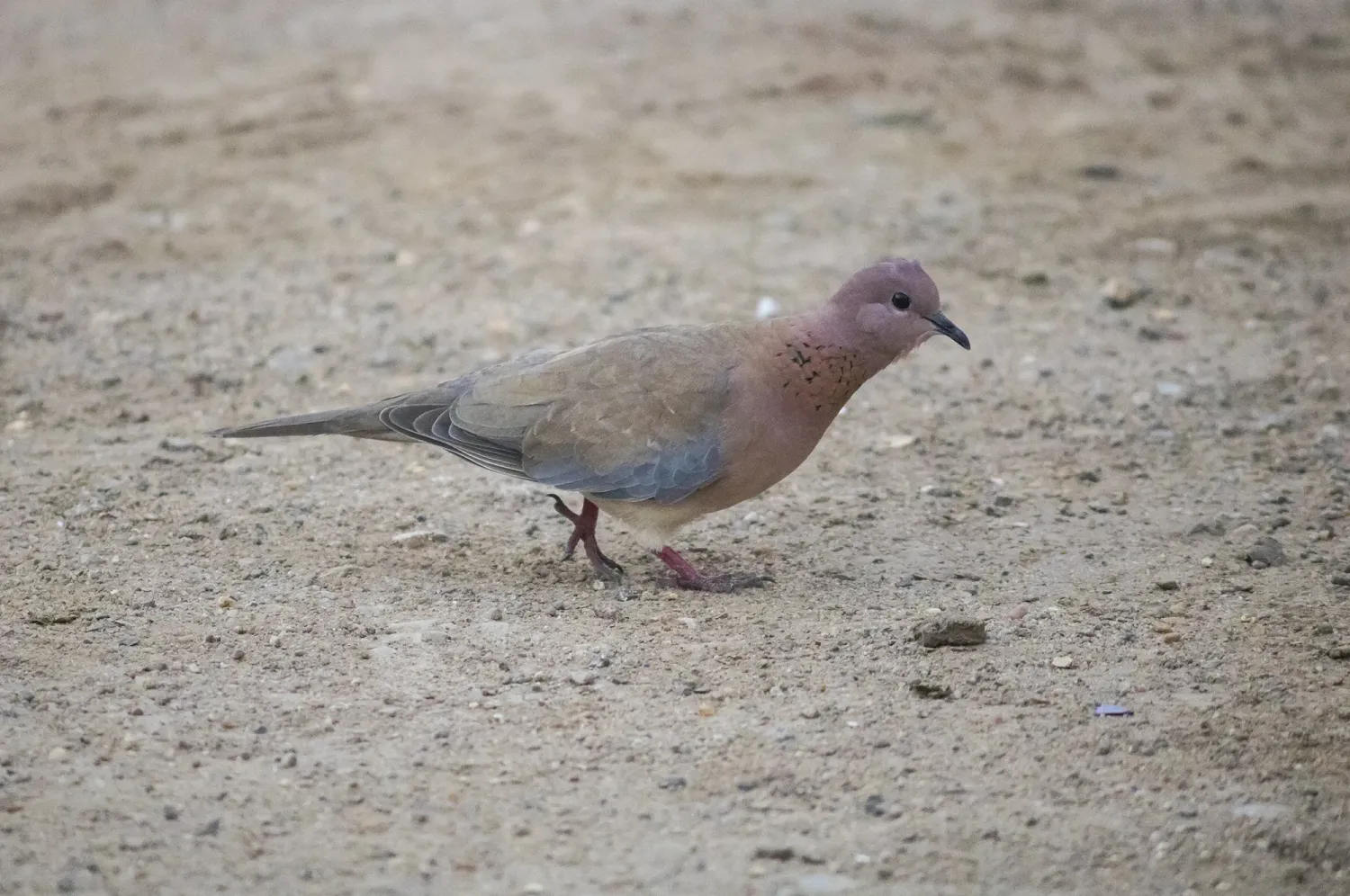
Measuring approximately 27-27 cm in length, the Laughing Dove is a relatively small pigeon with a long tail. Its plumage primarily features attractive pink and gray tones. A key identifying feature is the striking rufous and black chequered necklace pattern visible on its neck, setting it apart from other dove species.
Habitat
The Laughing Dove is highly adaptable, preferring dry areas, wooded savannahs, and thickets of acacias, often found a few kilometers from water sources. This species is a common resident in urban areas, large towns, and villages, demonstrating its ability to coexist with human populations. Nests are typically constructed in bushes or trees.
Diet
Primarily a ground feeder, the Laughing Dove's diet consists mainly of fallen seeds, particularly those of grasses. They also consume other vegetable matter and small ground insects like termites and beetles, foraging actively in their preferred habitats.
Breeding and Nesting
The Laughing Dove is a resident breeder across its extensive range. While specific details on breeding cycles are not provided, it is known that this species nests in bushes or trees, constructing its nests in suitable vegetation within its habitat.
Behavior
Laughing Doves are often observed in pairs, diligently feeding on the ground in their preferred dry scrub and semi-desert environments. Their most notable behavioral trait is their distinctive call, which gives them their common name and serves as an easy way to distinguish them from other dove species.
Conservation Status - LC Least Concern
The conservation status of the Laughing Dove (Spilopelia senegalensis) was not specified in the provided information.
Interesting Facts
- The Laughing Dove is also known by several other names, including laughing turtle dove, palm dove, and Senegal dove. In India, it's often referred to as the little brown dove.
- Its distinctive call is a primary method for distinguishing it from other dove species in its habitat.
- Pairs of Laughing Doves are frequently observed feeding together on the ground in dry scrub and semi-desert areas.
- This species was successfully introduced into Western Australia and has established wild populations around Perth and Fremantle.
Tips for Birdwatchers
For birdwatchers hoping to spot the Laughing Dove:
- Listen for its call: Its unique vocalization is often the easiest way to identify its presence.
- Look in dry habitats: Search dry scrub, semi-desert areas, and even urban gardens or villages.
- Observe ground feeding: These doves often forage on the ground, so keep an eye out for pairs pecking for seeds and insects.
- Identify by plumage: Note its pink and gray coloration and, most distinctly, the rufous and black chequered necklace pattern.
Conclusion
The Laughing Dove stands out as a resilient and widespread pigeon, easily recognized by its charming pink and gray plumage, distinctive chequered necklace, and characteristic call. From the urban landscapes of Africa to the semi-deserts of the Indian Subcontinent and even introduced populations in Australia, this small dove continues to thrive, offering birdwatchers and nature lovers a delightful subject to observe.
