
Introduction
The Indian Pied Starling (Gracupica contra) is a charismatic and highly recognizable member of the Sturnidae family. Commonly known as the Asian Pied Starling, this bird is a familiar sight across the Indian subcontinent and parts of Southeast Asia. Often found in proximity to human settlements, it is known for its bold personality and distinct pied plumage. Unlike many shy woodland species, the Indian Pied Starling is highly social, frequently seen foraging in small groups or pairs in open fields, agricultural lands, and urban gardens. Its melodious, yet varied, vocalizations—ranging from chirps to complex whistles—add a vibrant soundscape to its environment. As a quintessential perching bird, it has adapted remarkably well to human-altered landscapes, making it a favorite subject for amateur birdwatchers and ornithologists alike. Understanding the ecology and behavior of this species provides valuable insight into how certain avian populations thrive in rapidly changing environments, balancing wild instincts with urban adaptability.
Physical Appearance
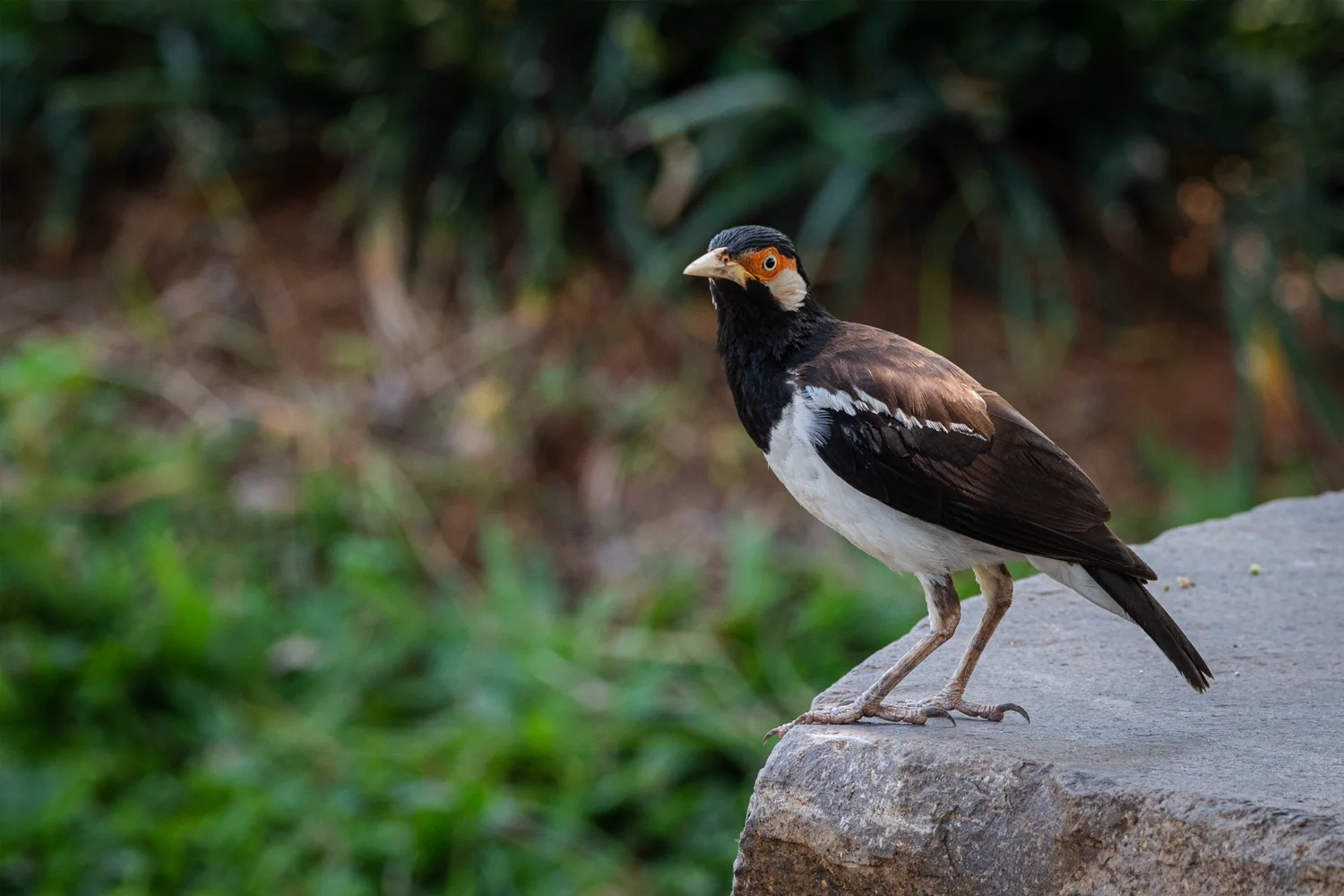
Measuring between 20 to 24 cm in length, the Indian Pied Starling is a medium-sized passerine with a distinct, high-contrast appearance. Its primary coloration is a deep, glossy black that covers the head, neck, wings, and tail, while the secondary color is a crisp, clean white that serves as a striking belly and wing patch. A key diagnostic feature is the bright orange-yellow skin surrounding the eye, which contrasts sharply against the dark plumage. The bill is equally vivid, featuring a yellow base that transitions into a reddish-pink or orange tip. The legs are a pale yellowish-white, providing a clean aesthetic to its overall look. Juveniles appear duller, often with brownish-grey feathers before molting into their adult pied livery. The streamlined body and strong, pointed bill are perfectly adapted for its perching lifestyle, allowing it to navigate branches and forage on the ground with equal agility. Its wingspan and flight pattern are characteristic of starlings, showing rapid, direct wingbeats when traveling between foraging sites.
Habitat
The Indian Pied Starling is primarily found in open country, agricultural plains, and near human habitation. They are rarely seen in dense forests, preferring instead the edges of woodlands, orchards, and parklands. In many parts of their range, they are closely associated with water sources, often found near wetlands, rice paddies, and village ponds. Their ability to exploit human-modified landscapes has allowed them to colonize suburban gardens and city parks successfully. They typically nest at lower elevations and are rarely found in high-altitude mountain regions, preferring the tropical and subtropical climate of the lowlands where food resources are abundant throughout the year.
Diet
As an omnivorous species, the Indian Pied Starling has a highly flexible and opportunistic diet. They spend a significant amount of time foraging on the ground, probing the soil with their sharp bills to extract insects, larvae, earthworms, and small mollusks. This makes them highly beneficial to local farmers, as they help control insect populations in agricultural fields. Beyond their insectivorous habits, they frequently consume various fruits, berries, and nectar from flowering trees. In urban environments, they are known to visit bird feeders and scavenge for food scraps. Their ability to switch between protein-rich insect prey and carbohydrate-rich plant material is a key factor in their widespread success and high population density.
Breeding and Nesting
The breeding season of the Indian Pied Starling typically aligns with the monsoon period, though it can vary based on regional rainfall. These birds are known for their elaborate, bulky nests constructed from twigs, grass, and occasionally synthetic debris, often lined with softer material like feathers or animal hair. They are social nesters and may place their nests in a variety of locations, including the forks of trees, palm fronds, or even human structures like building crevices. A typical clutch consists of three to six glossy, pale blue eggs. Both the male and female participate in the incubation process, which lasts roughly two weeks. Once hatched, the chicks are cared for by both parents, who work tirelessly to provide a steady supply of insects. This cooperative parental care ensures a high survival rate for the fledglings, allowing the species to maintain robust populations even in competitive environments.
Behavior
The Indian Pied Starling is a gregarious bird, usually observed in small, noisy flocks. They are highly vocal, utilizing a wide repertoire of calls to communicate within the group, establish territory, or warn of predators. Their movement is characterized by a mix of terrestrial walking and agile flight. During the day, they are constantly active, often seen hopping along the ground or perching on fence lines and power cables. They are known for their intelligence and can be quite bold, showing little fear of humans. Their social structure is complex, involving various displays and interactions that reinforce group bonds, particularly during the non-breeding season when they roost communally in large, noisy groups.
Conservation Status - LC Least Concern
The Indian Pied Starling is currently classified as Least Concern by the IUCN. Their population is stable and in some regions, it is even increasing due to the expansion of agricultural lands and urban areas which provide ample food and nesting sites. They face few significant threats, though habitat loss due to extreme urbanization and the use of pesticides in commercial farming could potentially impact local groups in the long term. Because they are not dependent on specialized habitats, they remain one of the most resilient and common bird species found across their extensive Asian range.
Interesting Facts
- They are well-known mimics and can imitate the sounds of other birds.
- The bright yellow skin around the eye is a clear indicator of a healthy adult.
- They often engage in 'anting,' where they allow ants to crawl over their feathers to use the formic acid as a natural parasite repellent.
- Pairs often remain together for multiple breeding seasons.
- They are highly beneficial to agriculture for their natural pest control services.
- They have adapted to build nests using man-made materials like plastic and wire.
Tips for Birdwatchers
To spot the Indian Pied Starling, look for them in open agricultural fields or around village outskirts during the early morning or late afternoon. Their high-contrast plumage makes them easy to identify, even from a distance. If you are using binoculars, focus on low-hanging branches or the ground, as they spend much of their time foraging in these areas. Because they are social, if you see one, there are likely others nearby. They are quite tolerant of human presence, so you can often get close enough for excellent photography if you move slowly and avoid sudden movements. Listening for their distinct, warbling, and often harsh chattering calls will help you locate them before you see them visually.
Conclusion
In conclusion, the Indian Pied Starling (Gracupica contra) is a fascinating example of avian adaptability and ecological success. With their striking black and white appearance, complex social behaviors, and beneficial role in controlling agricultural pests, they are an essential part of the biodiversity in the Indian subcontinent. Their ability to thrive alongside humans, while maintaining their wild instincts, makes them an accessible and rewarding species for birdwatchers of all experience levels. Whether observing their intricate nesting habits during the monsoon or listening to their varied vocalizations in a local park, there is always something new to learn from these charismatic starlings. As urbanization continues to reshape our natural landscapes, species like the Indian Pied Starling serve as a reminder of nature's resilience. Protecting their habitats and ensuring the health of the ecosystems they inhabit remains important for maintaining the rich avian heritage of the region. We encourage all nature enthusiasts to take a moment to appreciate this vibrant bird, as it truly embodies the beauty and complexity of the common species that share our world.