
Introduction
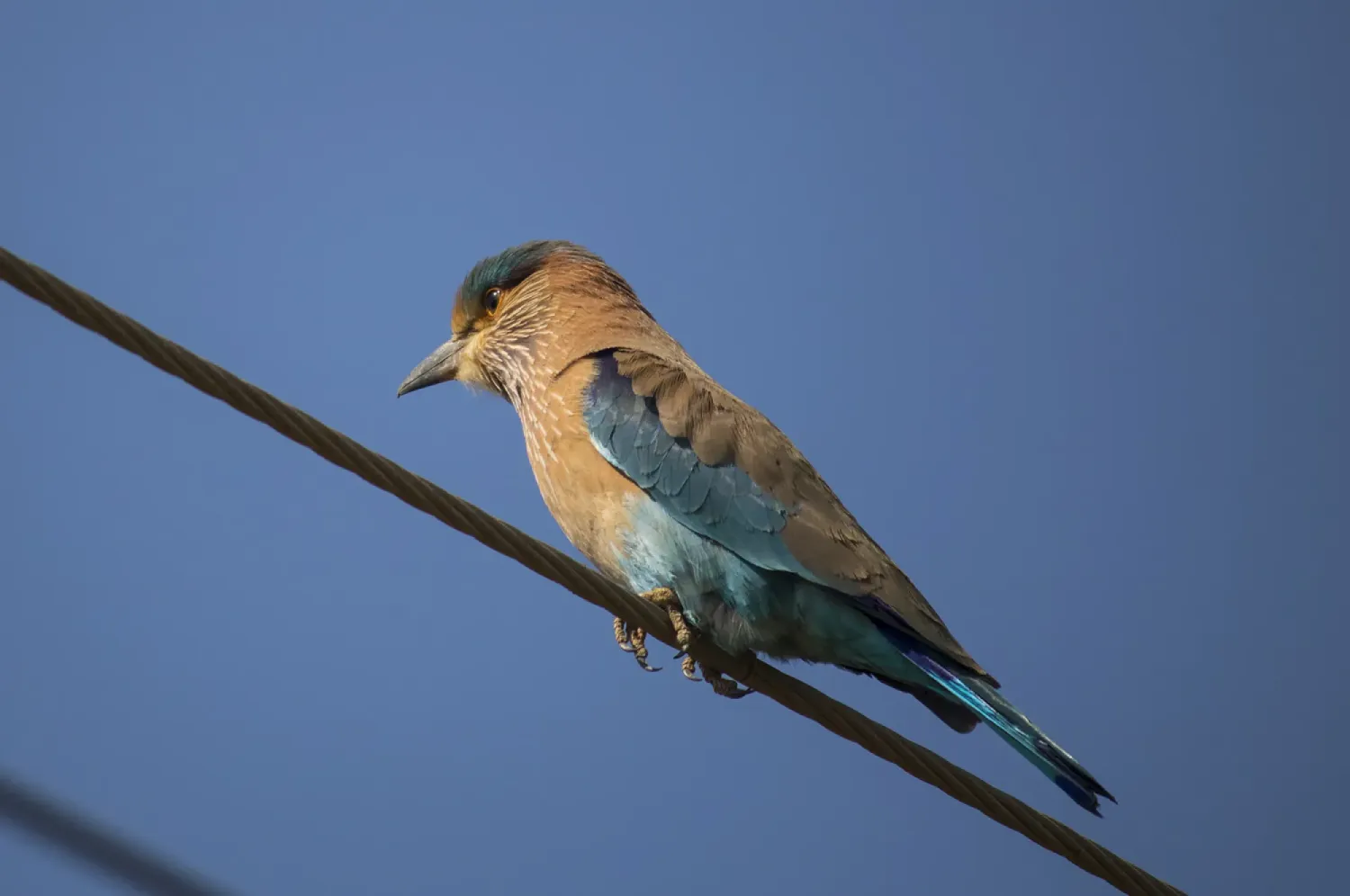
The Indian Roller (Coracias benghalensis) is a captivating member of the roller bird family, renowned for its striking plumage and impressive aerial acrobatics. This beautiful bird is widely distributed across West Asia, the Indian Subcontinent, and Sri Lanka, where it is a familiar sight in various open habitats. Its presence is significant, even being chosen as the state bird by several Indian states, highlighting its cultural and ecological importance.
Physical Appearance
Measuring approximately 33-33 cm in length, the Indian Roller is a medium-sized bird. Its most distinguishing feature is its dazzling array of colors, predominantly various shades of blue and green, which shimmer beautifully in the sunlight. These vibrant hues make it easily recognizable and a favorite among birdwatchers.
Habitat
Indian Rollers thrive in open grassland and scrub forest habitats. They are frequently observed perched along roadside trees and electric or telegraphic wires, using these elevated spots as vantage points for hunting. Studies on their roosting behavior reveal that after waking, they spend a few minutes preening before flying around their roosting sites. Favoured perches also include trees and shrubs, demonstrating their adaptability to different arboreal structures.
Diet
The diet of the Indian Roller is primarily insectivorous, consisting mostly of insects. However, these opportunistic hunters are not limited to insects; they also skillfully catch and consume a variety of other small prey, including small lizards, frogs, small rodents, and even snakes. This diverse diet showcases their adaptability and role as effective predators in their ecosystem.
Breeding and Nesting
During the breeding season, male Indian Rollers are particularly noted for their spectacular aerobatic displays. These elaborate aerial maneuvers are a key part of their courtship ritual, designed to attract mates. While specific nesting details are not provided in the data, these displays are a clear indication of their breeding activities.
Behavior
The Indian Roller is well-known for its distinctive behavior. It is often seen perched conspicuously along roadside trees and wires, patiently waiting for prey. Its most famous behavior, however, is the male's dazzling aerobatic displays during the breeding season, which involve impressive dives and rolls. Although not migratory, the species does undertake some seasonal movements, adapting to local conditions. Immediately after waking, they engage in preening before flying around their roosting sites.
Conservation Status - NT Near Threatened
The Indian Roller is currently listed as Least Concern on the IUCN Red List. This classification indicates that the species is widespread and its population is considered stable, facing no immediate threat of extinction, which is good news for this beautiful bird.
Interesting Facts
- The Indian Roller is the state bird of several states in India, including Odisha, Karnataka, Telangana, and Andhra Pradesh.
- It is best known for the incredible aerobatic displays performed by males during the breeding season.
- Despite its wide distribution from West Asia to Sri Lanka, the largest population of the Indian Roller occurs in India.
- Unlike many bird species, it is not migratory but does undertake some seasonal local movements.
- Their diet is quite varied, ranging from common insects to small vertebrates like lizards, frogs, and even small snakes.
Tips for Birdwatchers
For birdwatchers hoping to spot the Indian Roller, look for them along roadside trees and wires in open grassland and scrub forest habitats. Their vibrant blue and green plumage makes them relatively easy to identify, especially when perched in the open. Keep an eye out for their distinctive aerial displays during the breeding season for a truly memorable sighting. Dawn is a good time to observe them preening and flying around their roosting sites.
Conclusion
The Indian Roller is a truly magnificent bird, embodying the vibrant biodiversity of its range. Its striking colors, impressive aerial antics, and adaptability make it a joy to observe. As a species of Least Concern, it continues to grace the landscapes of West Asia and the Indian Subcontinent, reminding us of the beauty and resilience of avian life. Protecting its habitats ensures that future generations can continue to marvel at this winged jewel.