
Introduction
Introduction
The Black Redstart (Phoenicurus ochruros) is a small, hardy passerine bird belonging to the Old World flycatcher family. Often recognized by its characteristic quivering orange-red tail, this bird is a versatile survivor found across Europe, Asia, and North Africa. Historically grouped with thrushes, it is now classified alongside flycatchers due to its behavioral and anatomical traits. Whether perched on a high mountain crag or foraging in a winter plantation, the Black Redstart is a delight for birdwatchers.
Physical Appearance
Physical Appearance
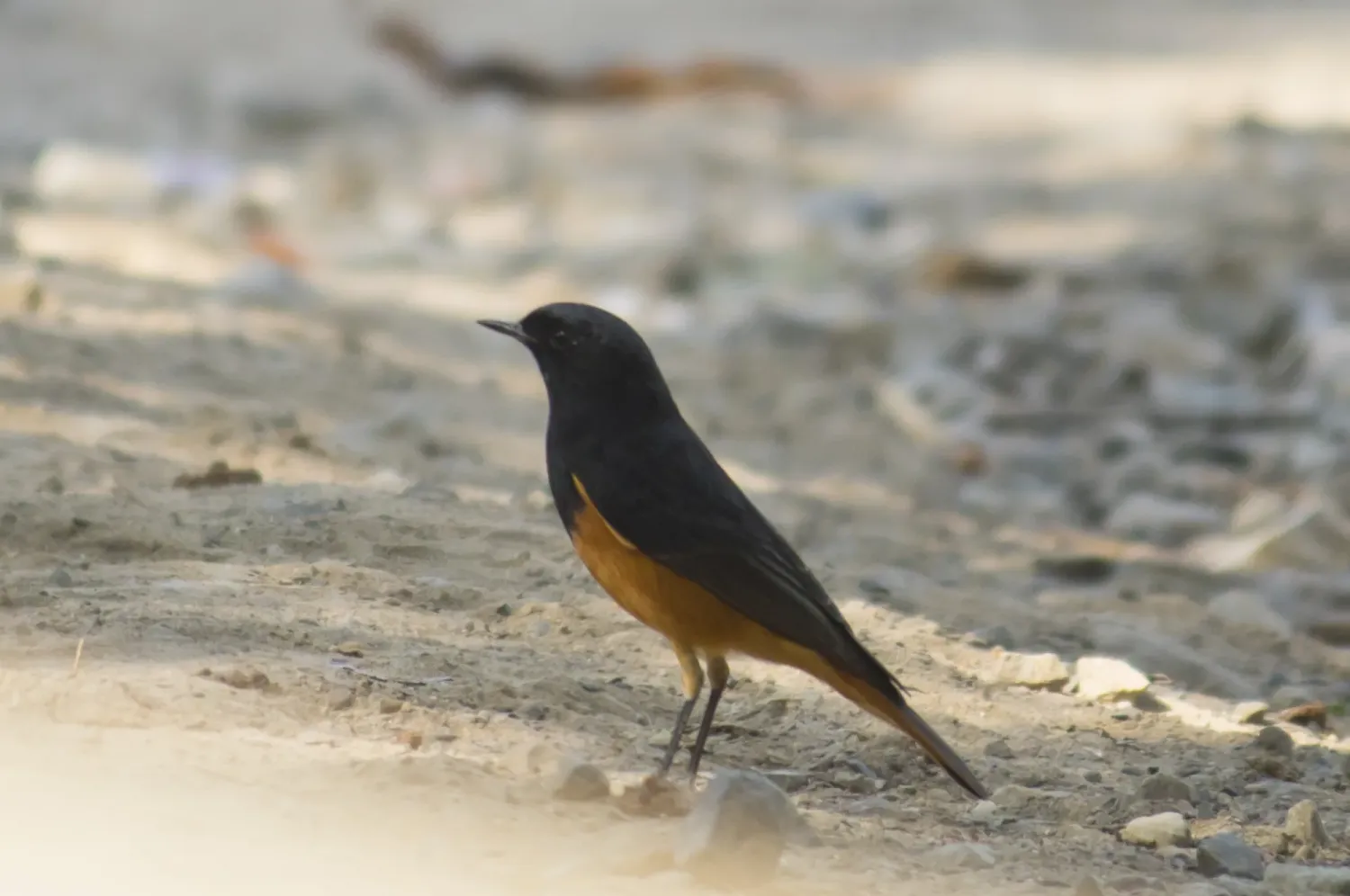
Measuring about 13–15 cm in length, the Black Redstart is a compact bird with a distinctive color palette. Adult males are striking with dark grey to black upperparts and a black breast. The most prominent feature is the orange-red lower rump and tail, though the central tail feathers remain dark red-brown. Depending on the subspecies, the belly can range from grey to vibrant orange-red. Females and one-year-old males are more subdued, sporting a grey to grey-brown plumage, yet they always retain the tell-tale orange-red tail that defines the species.
Habitat
Habitat
The Black Redstart is a bird of diverse environments. During the breeding season, it favors high-altitude regions such as the Tibetan steppe, stony slopes, and rocky mountainous crags. It is well-adapted to vertical landscapes with sparse vegetation. In the winter months, these birds migrate to lower elevations, frequently appearing in cultivated fields, plantations, and even urban industrial areas where stone structures mimic their natural rocky haunts.
Diet
Diet
This species is primarily insectivorous, feeding on a wide array of invertebrates including grasshoppers, beetles, ants, bees, and spiders. It is a skilled hunter, often catching flies and lepidopteran insects in mid-air or picking earthworms and mollusks from the ground. To supplement its diet, especially during colder months or based on location, the Black Redstart also consumes berries, seeds, and small fruits, showing remarkable dietary flexibility.
Breeding and Nesting
Breeding and Nesting
Black Redstarts typically nest in crevices, holes in rocks, or on ledge-like structures. In mountainous areas, they utilize gulleys and crags, while in human-inhabited areas, they often build nests in the nooks of buildings or stone walls. The nest is a cup-shaped structure made of grass, moss, and hair. They are known for being territorial during the breeding season, with males singing from high perches to defend their nesting sites.
Behavior
Behavior
One of the most recognizable behaviors of the Black Redstart is the constant shivering or flicking of its red tail while perched. They are active birds, often seen bobbing their bodies in a nervous fashion. They hunt using a 'perch and pounce' technique, diving from a vantage point to snatch prey from the ground. Despite their small size, they are quite bold and can often be seen perched conspicuously on rocks or rooftops.
Conservation Status - LC Least Concern
Conservation Status
The Black Redstart is currently listed as a species of Least Concern by the IUCN. Its populations are generally stable, largely due to its ability to adapt to human-altered landscapes. In many parts of Europe, it has actually benefited from urban development, utilizing construction sites and industrial buildings as modern-day rocky cliffs.
Interesting Facts
Interesting Facts
- The name 'redstart' comes from the Middle English word 'stert', which means 'tail'.
- It is also known by the names Tithy's Redstart or simply the Blackstart.
- There are distinct subspecies; the western varieties have grey bellies, while the eastern ones often have orange-red bellies.
- The Black Redstart was one of the first birds to colonize bombed-out cities after World War II, finding the ruins similar to their natural mountain habitats.
- They can be found at altitudes as high as 5,000 meters in the Himalayas during the summer.
Tips for Birdwatchers
Tips for Birdwatchers
- Look for the Tail: If you see a small dark bird, wait for it to move; the shivering orange-red tail is the best field mark.
- Check High Perches: In rocky areas or villages, look at the very top of boulders, chimneys, or rooftops where males like to sing.
- Winter Observation: During winter, visit plantations and farmland where they forage on the ground for insects.
- Listen for the Song: Their song is a quick, scratchy warble that often ends with a unique sound like crushing dry leaves.
Conclusion
Conclusion
The Black Redstart is a fascinating example of avian adaptability. Transitioning from the high-altitude steppes of Tibet to the bustling plantations of its wintering grounds, it remains a resilient and recognizable presence. By understanding its habitat needs and dietary habits, we can better appreciate this little flycatcher that brings a flash of orange fire to the stoniest of landscapes.