
Introduction
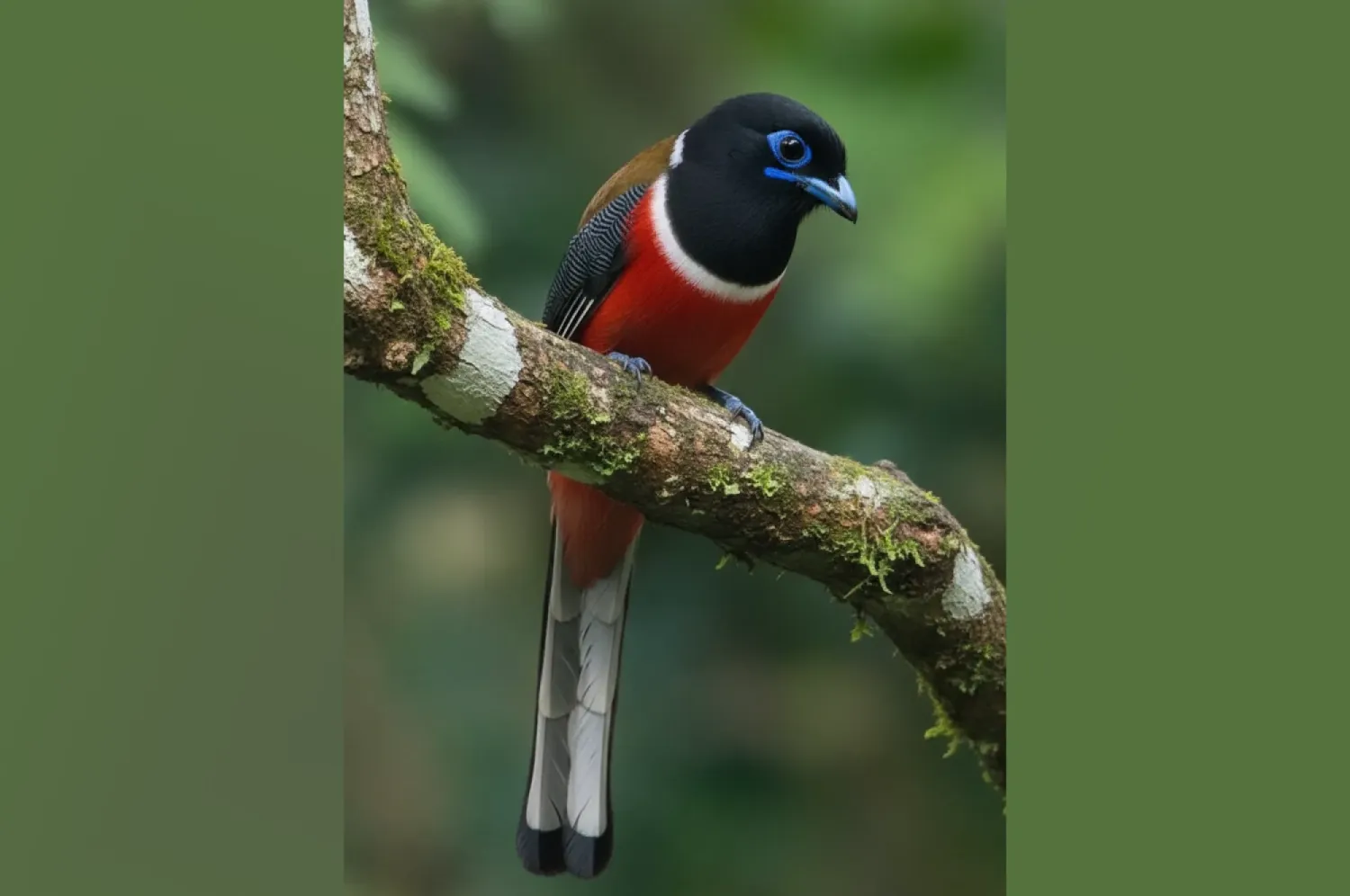
The Malabar Trogon (Harpactes fasciatus) is a stunning species belonging to the trogon family, renowned for its vibrant plumage. This insectivorous bird is a captivating resident of the lush forests across Sri Lanka and peninsular India, particularly prominent in the Western Ghats and certain hill forests of central and eastern India. With its distinctive orange and black coloration, it stands out as a true jewel of the subcontinent's avian diversity.
Physical Appearance
Measuring approximately 31 cm in length, the Malabar Trogon is a medium-sized bird. Its most striking feature is its brilliant plumage, characterized by a vivid combination of orange and black. Like other members of the trogon family, there is a noticeable difference in plumage between males and females, though specific details of these variations are not always immediately apparent in field guides without closer inspection.
Habitat
The Malabar Trogon thrives in the dense forests of Sri Lanka and peninsular India. Its presence is most notable in the Western Ghats, various hill forests of central India, and specific areas within the Eastern Ghats. Within these environments, they are typically observed perching very still, often clinging laterally to branches, especially when they feel alarmed. While not migratory in the traditional sense, these birds may undertake seasonal movements within hill forest regions, often in response to rainfall patterns.
Diet
The diet of the Malabar Trogon is primarily insectivorous, feeding almost exclusively on insects. Unlike their New World counterparts, fruits have not been commonly observed in their diet. Interestingly, seeds have been reported in the diet of specimens found in Sri Lanka. These birds are often found participating in mixed-species foraging flocks within the forests of Sri Lanka, where they can sometimes fall victim to kleptoparasitism, with drongos occasionally stealing their catches.
Breeding and Nesting
Specific details regarding the breeding and nesting habits of the Malabar Trogon were not provided in the given information. Generally, trogons are known to nest in tree cavities, often in decaying wood, but further specific research would be needed to detail the precise breeding behaviors of this particular species.
Behavior
The Malabar Trogon exhibits several distinctive behaviors. They are known for their habit of perching very still, a tactic often employed when they feel alarmed, sometimes even clinging laterally to branches. When calling, they sometimes perform a characteristic raising and lowering of their tail. Their vocalizations include a series of guttural or purring notes, while the male's song is a series of percussive 'kyau' calls. They are also known to join mixed-species foraging flocks, particularly in Sri Lankan forests.
Conservation Status - LC Least Concern
The specific conservation status of the Malabar Trogon (Harpactes fasciatus) was not provided in the given data. However, as an indicator species of forest health, their populations are generally sensitive to habitat loss and degradation across their range in India and Sri Lanka. Monitoring and conservation efforts are crucial for maintaining healthy populations of forest-dwelling birds like the Malabar Trogon.
Interesting Facts
- The Malabar Trogon is almost exclusively insectivorous, a notable distinction from many New World trogons which often consume fruits.
- Despite their primary insect diet, seeds have been reported in the diet of specimens found in Sri Lanka, indicating some dietary flexibility.
- They are not truly migratory but undertake seasonal movements within hill forest regions, likely influenced by rainfall patterns.
- These birds are sometimes observed in mixed-species foraging flocks, where they can become targets of kleptoparasitism by opportunistic drongos.
- Males and females of the Malabar Trogon display variations in plumage, a common trait among trogon species.
- They have a peculiar habit of clinging laterally to branches and remaining perfectly still, especially when alarmed, making them quite camouflaged.
Tips for Birdwatchers
For birdwatchers hoping to spot the elusive Malabar Trogon, patience is key. Focus your search in the dense forest habitats of the Western Ghats, central India, and Sri Lanka. Listen for their distinctive guttural or purring notes and the male's percussive 'kyau' calls. Look for birds perching very still, often low down and clinging laterally to branches. Their vibrant orange and black colors, though striking, can be surprisingly camouflaged against the dappled light of the forest undergrowth. Early mornings and late afternoons are often the best times for observation.
Conclusion
The Malabar Trogon stands as a magnificent example of avian beauty and adaptation within the South Asian forests. Its vibrant plumage, unique vocalizations, and specialized insectivorous diet make it a fascinating subject for ornithologists and bird enthusiasts alike. Protecting its forest habitats across India and Sri Lanka is vital to ensure the continued presence of this captivating orange and black jewel for future generations to admire.
