
Introduction
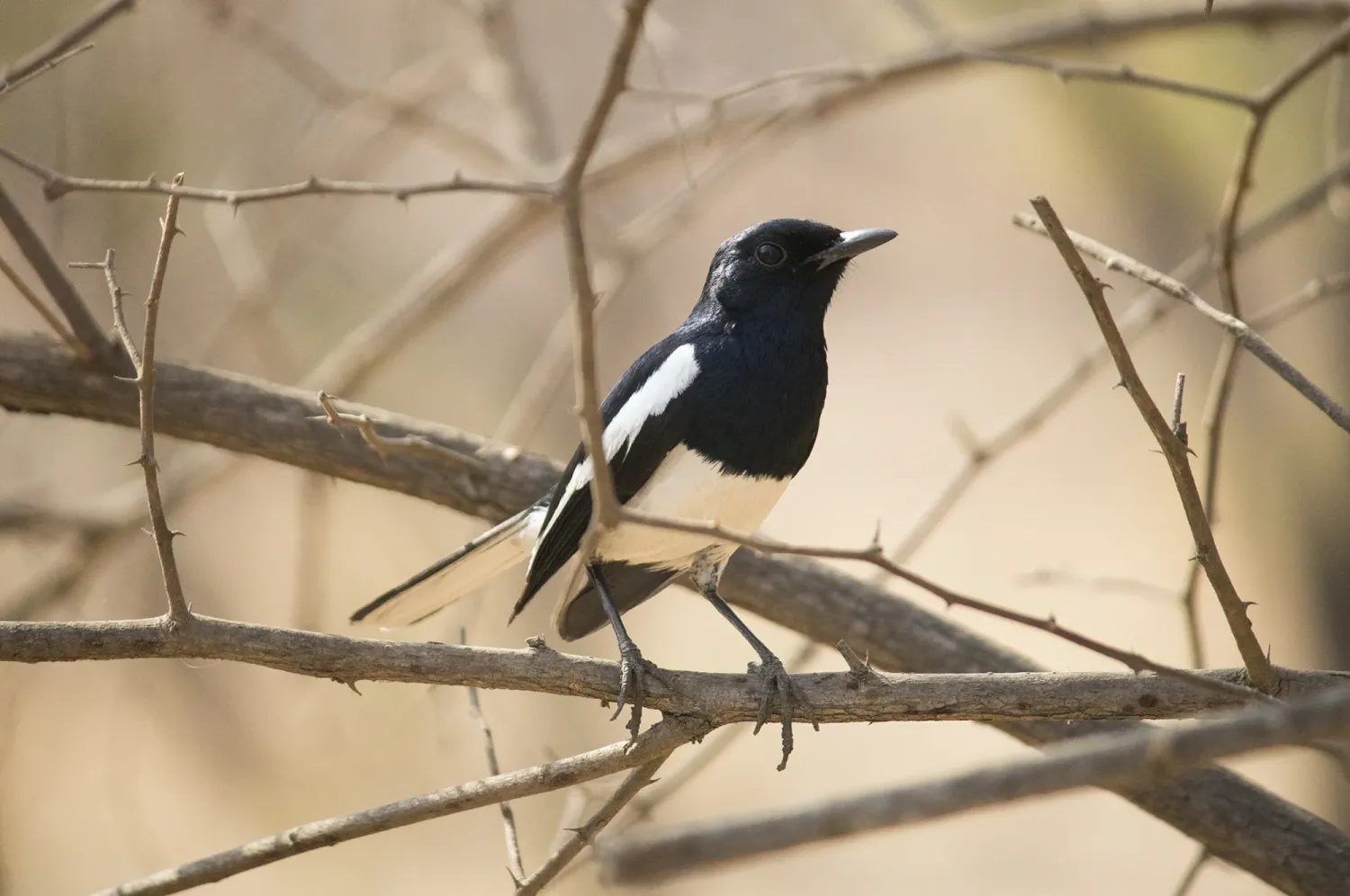
The Oriental Magpie-Robin (Copsychus saularis) is a charming and vocal small passerine bird. Formerly classified within the thrush family Turdidae, it is now recognized as a member of the Old World flycatcher family. Known for its melodious songs and striking plumage, it is one of the most recognizable birds in its range.
Physical Appearance
This species typically measures between 20 to 23 cm in length. They are distinctive black and white birds with a long tail that is frequently held upright. Males exhibit glossy black upperparts and a white belly, while females are generally more grayish-brown and white. Their wings feature a prominent white patch that is visible both at rest and in flight.
Habitat
The Oriental Magpie-Robin is highly adaptable and common in various environments. Its primary habitats include:
- Parks and urban gardens
- Cultivated areas and open woodlands
- Surroundings of human habitations
- Coastal mangroves and thickets
- Bushes and scrublands up to 2,000 metres in altitude
Diet
These birds are primarily insectivorous, feeding mainly on the ground. Their diet includes:
- Insects such as crickets and grasshoppers
- Earthworms and snails
- Small lizards
- Flower nectar and occasional plant matter
Breeding and Nesting
Oriental Magpie-Robins usually nest in tree holes or crevices in buildings and walls. They are known to be highly territorial during the breeding season. The female typically lays 4 to 5 eggs, which are incubated for about two weeks. Both parents participate in feeding the chicks.
Behavior
These birds are famous for their conspicuous behavior, often perching on high points to sing or foraging openly on lawns. A signature trait is their upright tail, which they frequently flick or cock. They are highly vocal, possessing a wide repertoire of whistles and are known to mimic the calls of other bird species.
Conservation Status - LC Least Concern
The Oriental Magpie-Robin is currently categorized as Least Concern by the IUCN. While they are abundant in many regions, they have historically faced pressure from the cage-bird trade due to their excellent singing abilities.
Interesting Facts
- It is the national bird of Bangladesh.
- The species was once a very popular cagebird because of its complex and beautiful songs.
- Despite their small size, they can be quite aggressive when defending their territory from other birds.
- They are often among the first birds to start singing at dawn.
Tips for Birdwatchers
- Look for them in early morning when they are most active and vocal.
- Check garden fences, lamp posts, and low tree branches where they like to perch.
- Listen for a variety of melodious whistles; they are often heard before they are seen.
- Watch the ground near bushes, as they spend a lot of time hopping around looking for insects.
Conclusion
The Oriental Magpie-Robin is a delightful presence in both wild and urban landscapes across the Indian subcontinent and Southeast Asia. Its striking appearance, bold personality, and beautiful song make it a favorite for birdwatchers and nature lovers alike.
