
Introduction
The Red-vented Bulbul (Pycnonotus cafer) is a prominent member of the bulbul family of passerine birds. Native to the Indian subcontinent, this bird is recognized for its adaptability and energetic personality, making it a common sight in various landscapes.
Physical Appearance
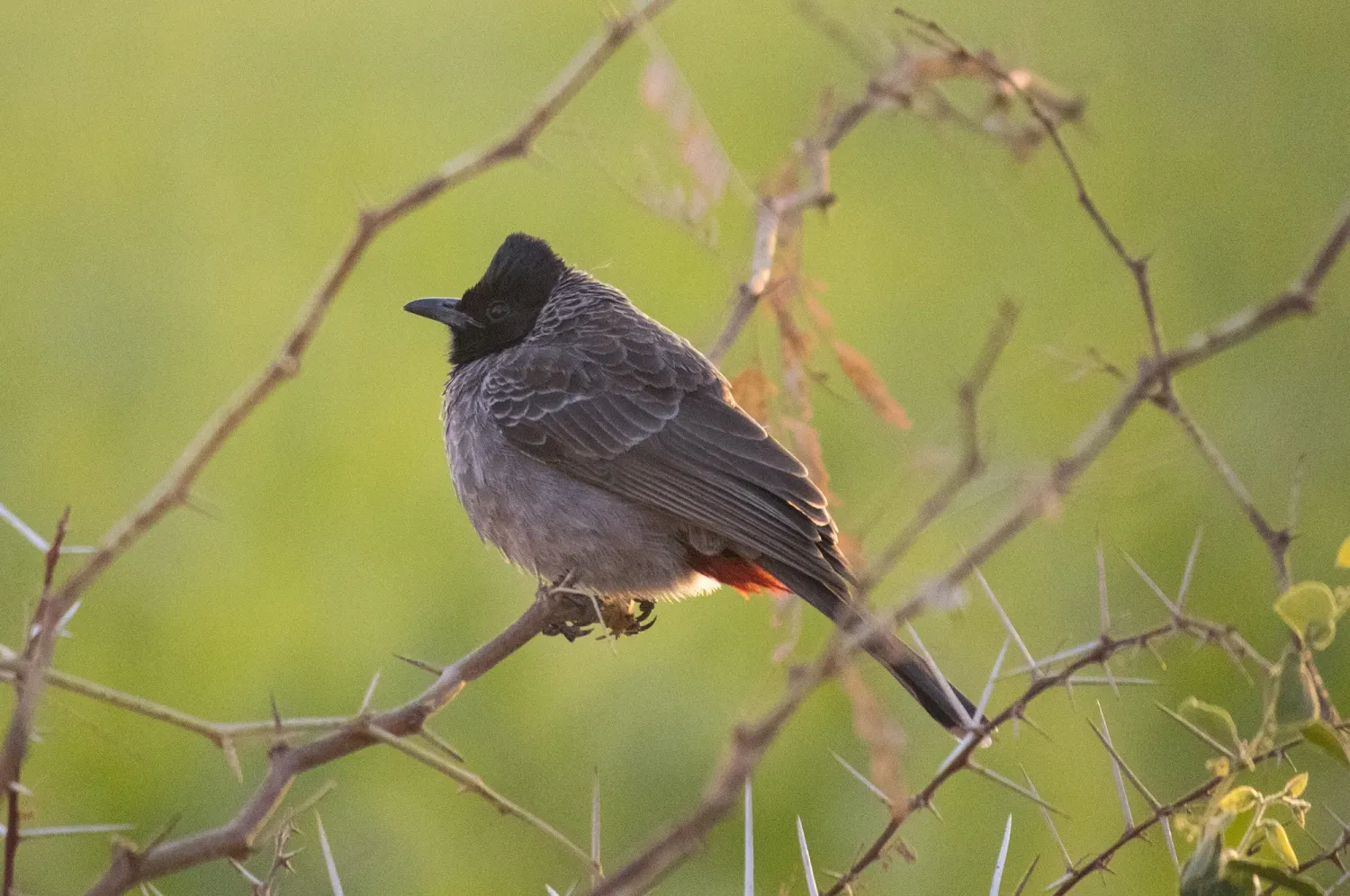
Measuring approximately 20 cm in length, the Red-vented Bulbul features a dark, scaly-patterned body and a slightly crested black head. Its most distinguishing characteristic is the bright red patch under the tail, which stands out against its white rump and dark feathers.
Habitat
These birds are highly versatile and thrive in open deciduous forests, secondary growth, gardens, and light scrub. They are known to be bold and tame, often living in close proximity to human habitats in both rural and urban settings.
Diet
The Red-vented Bulbul maintains a diverse diet that includes:
- Fruits, berries, and figs
- Leaves, flowers, buds, and nectar
- Insects and spiders
Breeding and Nesting
As resident breeders across their range, they typically build cup-shaped nests in shrubs or small trees. Their ability to adapt to different nesting environments has contributed significantly to their successful expansion across various continents.
Behavior
Characterized as bold and quarrelsome, these birds usually move in pairs or small, loose flocks. They are energetic flyers that can hover briefly to gather food and are frequently observed chasing insects on the ground or within bushes.
Conservation Status - LC Least Concern
While not a species of conservation concern in its native range, the Red-vented Bulbul is listed as one of the world's 100 worst invasive alien species due to its impact on native biodiversity in regions where it has been introduced.
Interesting Facts
- The species is native to the Indian subcontinent but has established wild populations in Hawaii, Fiji, Samoa, and Tonga.
- It is also found in parts of the United Arab Emirates, Bahrain, the United States, and Argentina.
- The Red-vented Bulbul is a resident breeder from Sri Lanka all the way to parts of Tibet and Burma.
Tips for Birdwatchers
To observe these birds, look for them on exposed perches where they sit to watch for insects. They are very vocal and active throughout the day, particularly near fruiting trees or flowering shrubs in gardens.
Conclusion
The Red-vented Bulbul is a fascinating example of avian resilience. While its presence is a delight to many birdwatchers in its native range, its classification as an invasive species elsewhere serves as a reminder of the delicate balance of global ecosystems.