
Introduction
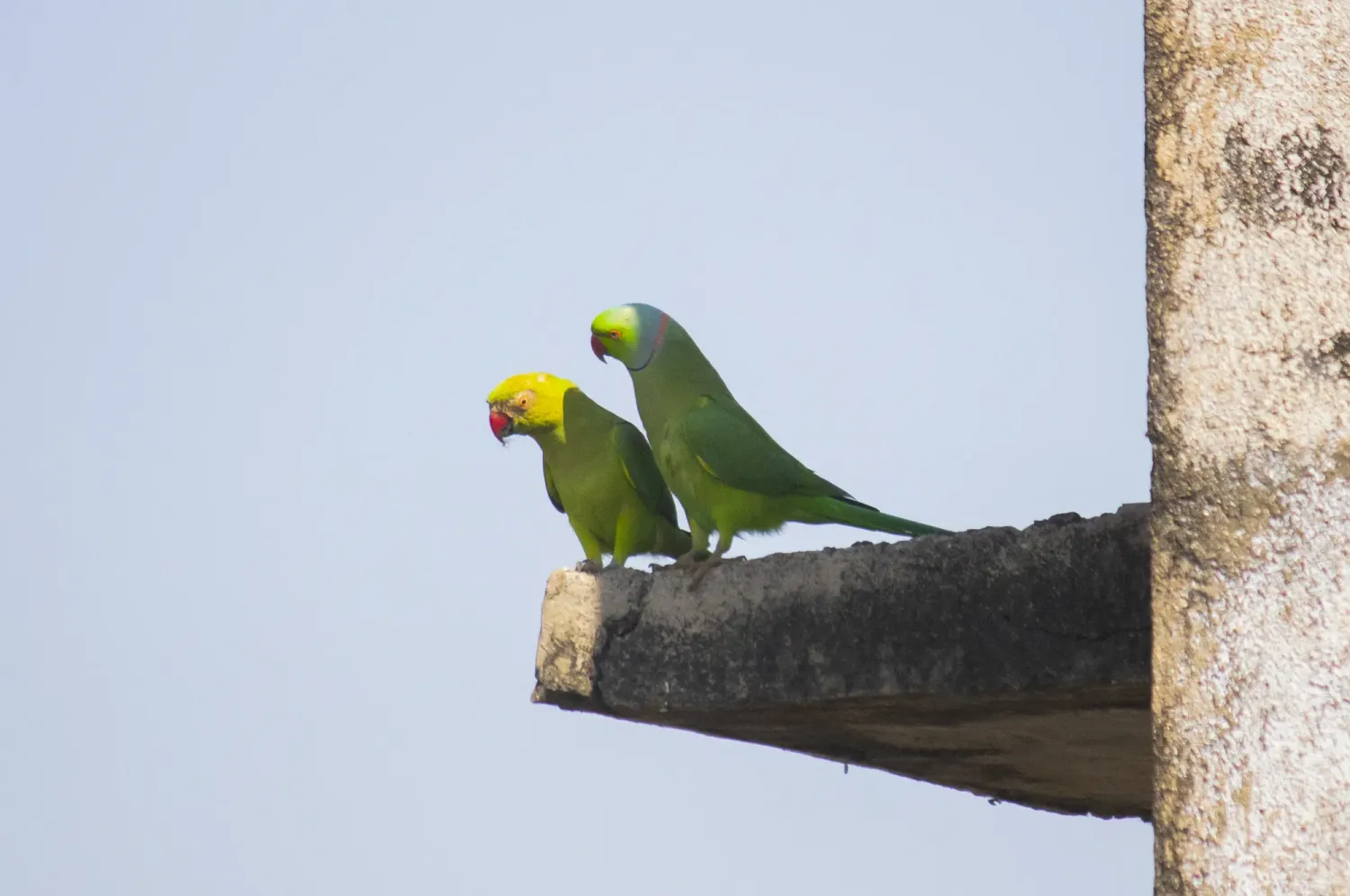
The Rose-ringed Parakeet (Psittacula krameri), also known as the Ring-necked Parakeet, is a gregarious tropical bird known for its striking green plumage and impressive adaptability. As one of the few parrot species to thrive despite urbanization, it has established a massive range across various continents.
Physical Appearance
The Rose-ringed Parakeet measures approximately 40 to 42 cm in length. A significant portion of this length is comprised of its long, elegant tail feathers. Adult males are easily identified by a black neck-ring and a pink nape-band. Females and juvenile birds generally lack these rings, though they may display faint, shadow-like grey bands around their necks.
Habitat
This resilient species inhabits a wide variety of environments, including:
- Urban areas: Large city parks and suburban gardens.
- Cultivated land: Orchards, coffee plantations, and grain fields.
- Wild landscapes: Open countryside, palm thickets, dry forests, and semi-desert savannahs.
- Lowlands: Second-growth open jungles and wooded valleys.
Diet
The Rose-ringed Parakeet is an opportunistic feeder with a diet consisting of:
- Seeds and Grains: Particularly rice and maize in agricultural areas.
- Fruits and Berries: Including varied fruits and pecan nuts.
- Nectar and Flowers: Often found feeding on blossoms in tropical regions.
- Buds: Fresh tree buds are a common food source in spring.
Breeding and Nesting
In the wild, Rose-ringed Parakeets are cavity nesters, typically utilizing holes in trees. They are known for being highly social, though they become more territorial around their nesting sites during the breeding season. Their ability to adapt to disturbed habitats means they often find nesting opportunities in urban structures as well.
Behavior
This is a noisy and social species characterized by unmistakable squawking calls. They are highly gregarious, often gathering in large groups to feed or roost. Their intelligence and ability to adapt to human-altered landscapes have made them both popular pets and successful colonizers of cities worldwide.
Conservation Status - LC Least Concern
The Rose-ringed Parakeet is currently listed as a species of Least Concern due to its extremely large range and increasing population trends. Its ability to withstand deforestation and urbanization has allowed it to remain stable while other parrot species decline.
Interesting Facts
- The tail of a Rose-ringed Parakeet accounts for a large portion of its total body length.
- It is one of the few parrot species that is non-migrating but highly successful at invading new territories.
- In some regions, they are considered agricultural pests because they can devastate orchards and grain stores.
- The species is dimorphic, meaning males and females have distinct physical differences (the neck ring).
Tips for Birdwatchers
To spot these birds, listen for their loud, high-pitched squawks in urban parks with tall trees. They are most active during the early morning and late afternoon. Look for their long tails in flight, which creates a very distinct silhouette against the sky.
Conclusion
The Rose-ringed Parakeet is a fascinating example of nature's resilience. From the deep jungles to the heart of modern metropolises, this bird continues to thrive, bringing a splash of tropical color and a loud, energetic presence to every environment it calls home.
