
Introduction
The Alexandrine Parakeet (Psittacula eupatria), also known as the Alexandrine Parrot, is a captivating medium-sized parrot belonging to the Psittacidae family. Named in honor of Alexander the Great, who introduced these magnificent birds from Punjab to European and Mediterranean royalty, nobility, and warlords, their legacy continues to fascinate. These social birds are not only cherished in their native range but have also established thriving feral populations across numerous countries, including Spain, England, Germany, and Japan, often coexisting with their close relative, the Rose-ringed Parakeet.
Physical Appearance
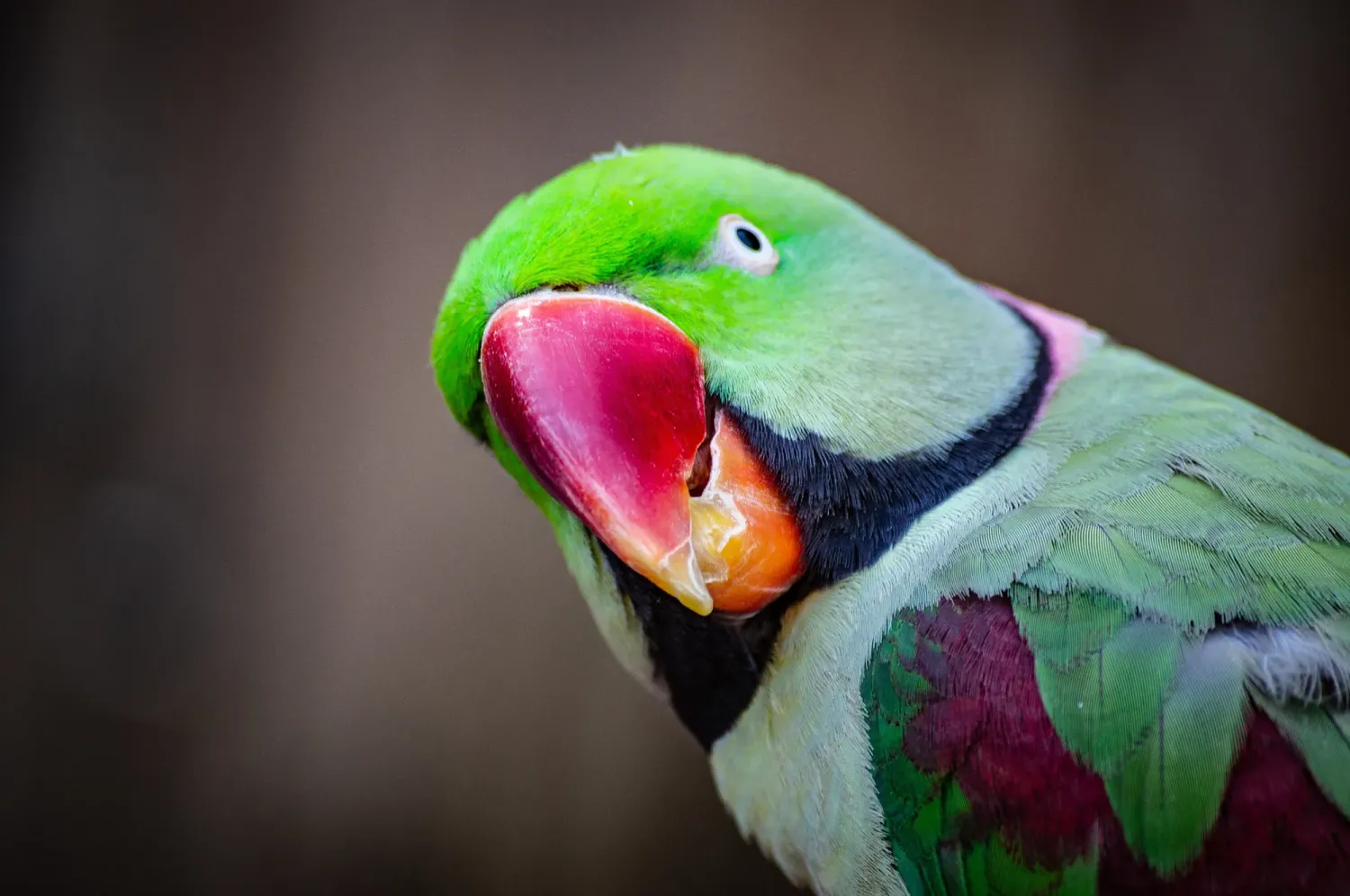
The Alexandrine Parakeet is notable for its impressive size, typically measuring between 53 to 53 centimeters in length. Its plumage is predominantly a vibrant green, beautifully contrasted by distinct pink markings, often visible on its neck or shoulders, adding to its regal appearance. This striking combination makes it easily identifiable among other parakeet species.
Habitat
These parakeets are highly social birds, frequently observed forming large flocks. They prefer living in deciduous forests and well-wooded areas, where they can find ample foraging opportunities and nesting sites. Their presence is often announced by their characteristic flight pattern – deliberate wing-beats accompanied by a harsh, loud scream. Beyond their native range, Alexandrine Parakeets have successfully adapted to urban and suburban environments, establishing significant feral populations in diverse locations such as the United Arab Emirates, Iran, and Hong Kong, demonstrating their remarkable adaptability.
Diet
The diet of the Alexandrine Parakeet is primarily vegetarian and varied. These resourceful birds feed mainly on seeds, which they expertly gather both from the ground and directly from vegetation. In addition to seeds, their diet is supplemented with various fruits and berries, providing them with essential nutrients. This diverse foraging strategy allows them to thrive in a range of environments.
Breeding and Nesting
While specific detailed information on the breeding and nesting habits of the Alexandrine Parakeet was not provided, like many parakeet species, they are generally known to be cavity nesters. They typically seek out natural tree hollows or abandoned woodpecker nests to lay their eggs and raise their young. Breeding usually occurs once a year, with both parents often involved in the care of their offspring.
Behavior
Alexandrine Parakeets are highly social creatures, known for congregating in large flocks, which can be quite conspicuous. Their flight is characterized by deliberate wing-beats, often accompanied by a distinctive harsh, loud scream that makes their presence known. These vocalizations play a crucial role in communication within their large groups. They are active during the day, spending much of their time foraging and interacting within their social structures.
Conservation Status - LC Least Concern
The specific conservation status (e.g., IUCN Red List classification) of the Alexandrine Parakeet was not explicitly provided in the available data. However, given their widespread distribution and the establishment of numerous feral populations across the globe, they appear to be a resilient species. Regional populations may face localized threats, but their overall adaptability and ability to thrive in various habitats suggest a stable, though unclassified, status in many areas.
Interesting Facts
- The Alexandrine Parakeet is named after Alexander the Great, who was instrumental in introducing these birds from Punjab to European and Mediterranean royalty, where they were highly valued.
- These parakeets can measure an impressive 53-53 cm, making them one of the larger parakeet species.
- They possess striking plumage, predominantly green with distinctive pink markings, often on the neck or shoulders.
- Alexandrine Parakeets have successfully established feral populations in at least 10 countries across Europe, the Middle East, and Asia, showcasing their adaptability to new environments.
- They often live alongside feral populations of their close relative, the Rose-ringed Parakeet (Psittacula krameri), in many of these introduced regions.
- Their presence is often announced by their harsh, loud scream and characteristic deliberate wing-beats while flying in flocks.
Tips for Birdwatchers
For birdwatchers hoping to spot the magnificent Alexandrine Parakeet, here are some tips:
- Listen for their calls: Their distinctive harsh, loud scream is often the first indication of their presence, especially when they are flying in flocks.
- Look in well-wooded areas: Focus your search on deciduous forests and well-wooded parks or gardens, particularly in regions where feral populations are known to exist.
- Observe flocks: Alexandrine Parakeets are highly social and almost always found in large numbers. Scan groups of birds for their vibrant green and pink plumage.
- Check foraging sites: They feed on seeds, fruits, and berries, so observing fruit trees or areas with fallen seeds can increase your chances of a sighting.
- Be patient: While their calls are loud, they can blend into foliage. Patience and keen observation will be rewarded with a glimpse of these beautiful parrots.
Conclusion
The Alexandrine Parakeet stands as a testament to natural beauty and remarkable adaptability. From its historical connection to Alexander the Great to its widespread presence in both native and introduced habitats, this green and pink parrot continues to captivate. Its striking appearance, social flocking behavior, and distinctive vocalizations make it a fascinating subject for ornithologists and bird enthusiasts alike. Whether soaring with deliberate wing-beats or foraging for seeds and fruits, the Alexandrine Parakeet is a vibrant and enduring symbol of the avian world.
