
Introduction
The Ruff (Calidris pugnax) is one of the most intriguing species within the sandpiper family, known for its remarkable variability and complex social structure. Unlike many other wader species, the Ruff displays extreme sexual dimorphism, particularly during the breeding season when males develop elaborate, colorful plumage ruffs and ear tufts that vary significantly between individuals. These medium-sized birds, typically measuring between 20 and 32 centimeters, are renowned for their long-distance migrations, traveling between their breeding grounds in the Arctic tundra of Eurasia and their wintering quarters in Africa, southern Asia, and parts of Europe. As a species, the Ruff has captivated ornithologists for decades due to the unique 'lek' mating system, where males gather to compete for the attention of females. Understanding the Ruff requires an appreciation for its adaptability across diverse landscapes, from damp grasslands to coastal estuaries. Whether you are a seasoned birder or a curious nature enthusiast, the Ruff offers a masterclass in avian evolution and behavioral ecology, making it a truly standout species in the world of shorebirds.
Physical Appearance
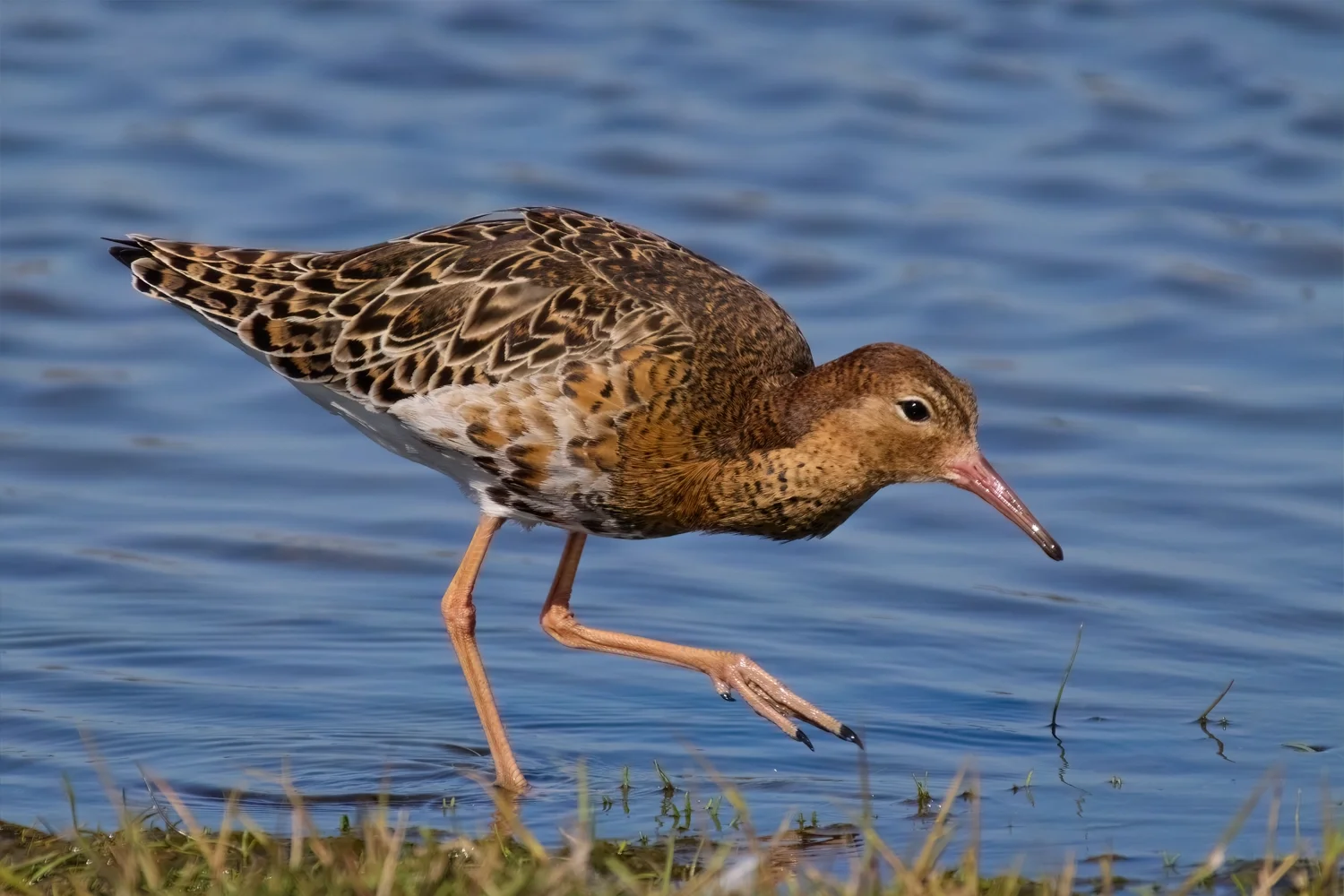
Physically, the Ruff is a bird of striking contrasts, primarily characterized by a mottled brown and white plumage that shifts depending on the season and the individual's sex. During the non-breeding season, both sexes appear relatively similar, sporting brownish-grey upperparts with pale edges, which provide excellent camouflage against mudflats and grassy wetlands. However, the male undergoes a dramatic transformation as spring approaches. During the breeding season, males grow an extravagant 'ruff' of feathers around the neck, which can be black, chestnut, white, or a combination of these colors. This display is unique to each individual male, ensuring that no two birds look exactly alike during the lekking period. Females, known as reeves, remain smaller and more cryptically colored in shades of brown and buff, which is essential for protecting them while incubating eggs on the ground. Their bills are moderately long and slightly droopy at the tip, perfectly adapted for probing soft mud in search of invertebrates. Their legs, which vary from dull yellow to orange, are long and slender, allowing them to wade through shallow water with agility and grace.
Habitat
The Ruff is primarily a bird of open, wet landscapes, demonstrating a strong preference for damp environments throughout its annual cycle. During the breeding season, they favor the vast, marshy expanses of the Arctic and sub-Arctic tundra across Eurasia. These areas provide the necessary abundance of insect life and low-lying vegetation required for successful nesting. During migration and in their wintering grounds, Ruffs are highly adaptable, frequently occupying inland wetlands, floodplains, wet meadows, and rice paddies. They are also commonly found on coastal estuaries and lagoons where they can forage on intertidal mudflats. The availability of shallow water is a critical factor in their habitat selection, as it dictates the accessibility of their primary food sources. Because they are gregarious, they often congregate in large, mixed-species flocks, turning quiet marshes into bustling hubs of avian activity during the peak of their migratory movements.
Diet
As typical waders, the Ruff is primarily carnivorous, feeding on a wide variety of small invertebrates that inhabit wetland soils and shallow waters. Their diet consists largely of aquatic insects, larvae, crustaceans, worms, and mollusks. During the breeding season, they rely heavily on the abundant supply of chironomid midges and other tundra-dwelling insects to fuel their high energy requirements. When on their wintering grounds, they diversify their intake, often foraging in damp grasslands or agricultural fields where they search for terrestrial insects and small seeds. They utilize their sensitive, long bills to probe the substrate, using a tactile sensing method to locate hidden prey. While they are predominantly insectivorous, they have been observed consuming small amounts of vegetable matter, such as seeds or algae, especially when preferred animal prey is scarce. Their foraging behavior is methodical and constant, as they walk steadily through mudflats, capturing prey with quick, precise movements of the head and bill.
Breeding and Nesting
The breeding biology of the Ruff is perhaps its most famous trait, centered around the lekking system. In this unique social structure, males gather in traditional display areas, or leks, where they engage in elaborate posturing, sparring, and vocalizing to impress visiting females. These displays involve fluffing their colorful ruffs, drooping their wings, and crouching low to the ground. Females, who are solely responsible for nesting and chick rearing, visit these leks, evaluate the competing males, and then select a mate. Once mating is complete, the female departs to build a nest, which is typically a shallow depression on the ground, lined with grass and hidden amidst tall vegetation or in a tussock. She lays a clutch of three to four eggs, which she incubates alone for approximately three weeks. The chicks are precocial, meaning they leave the nest almost immediately after hatching and are capable of finding their own food under the watchful eye of the mother, who provides protection and warmth during the critical early stages of development.
Behavior
The behavior of the Ruff is characterized by its high level of sociality and its distinct seasonal shifts in temperament. Outside of the breeding season, they are highly gregarious birds, often found in large, dense flocks that move in synchronized patterns, a phenomenon often described as 'murmuration' on a smaller scale. These flocks provide safety in numbers against predators. During the breeding season, however, the males become remarkably territorial and aggressive toward one another as they compete for dominance on the lek. This aggression is ritualized, involving intense face-to-face confrontations, though serious injury is rare. They are also noted for their long-distance migratory behavior, which is one of the most impressive feats of endurance in the avian world. They are strong, agile fliers capable of covering thousands of kilometers to reach their destination. Their communication involves a range of soft, low-pitched calls, particularly during the lekking season, when they may emit low-frequency sounds that carry across the open tundra.
Conservation Status - LC Least Concern
The Ruff is currently classified as a species of Least Concern on the IUCN Red List, though this status masks significant regional declines. Populations have faced challenges due to the drainage of wetlands, habitat fragmentation, and changes in agricultural practices across their migratory routes. Climate change also poses a growing threat to their Arctic breeding grounds, where shifts in vegetation and insect emergence times can disrupt their delicate reproductive cycle. International conservation efforts are focused on protecting key stopover sites along their migratory flyways, ensuring that these birds have safe places to rest and refuel during their extensive journeys. Continued monitoring of their population trends remains vital to identifying areas where conservation action is most needed to prevent further habitat loss.
Interesting Facts
- Ruffs are famous for their lekking behavior, where males gather to compete for mates.
- Male Ruffs have unique, individualistic plumage during the breeding season.
- Females (reeves) are significantly smaller than males and lack the colorful neck ruffs.
- They are long-distance migrants, traveling from the Arctic to Africa.
- Ruffs are known to be highly social, often foraging in large, mixed-species flocks.
- Their scientific name, Calidris pugnax, translates to 'combative sandpiper.'
- They have highly sensitive bills that allow them to detect prey underground.
- The Ruff is one of the most variable bird species in terms of appearance during the breeding phase.
Tips for Birdwatchers
For birdwatchers hoping to spot a Ruff, the best time to observe them is during the spring and autumn migration periods. Look for them in shallow, inland wetlands, flooded fields, or coastal mudflats. Because they often associate with other waders like Dunlin or Golden Plover, patience and careful scanning are required. Using a high-quality spotting scope is essential, as these birds can be wary and may remain at a distance. If you are fortunate enough to visit their breeding grounds in the Arctic, you may witness the incredible spectacle of a lek. Always maintain a respectful distance, especially during the breeding season, to avoid disturbing the birds. Keep a log of the individuals you see, noting any unique plumage variations, as this can add a rewarding layer of detail to your birdwatching experience. Joining local birding groups can also provide valuable information on recent sightings and hotspots in your area.
Conclusion
In summary, the Ruff (Calidris pugnax) stands as a testament to the complexity and wonder of the natural world. From its remarkable sexual dimorphism and unique lekking behavior to its epic migratory journeys across continents, this wader captures the imagination of anyone who observes it. While it remains a relatively common species, the threats posed by habitat loss and climate change serve as a reminder of the fragility of our ecosystems. Protecting the Ruff means protecting the vast network of wetlands that it—and countless other species—relies upon for survival. For the birdwatcher, the Ruff offers a rewarding challenge, requiring patience and keen observation skills to fully appreciate the nuances of its behavior and appearance. Whether you encounter a lone bird foraging on a quiet mudflat or a bustling flock preparing for migration, the Ruff is a species that commands respect and admiration. By supporting wetland conservation and engaging in responsible birding practices, we can ensure that these fascinating birds continue to grace our landscapes for generations to come. Their presence is a vital indicator of the health of our global wetlands, making them a cornerstone of avian conservation efforts worldwide.