
Introduction
The Sarus Crane (Antigone antigone) is a truly majestic sight, holding the title of the tallest flying bird in the world. Standing up to 1.8 meters tall, this non-migratory wader is an iconic inhabitant of the wetlands across the Indian Subcontinent, Southeast Asia, and Australia. Known for its graceful movements and deep cultural significance, the Sarus Crane is a primary target for birdwatchers and nature enthusiasts globally.
Physical Appearance
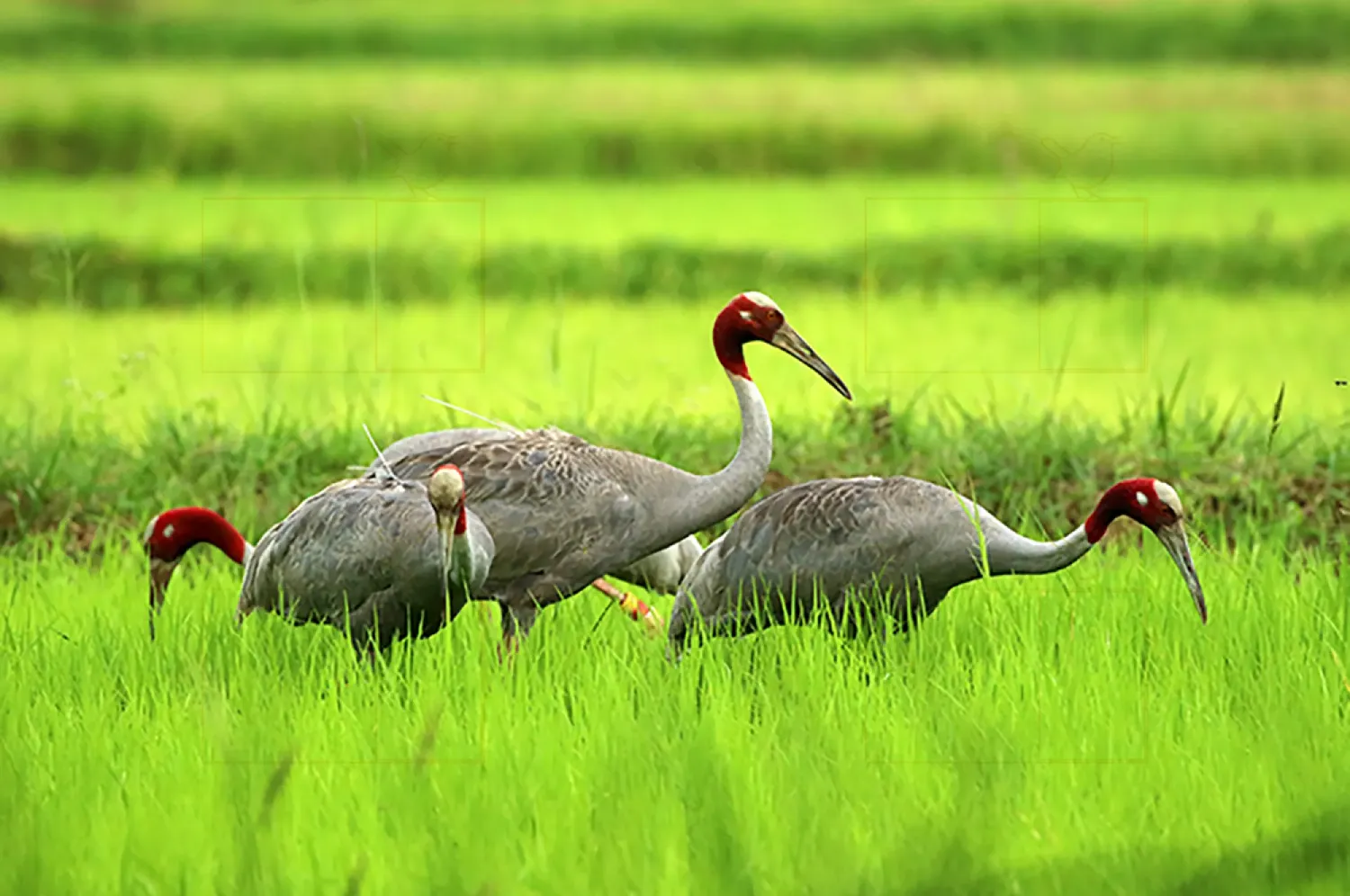
The Sarus Crane is easily identified by its impressive stature and distinct coloration. Key physical features include:
- Size: Stands between 156-180 cm (up to 5 ft 11 in) in height.
- Body Color: Primarily a pale grey plumage.
- Head and Neck: Features a bare red head and upper neck, contrasted by a bare ashy-green crown.
- Wings: In flight, the black primary feathers provide a sharp contrast against the rest of the grey wing.
- Legs and Bill: It possesses long, reddish legs and a very large, robust bill.
- Immature Appearance: Young birds have rusty-buff feathers on the head and neck, lacking the vibrant red and green crown of the adults.
Habitat
Sarus Cranes are versatile in their habitat choice, provided there is a reliable water source. Their preferred environments include:
- Agricultural Lands: Well-watered cultivation areas, particularly rice paddies.
- Wetlands: Shallow marshes, lakes, and margins of large rivers.
- Woodlands: Seasonally-flooded Dipterocarp forests in Southeast Asia and Eucalyptus-dominated woodlands in Australia.
- Artificial Structures: They are frequently seen near canals and reservoirs in agricultural landscapes.
Diet
These birds are opportunistic feeders with a varied diet that changes based on their environment. Their food sources include:
- Insects: They particularly enjoy grasshoppers.
- Small Vertebrates: They hunt for frogs, fish, and other small prey.
- Invertebrates: Crustaceans found in shallow waters.
- Plant Matter: Aquatic plants, roots, tubers, and various seeds.
Breeding and Nesting
The breeding cycle of the Sarus Crane is a fascinating display of engineering and partnership:
- Season: Breeding typically occurs during the rainy season.
- Nesting: Pairs construct an enormous "island" nest, a circular platform made of reeds and grasses.
- Nest Size: These nests can be nearly two metres in diameter, built high enough to stay above the water level.
- Loyalty: They form long-lasting pair-bonds and are famous for their devotion to one another.
Behavior
The behavior of the Sarus Crane is characterized by its loud trumpeting duet, often performed by pairs at rest or in flight. They are highly territorial birds that engage in elaborate courtship displays involving leaps, bows, and dance-like movements. Unlike many other crane species, the Sarus Crane is non-migratory, staying within its territory throughout the year.
Conservation Status - VU Vulnerable
The Sarus Crane is currently classified as globally threatened. While they have benefited from expanded irrigation and wet-crop agriculture in parts of India, they have been extirpated from many areas of their historical range. Habitat destruction and changes in land use remain the primary threats to their population.
Interesting Facts
- The Sarus Crane is the tallest flying bird in the world, reaching heights of up to 1.8 meters.
- In India, they are revered as symbols of marital fidelity and are believed to mate for life.
- Legend suggests that if one member of a pair dies, the other may starve itself to death in grief.
- Their nests are essentially man-made islands that can be large enough to support the weight of a human.
- They perform synchronized duets that can be heard from great distances.
- The subspecies G. a. sharpii is darker grey than the nominate species found in India.
Tips for Birdwatchers
To get the best view of these magnificent birds, consider the following tips:
- Early Mornings: Visit wetlands or agricultural fields at dawn when the birds are most active and vocal.
- Listen for the Trumpet: Their loud calls are the easiest way to locate them in vast open fields.
- Respect Their Space: Keep a safe distance from nesting sites, as they are protective of their "island" homes.
- Use Optics: A good pair of binoculars or a spotting scope is essential for observing their intricate courtship dances without disturbing them.
Conclusion
The Sarus Crane (Antigone antigone) is a spectacular example of avian beauty and resilience. As a symbol of loyalty and a giant of the wetlands, it remains one of the most significant species in the ecosystems of Asia and Australia. By understanding their needs and protecting their habitats, we can ensure that this "tallest flying bird" continues to grace our wetlands for generations to come.