
Introduction
The Scaly Laughingthrush (Trochalopteron subunicolor) is a fascinating species of bird belonging to the family Leiothrichidae. Often overlooked due to its subtle coloration compared to more vibrant avian species, this bird is a quintessential representative of the montane forests across the Himalayas and parts of Southeast Asia. As a member of the perching birds group, it possesses a unique charm characterized by its complex vocalizations and elusive nature. Birdwatchers and ornithologists alike prize the opportunity to spot this species in the wild, as it offers a glimpse into the diverse and rich biodiversity of high-altitude ecosystems. Understanding the life cycle, habitat requirements, and ecological role of the Scaly Laughingthrush is essential for those interested in Asian ornithology. This guide provides a comprehensive overview of the bird, detailing its physical characteristics, behavioral patterns, and the conservation efforts required to ensure its continued presence in the wild, making it an indispensable resource for enthusiasts and researchers alike.
Physical Appearance
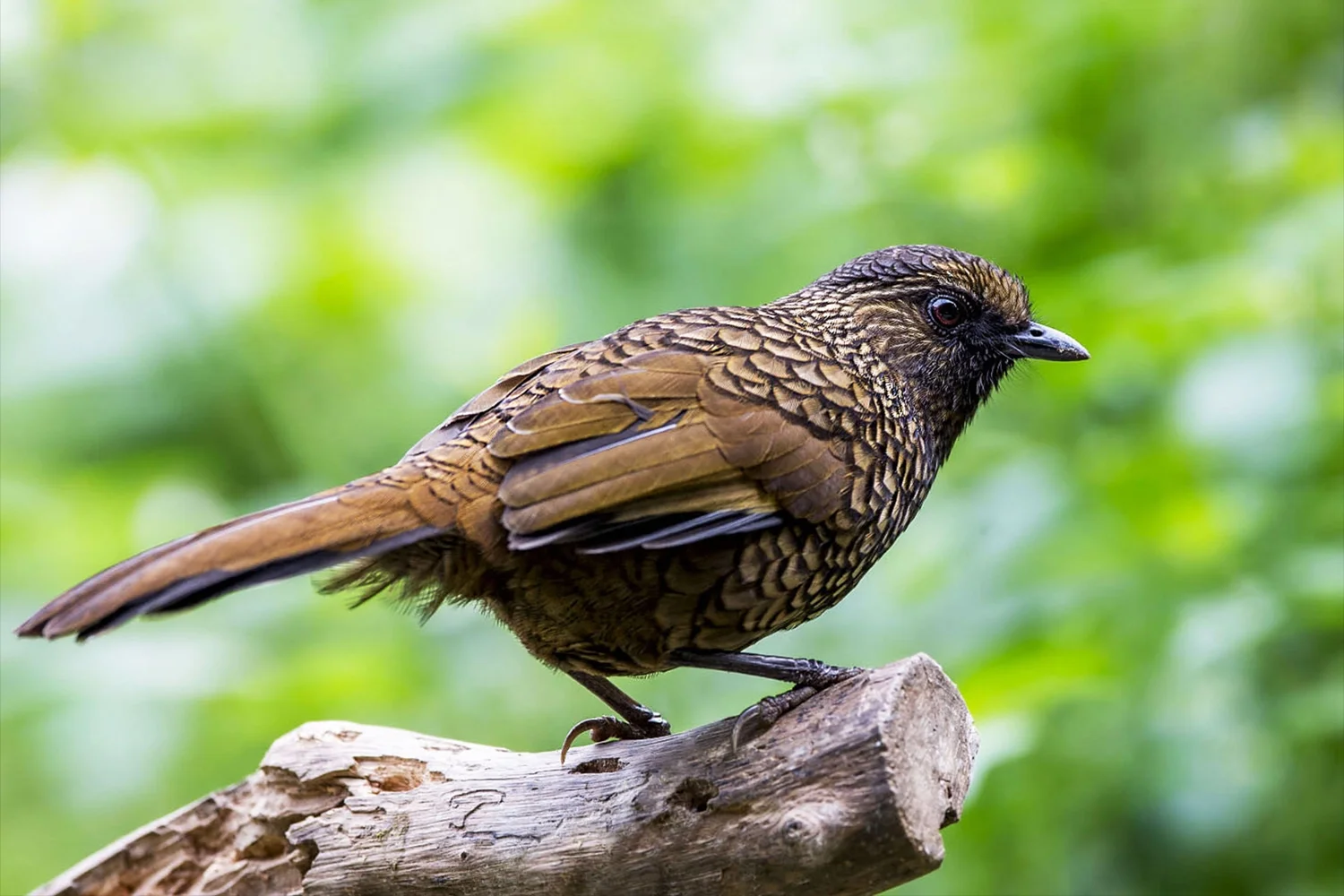
Measuring between 23 and 25 centimeters in length, the Scaly Laughingthrush is a medium-sized bird that exhibits a distinct, understated beauty. Its primary plumage color is a rich, earthy olive-brown, which provides excellent camouflage against the bark and foliage of its forest habitat. The bird earns its name from the intricate, scale-like pattern that covers much of its body, created by contrasting dark edges on its feathers. The secondary color is a prominent black, which is typically found on the wing feathers and around the facial area, providing a stark visual contrast to the olive-brown base. The bird has a robust, slightly curved bill, which is well-adapted for foraging among dense undergrowth. Its eyes are often surrounded by a subtle ring, and its legs are strong, supporting its active, hopping locomotion through the canopy and forest floor. Both sexes appear relatively similar in appearance, displaying a harmonious blend of colors that allows them to remain inconspicuous while moving through the dappled sunlight of their natural environment.
Habitat
The Scaly Laughingthrush is primarily found in the moist, temperate, and subtropical montane forests of the Himalayas, ranging from Nepal and Bhutan to parts of northeastern India, Myanmar, and southern China. These birds prefer high-altitude environments, typically inhabiting elevations between 1,500 and 3,000 meters. They are most commonly encountered in dense broad-leaved forests, rhododendron thickets, and areas with thick bamboo undergrowth. The bird relies heavily on these dense, complex vegetation structures for protection from predators and as a reliable source of food. They are generally sedentary, remaining in the same mountainous regions throughout the year, although they may perform slight altitudinal migrations during particularly harsh winter weather to find more favorable conditions in lower valleys.
Diet
As an opportunistic feeder, the Scaly Laughingthrush maintains a diverse and varied diet that shifts depending on the seasonal availability of food sources. Its primary diet consists of a wide array of insects, small invertebrates, beetles, and larvae, which it skillfully gleans from branches, leaves, and the forest floor. During the warmer months, when insect populations are at their peak, the bird focuses heavily on this protein-rich food source to support its energy needs and breeding efforts. In addition to its insectivorous habits, it also consumes a significant amount of plant matter, including various seeds, berries, fruits, and nectar from forest flowers. This omnivorous strategy allows the Scaly Laughingthrush to survive in environments where specific food sources might be scarce, showcasing its adaptability and importance as a seed disperser within its forest ecosystem.
Breeding and Nesting
Breeding for the Scaly Laughingthrush typically occurs during the spring and early summer months, coinciding with the abundance of insect life and favorable weather conditions. The birds are known to construct cup-shaped nests, which are meticulously crafted from twigs, moss, grass, and rootlets. These nests are usually positioned in the dense foliage of shrubs or low trees, often well-hidden from predators. Both the male and female participate in the nest-building process and the subsequent care of the young. A typical clutch consists of two to four eggs, which are incubated by the female for approximately two weeks. Once the chicks hatch, both parents share the responsibility of foraging and bringing insects to the nest, ensuring the rapid growth and development of the nestlings until they are ready to fledge after about three weeks.
Behavior
The Scaly Laughingthrush is a highly social and active bird, often observed moving in small, noisy groups or pairs through the dense undergrowth. They are well-known for their complex and varied vocalizations, which include melodic whistles, harsh calls, and chattering sounds that give the 'laughing' impression for which the group is named. These vocalizations are crucial for maintaining group cohesion and for communicating territory boundaries. While they spend much of their time foraging in the lower canopy and on the ground, they are relatively shy and elusive, often retreating into deeper cover when approached. Their hopping movement is energetic, and they are constantly on the move, using their strong legs to navigate through tangles of vegetation in search of food.
Conservation Status - LC Least Concern
Currently, the Scaly Laughingthrush is classified as a species of Least Concern by the IUCN. However, this status does not mean the species is free from threats. Habitat loss due to deforestation, the expansion of agriculture, and climate change affecting high-altitude forest ecosystems are significant concerns. As these montane forests are fragmented, the populations of the Scaly Laughingthrush may become isolated, reducing genetic diversity. Continued monitoring of their population trends is essential to ensure that their habitat remains protected and that they are not negatively impacted by human encroachment into their remote mountainous territories.
Interesting Facts
- The 'scaly' appearance is caused by the dark, crescent-shaped margins on their feathers.
- They are highly social birds and are rarely seen alone, preferring the company of their kin.
- Despite their name, their calls are often more melodic than a human laugh.
- They are essential for forest health as they help control insect populations.
- These birds are known to be quite curious but remain cautious around human observers.
- Their olive-brown plumage acts as perfect camouflage in the shadow-dappled Himalayan forests.
Tips for Birdwatchers
For birdwatchers hoping to spot the Scaly Laughingthrush, patience and a keen ear are your best tools. Because they are shy, you should look for them in the dense understory of Himalayan forests, particularly near areas with bamboo. Early mornings are the best time for observation, as the birds are most active and vocal. Listen for their distinctive chattering calls, which often precede a sighting. Using a high-quality pair of binoculars is essential due to the dim lighting in their preferred habitats. Wear neutral-colored clothing to blend into the environment and remain as quiet as possible. If you find a flock, move slowly and observe their foraging behavior, as they are often too busy searching for food to notice a still, observant watcher.
Conclusion
In conclusion, the Scaly Laughingthrush (Trochalopteron subunicolor represents a vital component of the montane forest ecosystems it inhabits. Its unique physical traits, such as its scale-patterned plumage and its adaptive, omnivorous diet, allow it to thrive in the complex and often challenging environments of the Himalayas. Beyond its biological characteristics, the bird serves as a reminder of the intricate connections within nature, from its role in insect control to its contribution to seed dispersal. While currently stable, the future of this species depends on our collective commitment to preserving the high-altitude forests that provide it with shelter and sustenance. For birdwatchers, the Scaly Laughingthrush offers a rewarding experience, challenging one's observational skills and providing a deeper appreciation for the less-conspicuous inhabitants of our planet. Protecting this bird means protecting the integrity of the mountain ecosystems themselves, ensuring that future generations can continue to witness their lively, social presence in the wild. As we continue to study and document the lives of these birds, we gain valuable insights into the broader health of our global biodiversity, making the conservation of the Scaly Laughingthrush a priority for anyone who values the wild, untamed beauty of the high mountains.