
Introduction
The White-throated Laughingthrush (Pterorhinus albogularis) is a fascinating member of the Leiothrichidae family, known for its distinctive and lively presence within the forests of Asia. As a quintessential perching bird, it captures the attention of ornithologists and casual birdwatchers alike with its melodious, often raucous calls that echo through its woodland home. Measuring between 25 and 30 centimeters in length, this species is relatively large compared to many other passerines, possessing a robust build that serves it well in the rugged terrain it inhabits. The bird is primarily recognized by its warm, earthy brown plumage, which provides excellent camouflage against the forest floor and understory, contrasted beautifully by a crisp, clean white throat patch that gives the species its common name. Beyond its physical appearance, the White-throated Laughingthrush is celebrated for its highly social nature, often traveling in boisterous family groups that maintain constant communication through a complex repertoire of vocalizations. Understanding this species offers a deeper look into the biodiversity of Asian mountain ecosystems, reflecting the delicate balance of forest life that these birds both inhabit and help maintain.
Physical Appearance
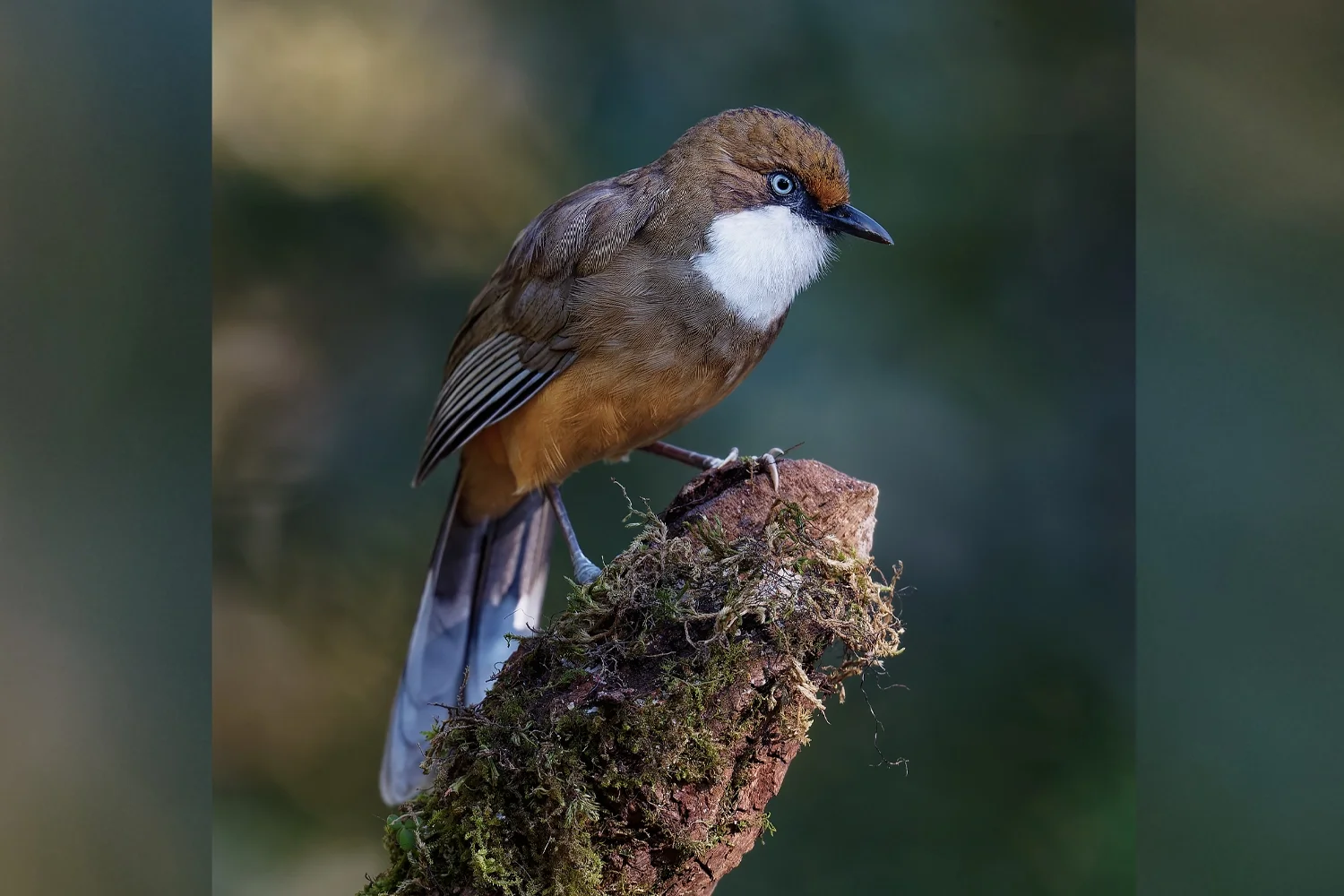
The White-throated Laughingthrush is a bird of striking yet understated beauty, characterized by a harmonious blend of colors that allow it to blend seamlessly into its natural environment. At a size of 25 to 30 cm, it presents a sturdy and compact silhouette. Its primary coloration is a rich, warm brown, which blankets the wings, back, and tail, offering a protective aesthetic that helps the bird remain inconspicuous while foraging in dense vegetation. The most defining feature, however, is the brilliant white patch on its throat, which stands out sharply against the darker tones of the breast and head. This white throat is not just a visual marker but often plays a role in social signaling within the flock. The head displays a slightly darker, sometimes grayish-brown shade, while the eyes are typically dark and alert, surrounded by a subtle eye ring. Its bill is strong and slightly curved, perfectly adapted for probing into bark and leaf litter for insects. The tail is relatively long and rounded, aiding in balance as the bird moves through the canopy. Juveniles tend to have slightly duller plumage, gaining the characteristic intensity of their adult coloration as they mature, ensuring that even at a distance, this bird remains a distinct and recognizable sight for those who know what to look for.
Habitat
The White-throated Laughingthrush is primarily found in the temperate and subtropical regions of the Himalayas and surrounding mountain ranges. Its preferred habitat consists of dense broad-leaved evergreen forests, oak forests, and rhododendron thickets, often at elevations ranging from 1,000 to 3,000 meters. These birds favor areas with heavy undergrowth, which provides essential protection from predators and ample opportunities for foraging. They are frequently spotted along the edges of mountain streams or in damp, mossy forest floors where leaf litter is abundant. By staying within the safety of the dense canopy and thick understory, they are able to navigate the complex forest architecture with ease, finding both food and nesting sites in the secluded corners of their high-altitude homes.
Diet
As an opportunistic feeder, the White-throated Laughingthrush maintains a diverse and varied diet that shifts according to the seasons. Its primary food sources include a wide array of insects, such as beetles, caterpillars, ants, and spiders, which it skillfully gleans from the bark of trees or unearths from the forest floor. In addition to its insectivorous habits, this bird is also fond of plant matter. It frequently consumes berries, small fruits, seeds, and nectar from various mountain flowers. This omnivorous strategy allows the Laughingthrush to remain resilient throughout the year, ensuring it can thrive even when specific food items become scarce during the colder winter months in its high-altitude range.
Breeding and Nesting
The breeding season for the White-throated Laughingthrush typically occurs during the spring and early summer months, aligning with the peak availability of food resources to support their offspring. These birds are known for building sturdy, cup-shaped nests constructed from a variety of materials, including twigs, moss, grass, and rootlets. The nest is usually well-hidden, tucked securely into the fork of a tree or nestled deep within dense shrubbery or vines to provide maximum protection from potential predators. Both parents are highly involved in the reproductive process, sharing the responsibilities of nest construction, incubation of the eggs, and the diligent feeding of the chicks. A typical clutch consists of two to four eggs, which have a smooth texture and are often a pale blue or greenish color. Once the eggs hatch, the parents work tirelessly to provide a protein-rich diet of insects to the growing young, ensuring their survival until they are ready to fledge and join the social dynamics of the family group.
Behavior
Behaviorally, the White-throated Laughingthrush is defined by its highly social and gregarious nature. These birds are rarely seen alone, preferring the company of their kin in small to medium-sized flocks. They are notoriously noisy, with a series of loud, laughing calls that give them their common name. These vocalizations are essential for maintaining group cohesion while moving through dense foliage. They are active, energetic foragers that spend much of their day hopping between branches or hopping across the ground in a rhythmic, searching motion. Despite their noisy reputation, they can be surprisingly elusive when they detect a threat, quickly disappearing into the deep cover of the undergrowth.
Conservation Status - LC Least Concern
The White-throated Laughingthrush is currently classified as a species of Least Concern by the IUCN. While its population is considered stable, it is not immune to the challenges posed by environmental changes. The primary threat to this species is the ongoing degradation and fragmentation of its forest habitat due to deforestation and human encroachment in Himalayan regions. Maintaining the integrity of these high-altitude ecosystems is crucial for their long-term survival. Continued monitoring and the protection of large, contiguous forest tracts are essential to ensure that these birds continue to thrive in their natural environment for generations to come.
Interesting Facts
- They are known for their loud, cackling vocalizations that sound remarkably like human laughter.
- They are highly social birds that engage in communal grooming and cooperative feeding.
- The white throat patch serves as a key visual signal during social interactions within the flock.
- They are remarkably agile, capable of maneuvering through dense, thorny undergrowth with minimal effort.
- Their diet is remarkably flexible, allowing them to adapt to different elevations and seasonal food availability.
- They often participate in 'mobbing' behavior, where a group of birds will loudly harass a predator to drive it away.
Tips for Birdwatchers
For birdwatchers hoping to spot the White-throated Laughingthrush, patience and silence are your greatest assets. Because these birds are highly social and vocal, the best strategy is to listen for their distinctive 'laughing' calls rather than trying to spot them visually from afar. Early morning is the most active time for these birds, as they move through the canopy in search of food. Wear muted colors to blend into the forest environment and use high-quality binoculars to observe their behavior from a distance, as they can be wary of sudden movements. Focus your search on areas with dense rhododendron or oak undergrowth near water sources, as these are frequent hotspots for foraging flocks. Always keep a respectful distance to avoid disturbing their social structure or nesting sites, and enjoy the reward of watching these charismatic birds in their natural, wild habitat.
Conclusion
In conclusion, the White-throated Laughingthrush (Pterorhinus albogularis) is a remarkable species that exemplifies the beauty and complexity of high-altitude avian life. From its striking physical appearance, marked by that signature white throat and robust brown plumage, to its boisterous social behavior and complex vocalizations, this bird remains a highlight for anyone exploring the mountain forests of Asia. By understanding its specific habitat requirements, dietary habits, and breeding cycles, we gain a deeper appreciation for the ecological roles it plays within its environment. While currently stable in terms of conservation status, the species serves as a reminder of the importance of protecting forest biodiversity against the pressures of human expansion. Birdwatchers and conservationists alike have a shared responsibility to observe these creatures ethically and advocate for the preservation of the wild spaces they call home. Whether you are an experienced ornithologist or a novice bird enthusiast, encountering a flock of White-throated Laughingthrushes in the wild is an unforgettable experience that brings the vibrant, echoing sounds of the forest to life. As we continue to study and protect these unique perching birds, we ensure that the forests of the Himalayas remain filled with their iconic and joyful song for many years to come.