
Introduction
The Violet Sabrewing (Campylopterus hemileucurus) is widely regarded as one of the most spectacular members of the hummingbird family. Found primarily in the lush, mountainous regions of Central America, this bird is a marvel of evolution and aesthetic beauty. As a member of the perching bird group, it commands attention with its robust size and deep, iridescent plumage. Unlike many smaller hummingbirds that flit rapidly and erratically, the Violet Sabrewing possesses a powerful flight and a presence that is both graceful and dominant. Ornithologists and birdwatchers alike prize sightings of this species, as it represents the vibrant biodiversity of the cloud forests. By understanding its biology, ecological role, and specific environmental needs, we can better appreciate why this avian gem is a focal point for conservation efforts in the Neotropics. Whether you are a seasoned researcher or a backyard enthusiast, the Violet Sabrewing offers a fascinating glimpse into the complex world of hummingbirds.
Physical Appearance
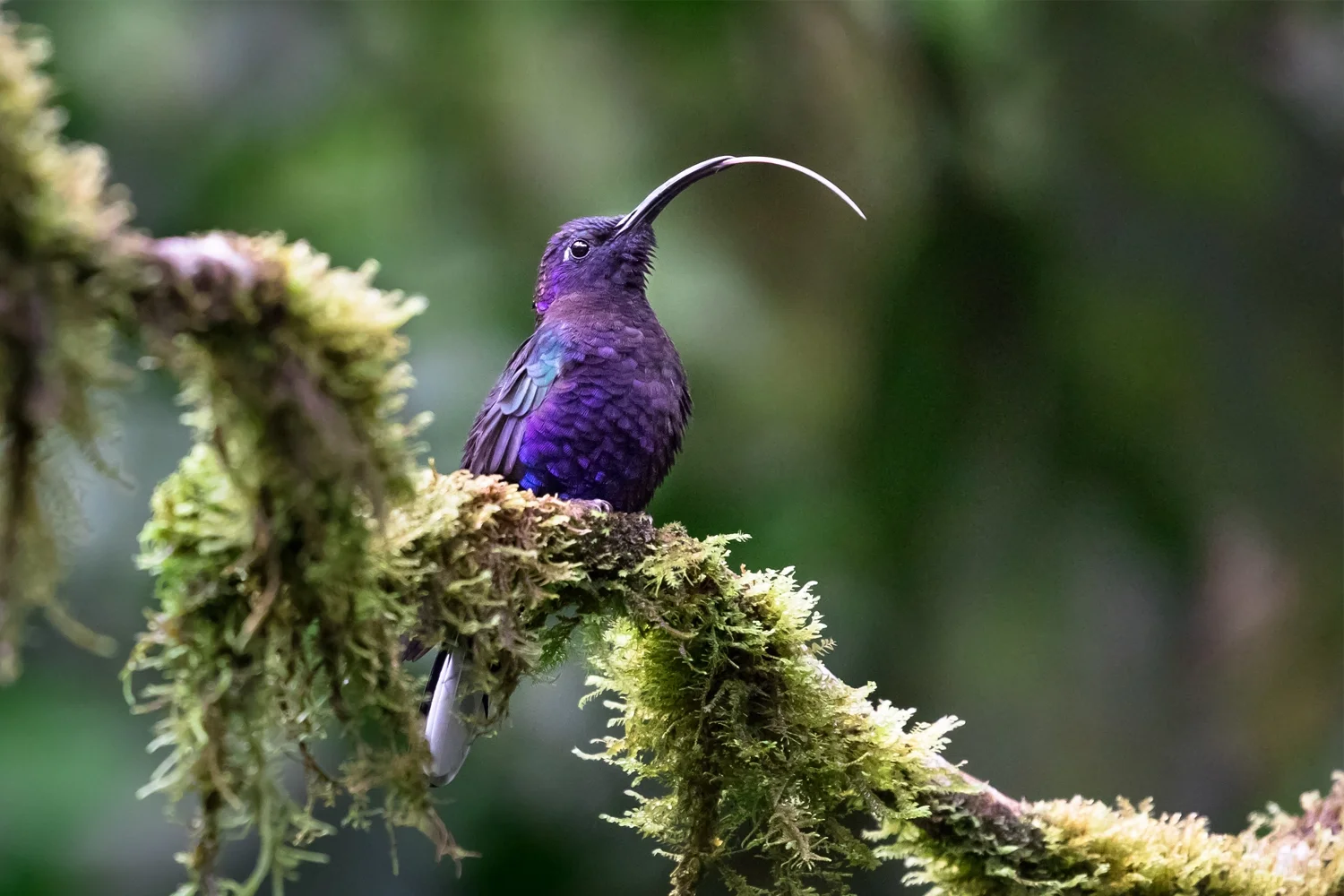
Measuring between 12 and 15 centimeters in length, the Violet Sabrewing is one of the largest hummingbirds found in its range. The primary color of the male is a deep, striking violet that shimmers with an intense metallic luster under direct sunlight. This rich purple hue covers much of the body, creating a regal appearance that is truly unmistakable in the wild. The secondary color is a lush, dark green, which typically manifests on the wings and back, providing a beautiful contrast to the violet underparts. The tail is long and rounded, featuring white outer rectrices that are often visible during flight. Females are slightly more subdued in coloration but maintain the elegant silhouette of the species. Both sexes possess a long, slightly decurved black bill perfectly adapted for deep-throated flowers. The structural integrity of their feathers allows for remarkable light refraction, making the bird appear to change colors as it maneuvers through the dense forest understory.
Habitat
The Violet Sabrewing is primarily a bird of the humid, tropical, and subtropical cloud forests. It thrives in high-elevation areas, typically ranging from 500 to 2,500 meters above sea level. These environments provide the dense vegetation and consistent rainfall necessary to support the nectar-rich flora the bird depends on. They are often found along the edges of forests, near streams, and in shaded ravines where the canopy remains thick. Because they are highly sensitive to habitat degradation, they are considered indicator species for the health of the cloud forest ecosystem. Protecting these mountainous corridors is essential for their long-term survival and continued presence in the regions they call home.
Diet
As an active pollinator, the diet of the Violet Sabrewing consists almost exclusively of nectar from a variety of flowering plants. They have a strong preference for flowers with long, curved corollas, such as those found in the Heliconia and Gesneriad families. Because of their relatively large size, they are capable of hovering for extended periods to extract nectar, but they are also known to 'trap-line'—a behavior where they visit a specific circuit of flowers throughout the day. In addition to nectar, they supplement their diet with small arthropods, including gnats, spiders, and fruit flies, which provide necessary proteins and minerals for muscle maintenance and reproductive health.
Breeding and Nesting
The breeding cycle of the Violet Sabrewing is a complex and highly specialized process. Males establish and fiercely defend lekking territories—small, communal areas where they perform elaborate aerial displays and vocalizations to attract prospective mates. Once a pair is formed, the female takes full responsibility for nest construction, incubation, and chick-rearing. The nest is a sophisticated cup-shaped structure made of moss, lichen, and spider silk, usually positioned on a horizontal branch near a mountain stream. The female typically lays two white eggs, which she incubates for approximately two to three weeks. The chicks are altricial, meaning they are born naked and helpless, requiring constant feeding and protection from the elements. As the young grow, the female displays incredible dedication, often making dozens of trips per hour to provide enough nectar and protein to ensure their successful fledging into the forest canopy.
Behavior
The Violet Sabrewing is known for its bold and somewhat territorial behavior. Unlike smaller, more timid hummingbirds, this species is often aggressive, frequently chasing away intruders from its preferred feeding patches. They are highly active throughout the day, though they are most vocal during the early morning hours. Their flight is strong and purposeful, characterized by a distinct, audible hum created by their wing beats. While they are usually solitary, they may congregate in areas with an abundance of flowering trees, leading to fascinating, albeit tense, social interactions. Their ability to navigate dense undergrowth with precision highlights their remarkable agility and mastery of their environment.
Conservation Status - LC Least Concern
Currently, the Violet Sabrewing is classified as a species of Least Concern by the IUCN, although this status is somewhat deceptive. While their total population remains stable, they are increasingly threatened by habitat loss due to deforestation, agricultural expansion, and climate change. Because they are restricted to specific cloud forest elevations, they have limited ability to migrate to new areas if their current environment is destroyed. Continued monitoring of their population density and the protection of primary forest fragments remain critical priorities for regional conservation organizations and international environmental groups.
Interesting Facts
- The Violet Sabrewing is one of the largest hummingbird species in the world.
- Males perform intricate group displays known as leks to attract females.
- Their wings produce a distinctive, low-frequency hum compared to smaller hummingbirds.
- They possess a specialized, slightly curved bill designed for specific flower shapes.
- Females are the sole providers of parental care, from nest building to fledging.
- They play a vital role as pollinators for many endemic cloud forest plants.
- The white tips on their outer tail feathers act as visual signals during flight.
Tips for Birdwatchers
For birdwatchers hoping to catch a glimpse of the Violet Sabrewing, patience is the ultimate key. Focus your efforts on the mid-elevation cloud forests of Central America, particularly near flowering Heliconia patches. Early morning is the best time for observation, as the birds are most active and vocal. Carry high-quality binoculars, as the iridescent plumage can be difficult to discern in the low light of the forest understory. Avoid using playback calls, as this can cause unnecessary stress to the birds. Instead, find a comfortable spot near a known feeding site and wait for the birds to return to their regular circuit. If you remain still and quiet, these bold hummingbirds may come surprisingly close, providing excellent opportunities for photography and study.
Conclusion
The Violet Sabrewing is a true icon of the Neotropical cloud forests, representing the intricate balance of life in some of the most biodiverse regions on Earth. From its stunning purple and green coloration to its complex social behaviors and vital role as a pollinator, this bird captivates the imagination of anyone fortunate enough to see it in its natural habitat. However, the beauty of the Sabrewing is a reminder of the fragility of the ecosystems it inhabits. As we face global environmental challenges, the survival of this species depends on our collective commitment to preserving the integrity of mountainous forest corridors and supporting sustainable land-use practices. By studying and appreciating the Violet Sabrewing, we gain a deeper understanding of the ecological threads that connect all living things. Whether you are a dedicated ornithologist or a casual nature lover, the story of this hummingbird encourages a greater respect for the natural world and the delicate, shimmering wonders that exist within it. We must ensure that future generations can continue to witness the breathtaking flight of the Violet Sabrewing against the misty backdrop of the clouds.
