
Introduction
The Western Water Rail (Rallus aquaticus) is a fascinating, albeit elusive, member of the Rallidae family. Often heard but rarely seen, this secretive wader is a master of camouflage within dense wetland vegetation, making it a prized sighting for dedicated birdwatchers.
Physical Appearance
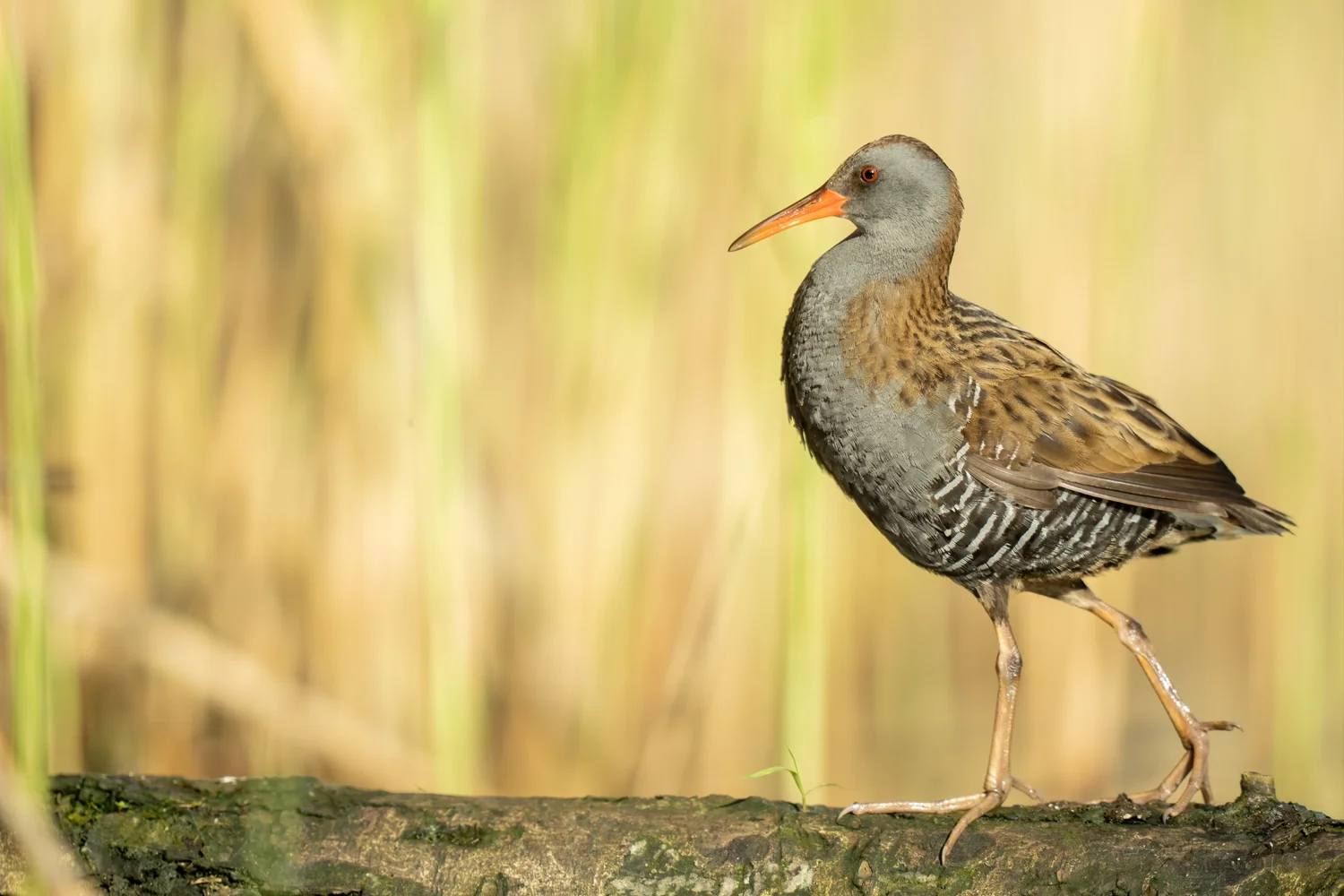
The Western Water Rail is a medium-sized bird, typically measuring between 23-28 cm in length. Its plumage is a masterclass in natural concealment, featuring a primary color of brown with dark streaking on the back, which helps it blend into reedbeds. This is contrasted by a striking blue-grey coloration on its face, throat, and breast, complemented by a long, slender, reddish-orange bill perfectly adapted for probing mud and shallow water.
Habitat
This species is primarily found in wetland environments. Key habitats include:
- Dense reedbeds and marshes
- Fens and swamps
- Slow-moving water edges
- Well-vegetated riverbanks and lagoons
Diet
The Western Water Rail is an omnivorous opportunistic feeder. Its diet consists of:
- Small fish and amphibians
- Aquatic insects and larvae
- Worms and crustaceans
- Seeds and berries during winter months
Breeding and Nesting
Breeding typically occurs in spring. The nest is a sturdy platform constructed from reeds and sedges, carefully hidden within thick aquatic vegetation just above the water level. Both parents share the responsibility of incubating the 6 to 11 eggs and tending to the downy, black chicks.
Behavior
The Western Water Rail is known for its shy and solitary nature. It moves with a distinctive jerky gait through reeds, often flicking its tail. Despite its secretive behavior, the species is highly territorial during the breeding season and is known for a variety of vocalizations, including the famous 'pig-like' squeal that often reveals its presence.
Conservation Status - LC Least Concern
Currently, the Western Water Rail is classified as Least Concern on the IUCN Red List. However, it remains vulnerable to habitat loss and the degradation of wetland ecosystems, which are critical for its survival.
Interesting Facts
- Its call is often compared to the sound of a squealing piglet.
- Despite their appearance, they are capable of strong, long-distance migration.
- Their laterally compressed bodies allow them to move quickly through dense reeds without making a sound.
- They are primarily crepuscular, meaning they are most active during dawn and dusk.
Tips for Birdwatchers
To spot a Western Water Rail, patience is essential. Focus on the edges of reedbeds during the quiet hours of dawn or dusk. Use high-quality binoculars and remain perfectly still; the bird is sensitive to movement. Listening for their distinctive calls is often the best way to locate them before attempting a visual identification.
Conclusion
The Western Water Rail is an iconic inhabitant of our wetlands. By protecting the reedbeds and marshes they call home, we ensure that this elusive and beautiful bird continues to thrive in our natural landscapes.
