
Introduction
The White-rumped Shama (Copsychus malabaricus) is widely regarded as one of the most melodious songbirds in the world. Belonging to the family Muscicapidae, this species is a member of the diverse group of perching birds known as passerines. Native to the dense tropical forests and woodlands of South and Southeast Asia, the Shama has captured the hearts of bird enthusiasts and aviculturists for centuries. Its reputation is primarily built upon its complex, varied, and incredibly powerful song, which often includes impressive mimicry of other avian species. Beyond its vocal talents, the White-rumped Shama possesses a striking elegance that makes it a prized subject for wildlife photography and ecological study. As a forest-dwelling species, it plays a vital role in its ecosystem by controlling insect populations. Understanding the life cycle, behavior, and environmental needs of this remarkable bird is essential for its continued conservation in an era of rapid habitat loss and fragmented ecosystems across its natural range.
Physical Appearance
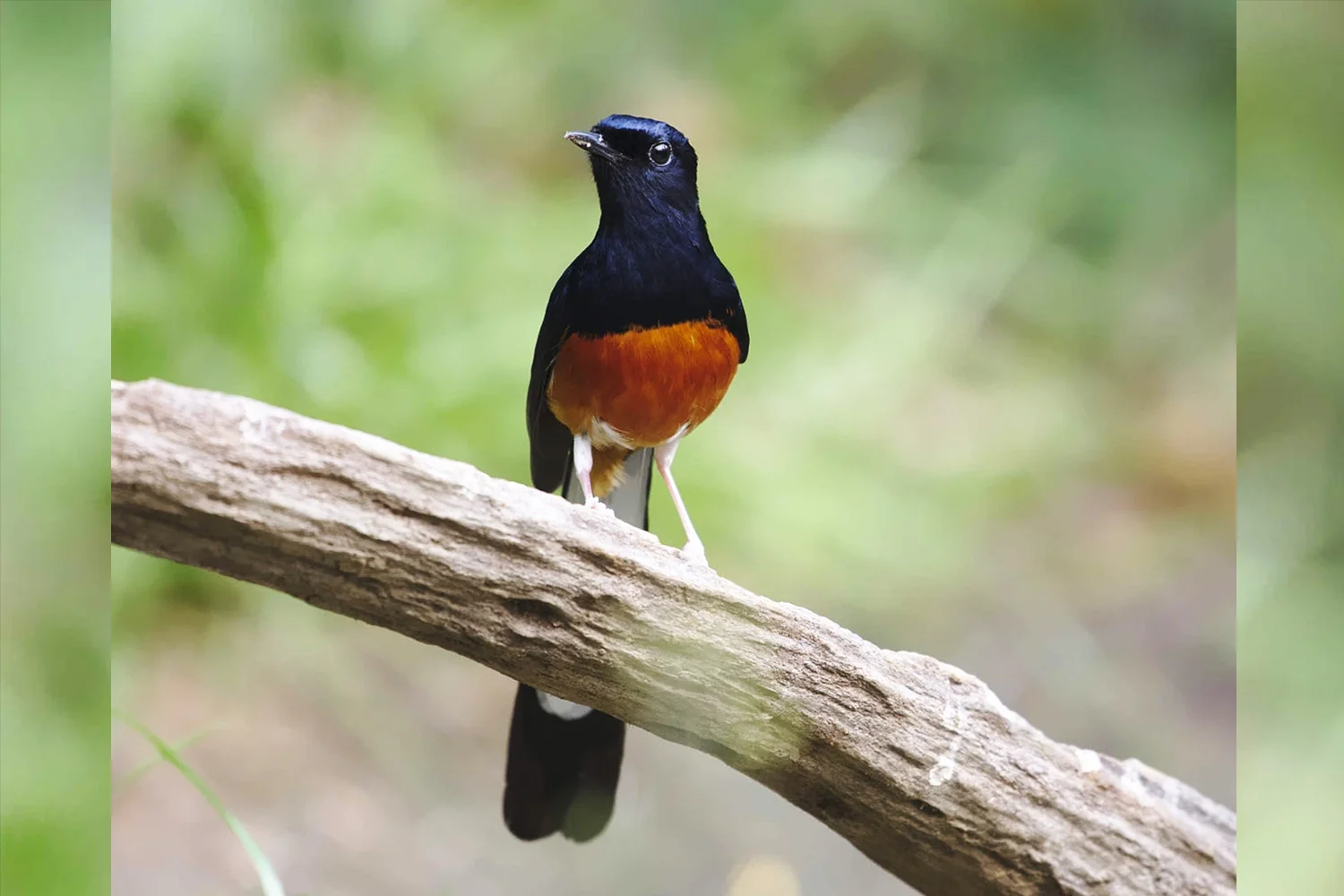
Measuring between 21 and 28 centimeters in length, the White-rumped Shama is a medium-sized bird characterized by a slim, graceful silhouette and a notably long, graduated tail. The primary color of the adult male is a deep, glossy, iridescent black that covers the head, back, and wings. This dark plumage provides a stunning contrast to the vibrant chestnut or rufous color found on its underparts. One of the most distinctive features of the species, as its name suggests, is the stark white rump patch, which is clearly visible when the bird is in flight or during specific displays. Females are generally smaller and tend to have a more muted, charcoal-gray appearance instead of the deep black seen in males, though they retain the characteristic chestnut belly. Both sexes feature sharp, pointed beaks adapted for snatching insects, and their strong, perching feet allow them to navigate the intricate branches of the forest understory with remarkable agility and speed.
Habitat
The White-rumped Shama is primarily found in the dense, shaded environments of tropical and subtropical moist broadleaf forests. It shows a strong preference for the understory of primary and secondary forests, where the thick vegetation provides ample cover and protection from predators. These birds are frequently sighted near ravines, rocky outcrops, and streams, where the humidity remains high and insect prey is abundant. While they are essentially forest-dwellers, they have been known to adapt to bamboo thickets, overgrown plantations, and occasionally the edges of rural gardens that offer sufficient shrubbery. The presence of dense foliage is critical for their survival, as it facilitates their secretive nature and provides necessary nesting sites away from the prying eyes of larger raptors and opportunistic nest predators.
Diet
As an insectivorous species, the White-rumped Shama relies on a diverse range of small invertebrates to meet its high metabolic needs. Its diet primarily consists of ants, spiders, beetles, crickets, and various larvae found among the leaf litter or on the undersides of leaves. During the breeding season, when protein requirements are elevated, they are particularly aggressive in hunting caterpillars and small grasshoppers to feed their growing chicks. While insects form the core of their nutritional intake, they have been observed occasionally consuming small forest berries and fruits. Their hunting technique involves sitting patiently on a low perch, scanning the ground, and then making a rapid, precise dive to capture prey before returning to a safe, elevated position to consume it.
Breeding and Nesting
The breeding season of the White-rumped Shama typically coincides with the onset of the monsoon or the peak of the insect-abundant months, usually between March and July. The nest is a cup-shaped structure meticulously constructed from twigs, roots, dry leaves, and moss, often hidden within the hollow of a tree, a rock crevice, or deep within a thick shrubbery. The female takes the lead in nest building and incubation, while the male remains vigilant, defending their territory with persistent singing and aggressive posturing toward intruders. A typical clutch consists of three to five pale, blotched eggs. Both parents participate in feeding the altricial chicks, which hatch after about two weeks of incubation. Once they fledge, the young birds remain dependent on their parents for several weeks as they learn the intricate skills required for forest survival.
Behavior
The White-rumped Shama is highly territorial and fiercely protective of its home range. Males are famous for their morning and evening vocalizations, which serve as both an advertisement for mates and a warning to rival males. Their song is a fluid, rich series of whistles and trills, often incorporating mimicked sounds from other birds in the vicinity. Despite their bold vocal displays, they are naturally shy and elusive creatures that prefer to stay hidden within dense foliage. When startled, they exhibit quick, darting flight patterns, often using their long tails to balance as they land on branches. They are most active during the early dawn and late dusk, periods known as the crepuscular hours.
Conservation Status - LC Least Concern
Currently, the White-rumped Shama is listed as a species of Least Concern by the IUCN. However, this status does not imply that they are immune to threats. The primary challenge facing the species is the widespread loss and degradation of lowland forest habitats due to deforestation and agricultural expansion. Furthermore, because of their extraordinary singing ability, they have historically been a target for the illegal songbird trade, which has led to significant population declines in certain local areas. Conservation efforts focus on protecting core forest habitats and enforcing strict regulations against trapping to ensure that these birds continue to thrive in their natural environment.
Interesting Facts
- They are renowned as one of the best songbirds in the world, capable of mimicking the calls of many other avian species.
- The long, elegant tail of the male can sometimes be as long as its entire body.
- Despite being shy, their territorial songs can be heard from a significant distance through the forest canopy.
- They are highly intelligent and often show great curiosity regarding their surroundings.
- The white rump patch acts as a distinct signal to other members of their species during flight.
- These birds are primarily solitary outside of the breeding season.
- In some cultures, they are kept as pets specifically for their complex and beautiful melodic repertoire.
Tips for Birdwatchers
For birdwatchers hoping to spot the White-rumped Shama, patience is your most valuable tool. Because they are shy and prefer the dense understory, scanning the canopy is often less effective than focusing on the forest floor and low-hanging branches near water sources. Early morning is the best time for observation, as the males are most vocal and active during this period. Using a high-quality pair of binoculars and remaining as still as possible will increase your chances of witnessing their natural behavior. If you hear a complex, melodic song that seems to change frequently, pause and track the sound. Avoid using playback calls, as this can cause unnecessary stress to the birds and disrupt their territorial defense patterns.
Conclusion
The White-rumped Shama (Copsychus malabaricus) stands as a testament to the beauty and complexity of avian life in the tropical forests of Asia. From its stunning black and chestnut plumage to its legendary vocal prowess, this bird represents the delicate balance of forest ecosystems. As we have explored, the Shama is not merely a pretty face; it is a vital insectivore, a territorial guardian, and a sophisticated communicator. However, its future remains tied to the health of the habitats it calls home. Protecting the dense, humid forests where they reside is not just about saving a single species, but about preserving the integrity of the entire biodiversity hotspot. For birdwatchers and nature lovers, the opportunity to hear a Shama in the wild is a rare privilege that underscores the importance of conservation. By respecting their space and supporting habitat preservation, we ensure that future generations will also be able to wake up to the enchanting, complex melodies of the White-rumped Shama echoing through the trees, a sound that has defined the Asian wilderness for countless centuries.