
ಪರಿಚಯ
ಗ್ರೇಟ್ ಹಾರ್ನ್ಬಿಲ್ (Buceros bicornis), ಇದನ್ನು ಸಾಮಾನ್ಯವಾಗಿ ಗ್ರೇಟ್ ಇಂಡಿಯನ್ ಹಾರ್ನ್ಬಿಲ್ ಎಂದು ಕರೆಯಲಾಗುತ್ತದೆ. ಇದು ಆಗ್ನೇಯ ಏಷ್ಯಾ ಮತ್ತು ಭಾರತೀಯ ಉಪಖಂಡದ ದಟ್ಟವಾದ ಕಾಡುಗಳಲ್ಲಿ ಕಂಡುಬರುವ ಅತ್ಯಂತ ಭವ್ಯವಾದ ಮತ್ತು ಸಾಂಪ್ರದಾಯಿಕ ಪಕ್ಷಿ ಪ್ರಭೇದಗಳಲ್ಲಿ ಒಂದಾಗಿದೆ. ಬುಕೊರೊಟಿಡೆ (Bucerotidae) ಕುಟುಂಬದ ಪ್ರಮುಖ ಸದಸ್ಯನಾಗಿರುವ ಈ ಪಕ್ಷಿಯು, ತನ್ನ ದೊಡ್ಡ ಗಾತ್ರ ಮತ್ತು ಕೊಕ್ಕಿನ ಮೇಲೆ ಇರುವ ಬೃಹತ್ 'ಕ್ಯಾಸ್ಕ್' (casque) ನಿಂದಾಗಿ ಹೆಸರುವಾಸಿಯಾಗಿದೆ. ಮೇಲ್ಛಾವಣಿಯ ರಾಜ ಎಂದು ಪರಿಗಣಿಸಲ್ಪಟ್ಟಿರುವ ಗ್ರೇಟ್ ಹಾರ್ನ್ಬಿಲ್, ಪರಿಸರ ವ್ಯವಸ್ಥೆಯ ಆರೋಗ್ಯವನ್ನು ಸೂಚಿಸುವ ಪ್ರಮುಖ ಪ್ರಭೇದವಾಗಿದೆ. ಈ ಮರವಾಸಿ ಪಕ್ಷಿಗಳು ಸ್ಥಳೀಯ ಸಂಸ್ಕೃತಿ ಮತ್ತು ಪರಿಸರದೊಂದಿಗೆ ಆಳವಾಗಿ ಬೆಸೆದುಕೊಂಡಿವೆ, ಇವುಗಳನ್ನು ಜಾನಪದ ಕಥೆಗಳು ಮತ್ತು ಕಲೆಗಳಲ್ಲಿಯೂ ಕಾಣಬಹುದು. ಇವುಗಳ ಉಪಸ್ಥಿತಿಯು ಸಮೃದ್ಧವಾದ ಪ್ರಾಥಮಿಕ ಅರಣ್ಯವನ್ನು ಸೂಚಿಸುತ್ತದೆ, ಏಕೆಂದರೆ ಇವುಗಳು ಬೆಳೆಯಲು ಮತ್ತು ತಮ್ಮ ಮರಿಗಳನ್ನು ಸಾಕಲು ದೊಡ್ಡ, ಪ್ರಬುದ್ಧ ಮರಗಳ ಅಗತ್ಯವಿರುತ್ತದೆ. ಗ್ರೇಟ್ ಹಾರ್ನ್ಬಿಲ್ ಬಗ್ಗೆ ತಿಳಿಯುವುದು ಪಕ್ಷಿಶಾಸ್ತ್ರದಲ್ಲಿ ಆಸಕ್ತಿ ಹೊಂದಿರುವವರಿಗೆ ಬಹಳ ಮುಖ್ಯ, ಏಕೆಂದರೆ ಇವು ಉಷ್ಣವಲಯದ ಪಕ್ಷಿಗಳಲ್ಲಿ ವಿಶಿಷ್ಟ ವಿಕಸನೀಯ ಹಾದಿಯನ್ನು ಪ್ರತಿನಿಧಿಸುತ್ತವೆ.
ದೈಹಿಕ ನೋಟ
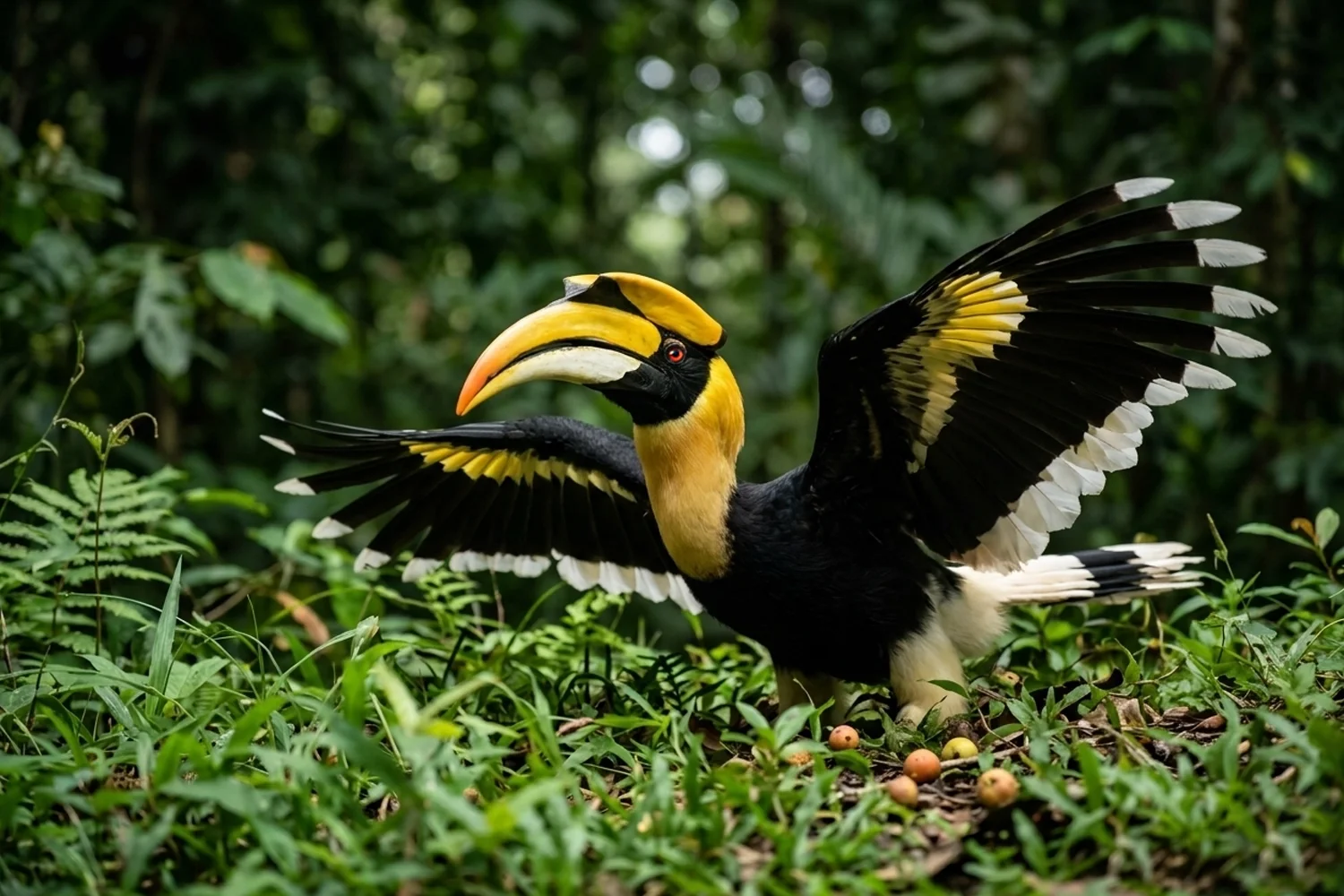
ಹಾರ್ನ್ಬಿಲ್ ಕುಟುಂಬದ ಅತಿದೊಡ್ಡ ಸದಸ್ಯರಲ್ಲಿ ಒಂದಾದ ಗ್ರೇಟ್ ಹಾರ್ನ್ಬಿಲ್, 95 ರಿಂದ 120 ಸೆಂ.ಮೀ ಉದ್ದವನ್ನು ಹೊಂದಿರುತ್ತದೆ. ಇದರ ಗರಿಗಳು ಗಾಢವಾದ ಮತ್ತು ಹೊಳೆಯುವ ಕಪ್ಪು ಬಣ್ಣದ್ದಾಗಿದ್ದು, ಹಳದಿ ಮತ್ತು ಬಿಳಿ ಬಣ್ಣದೊಂದಿಗೆ ಅದ್ಭುತ ವ್ಯತಿರಿಕ್ತತೆಯನ್ನು ಸೃಷ್ಟಿಸುತ್ತದೆ. ಈ ಪ್ರಭೇದದ ಅತ್ಯಂತ ವಿಶಿಷ್ಟ ಲಕ್ಷಣವೆಂದರೆ ಅದರ ಬೃಹತ್, ಬಾಗಿದ ಕೊಕ್ಕು ಮತ್ತು ಮೇಲಿನ ದವಡೆಯ ಮೇಲೆ ಇರುವ U-ಆಕಾರದ ಕ್ಯಾಸ್ಕ್. ಕ್ಯಾಸ್ಕ್ ಭಾರವೆಂದು ಕಂಡರೂ, ಇದು ಟೊಳ್ಳಾದ ಕೆರಾಟಿನ್ ರಚನೆಗಳಿಂದ ಮಾಡಲ್ಪಟ್ಟಿರುವುದರಿಂದ ತೂಕದಲ್ಲಿ ಹಗುರವಾಗಿರುತ್ತದೆ. ಪಕ್ಷಿಯ ಕುತ್ತಿಗೆ ಮತ್ತು ರೆಕ್ಕೆಯ ಗರಿಗಳಲ್ಲಿ ಬಿಳಿ ಬಣ್ಣದ ಪಟ್ಟಿಗಳಿದ್ದು, ಹಾರುವಾಗ ಸುಂದರವಾಗಿ ಕಾಣುತ್ತವೆ. ಕಣ್ಣುಗಳ ಸುತ್ತಲೂ ಕಪ್ಪು ರೆಪ್ಪೆಗೂದಲುಗಳಿದ್ದು, ಚರ್ಮವು ನೀಲಿ ಅಥವಾ ಗಾಢ ಬೂದು ಬಣ್ಣದಲ್ಲಿರುತ್ತದೆ. ಇವುಗಳ ಬಲವಾದ ಕಾಲುಗಳು ಮರಗಳ ಮೇಲೆ ಬದುಕಲು ಅನುಕೂಲಕರವಾಗಿವೆ. ಗಂಡು ಮತ್ತು ಹೆಣ್ಣು ಪಕ್ಷಿಗಳು ಒಂದೇ ರೀತಿಯ ಆಕಾರ ಹೊಂದಿದ್ದರೂ, ಗಂಡು ಪಕ್ಷಿಯು ಗಾತ್ರದಲ್ಲಿ ದೊಡ್ಡದಾಗಿರುತ್ತದೆ ಮತ್ತು ಕ್ಯಾಸ್ಕ್ ಮೇಲೆ ಕೆಂಪು-ಕಿತ್ತಳೆ ಬಣ್ಣವನ್ನು ಹೊಂದಿರುತ್ತದೆ, ಆದರೆ ಹೆಣ್ಣು ಪಕ್ಷಿಯ ಕ್ಯಾಸ್ಕ್ ಚಿಕ್ಕದಾಗಿರುತ್ತದೆ.
ನೈಸರ್ಗಿಕ ವಾಸಸ್ಥಾನ
ಗ್ರೇಟ್ ಹಾರ್ನ್ಬಿಲ್ ಮುಖ್ಯವಾಗಿ ದಟ್ಟವಾದ, ನಿತ್ಯಹರಿದ್ವರ್ಣದ ಉಷ್ಣವಲಯದ ಮಳೆಕಾಡುಗಳ ಪಕ್ಷಿಯಾಗಿದೆ. ಇದು ಹಿಮಾಲಯದ ತಪ್ಪಲು ಪ್ರದೇಶಗಳು, ಭಾರತದ ಪಶ್ಚಿಮ ಘಟ್ಟಗಳು ಮತ್ತು ಥೈಲ್ಯಾಂಡ್, ಮಲೇಷ್ಯಾ ಮತ್ತು ಇಂಡೋನೇಷ್ಯಾದಂತಹ ಆಗ್ನೇಯ ಏಷ್ಯಾದ ವಿಶಾಲ ಅರಣ್ಯಗಳಲ್ಲಿ ಕಂಡುಬರುತ್ತದೆ. ಈ ಪಕ್ಷಿಗಳು ಹಣ್ಣು ಬಿಡುವ ಮರಗಳು ಹೇರಳವಾಗಿರುವ ಎತ್ತರದ ಪ್ರಾಥಮಿಕ ಅರಣ್ಯಗಳನ್ನು ಬಯಸುತ್ತವೆ. ಇವು ಸಂಪೂರ್ಣವಾಗಿ ಮರವಾಸಿಗಳಾಗಿವೆ, ಅಂದರೆ ಇವು ತಮ್ಮ ಜೀವನದ ಹೆಚ್ಚಿನ ಸಮಯವನ್ನು ಅರಣ್ಯದ ಮೇಲ್ಭಾಗದಲ್ಲಿ ಕಳೆಯುತ್ತವೆ. ಗಿಡಗಳ ಮೇಲೆ ಕಳೆಯುತ್ತವೆ ಮತ್ತು ಅಗತ್ಯವಿದ್ದಾಗ ಮಾತ್ರ ಕೆಳಗೆ ಬರುತ್ತವೆ. ಗೂಡುಕಟ್ಟಲು ಇವುಗಳಿಗೆ ಹಳೆಯ ಮರಗಳ ಅಗತ್ಯವಿರುವುದರಿಂದ, ಅರಣ್ಯನಾಶವು ಇವುಗಳ ಸಂಖ್ಯೆಗೆ ದೊಡ್ಡ ಬೆದರಿಕೆಯಾಗಿದೆ. ಸಂತಾನೋತ್ಪತ್ತಿಯ ಸಮಯದಲ್ಲಿ ಇವು ಹೆಚ್ಚು ಪ್ರಾದೇಶಿಕವಾಗಿರುತ್ತವೆ, ಆದರೆ ಹಣ್ಣುಗಳನ್ನು ಹುಡುಕಲು ದೂರದವರೆಗೆ ಸಂಚರಿಸುತ್ತವೆ.
ಆಹಾರ ಕ್ರಮ
ವಿಶೇಷವಾದ ಹಣ್ಣುಹಂಪಲುಗಳನ್ನು ತಿನ್ನುವ ಪಕ್ಷಿಯಾಗಿ, ಗ್ರೇಟ್ ಹಾರ್ನ್ಬಿಲ್ ಬೀಜ ಪ್ರಸರಣದ ಮೂಲಕ ಅರಣ್ಯದ ಮರುಪೂರಣದಲ್ಲಿ ಪ್ರಮುಖ ಪಾತ್ರ ವಹಿಸುತ್ತದೆ. ಇವುಗಳ ಆಹಾರದಲ್ಲಿ ಪ್ರಧಾನವಾಗಿ ವಿವಿಧ ರೀತಿಯ ಹಣ್ಣುಗಳಿರುತ್ತವೆ, ಅದರಲ್ಲೂ ಅಂಜೂರದ ಹಣ್ಣುಗಳು (ಫಿಕಸ್ ಪ್ರಭೇದಗಳು) ಇವುಗಳಿಗೆ ತುಂಬಾ ಇಷ್ಟ. ಹಣ್ಣುಗಳನ್ನು ಹುಡುಕಲು ಇವು ದೂರದವರೆಗೆ ಹಾರುತ್ತವೆ, ಹೀಗೆ ಕಾಡಿನಾದ್ಯಂತ ಬೀಜಗಳನ್ನು ಹರಡುತ್ತವೆ. ಹಣ್ಣುಗಳ ಹೊರತಾಗಿ, ಇವು ಸಣ್ಣ ಪ್ರಾಣಿಗಳಾದ ಸರೀಸೃಪಗಳು, ಇಲಿಗಳು, ಉಭಯಚರಗಳು ಮತ್ತು ಕೆಲವೊಮ್ಮೆ ಸಣ್ಣ ಪಕ್ಷಿಗಳ ಮೊಟ್ಟೆಗಳನ್ನು ಸಹ ತಿನ್ನುತ್ತವೆ. ಇವುಗಳ ಬೃಹತ್, ಗರಗಸದಂತಹ ಕೊಕ್ಕು ಹಣ್ಣುಗಳನ್ನು ಕೀಳಲು ಮತ್ತು ಬೇಟೆಯನ್ನು ಹಿಡಿಯಲು ಸಂಪೂರ್ಣವಾಗಿ ಹೊಂದಿಕೊಂಡಿದೆ.
ಸಂತಾನೋತ್ಪತ್ತಿ ಮತ್ತು ಗೂಡುಕಟ್ಟುವಿಕೆ
ಗ್ರೇಟ್ ಹಾರ್ನ್ಬಿಲ್ ನ ಸಂತಾನೋತ್ಪತ್ತಿ ನಡವಳಿಕೆಯು ಅತ್ಯಂತ ಕುತೂಹಲಕಾರಿಯಾಗಿದೆ. ಗೂಡುಕಟ್ಟುವ ಸಮಯದಲ್ಲಿ, ಹೆಣ್ಣು ಪಕ್ಷಿಯು ದೊಡ್ಡ ಮರದಲ್ಲಿರುವ ಆಳವಾದ ನೈಸರ್ಗಿಕ ಹೊಳ್ಳೆಯನ್ನು ಆಯ್ಕೆ ಮಾಡುತ್ತದೆ. ಒಳಗೆ ಸೇರಿದ ನಂತರ, ಅದು ಮತ್ತು ಗಂಡು ಪಕ್ಷಿಯು ಮಣ್ಣು, ಹಿಕ್ಕೆ ಮತ್ತು ಹಣ್ಣಿನ ತಿರುಳನ್ನು ಬಳಸಿ ಹೊಳ್ಳೆಯ ಬಾಗಿಲನ್ನು ಮುಚ್ಚುತ್ತವೆ, ಗಂಡು ಪಕ್ಷಿಯು ಆಹಾರ ನೀಡಲು ಸಣ್ಣದಾದ ಸೀಳನ್ನು ಮಾತ್ರ ಬಿಡುತ್ತದೆ. ಇದು ಹಾವುಗಳು ಮತ್ತು ಮಂಗಗಳಂತಹ ಪರಭಕ್ಷಕಗಳಿಂದ ರಕ್ಷಣೆ ನೀಡುತ್ತದೆ. ಗಂಡು ಪಕ್ಷಿಯು ಮರಿಗಳು ಮತ್ತು ಹೆಣ್ಣು ಪಕ್ಷಿಗೆ ಆಹಾರವನ್ನು ಪೂರೈಸುವಲ್ಲಿ ನಿರಂತರವಾಗಿ ಶ್ರಮಿಸುತ್ತದೆ. ಮರಿಗಳು ಬೆಳೆದ ನಂತರ, ಹೆಣ್ಣು ಪಕ್ಷಿಯು ಗೋಡೆಯನ್ನು ಒಡೆದು ಹೊರಬರುತ್ತದೆ, ಇದು ಪ್ರಕೃತಿಯ ಒಂದು ಅದ್ಭುತ ವಿಕಸನೀಯ ಹೊಂದಾಣಿಕೆಯಾಗಿದೆ.
ನಡವಳಿಕೆ
ಗ್ರೇಟ್ ಹಾರ್ನ್ಬಿಲ್ ಒಂದು ಸಾಮಾಜಿಕ ಪಕ್ಷಿಯಾಗಿದ್ದು, ಹೆಚ್ಚಾಗಿ ಜೋಡಿಯಾಗಿ ಅಥವಾ ಸಣ್ಣ ಗುಂಪುಗಳಲ್ಲಿ ಕಂಡುಬರುತ್ತದೆ. ಇವುಗಳ ಜೋರಾದ, ಪ್ರತಿಧ್ವನಿಸುವ ಕರೆಗಳು ಅರಣ್ಯದಲ್ಲಿ ಸಂವಹನಕ್ಕಾಗಿ ಮತ್ತು ಪ್ರದೇಶವನ್ನು ಗುರುತಿಸಲು ಬಳಸಲ್ಪಡುತ್ತವೆ. ಇವುಗಳ ಹಾರಾಟವು ಭಾರವಾಗಿರುತ್ತದೆ ಮತ್ತು ವಿಶಿಷ್ಟವಾದ ಶಬ್ದವನ್ನು ಉಂಟುಮಾಡುತ್ತದೆ, ಇದನ್ನು ದೂರದಿಂದಲೇ ಕೇಳಬಹುದು. ಇವು ಹೆಚ್ಚು ಬುದ್ಧಿವಂತ ಪಕ್ಷಿಗಳಾಗಿದ್ದು, ಪರಸ್ಪರ ಶುಚಿಗೊಳಿಸಿಕೊಳ್ಳುವುದು ಮತ್ತು ಒಟ್ಟಾಗಿ ಆಹಾರ ಹುಡುಕುವುದು ಮುಂತಾದ ಸಂಕೀರ್ಣ ಸಾಮಾಜಿಕ ನಡವಳಿಕೆಗಳನ್ನು ಪ್ರದರ್ಶಿಸುತ್ತವೆ. ಸಾಮಾನ್ಯವಾಗಿ ಇವು ಮನುಷ್ಯರನ್ನು ಕಂಡರೆ ದೂರವಿರುತ್ತವೆ, ಆದರೆ ಕುತೂಹಲದಿಂದ ಗಮನಿಸಬಲ್ಲವು.
ಸಂರಕ್ಷಣಾ ಸ್ಥಿತಿ - VU ದುರ್ಬಲ
ಗ್ರೇಟ್ ಹಾರ್ನ್ಬಿಲ್ ಅನ್ನು ಪ್ರಸ್ತುತ IUCN ಕೆಂಪು ಪಟ್ಟಿಯಲ್ಲಿ 'ಅಳಿವಿನಂಚಿನಲ್ಲಿರುವ' (Vulnerable) ಎಂದು ಪಟ್ಟಿ ಮಾಡಲಾಗಿದೆ. ಅರಣ್ಯನಾಶ, ಅಕ್ರಮ ಮರ ಕಡಿತ ಮತ್ತು ಆವಾಸಸ್ಥಾನಗಳ ವಿಘಟನೆ ಇವುಗಳಿಗೆ ಮುಖ್ಯ ಬೆದರಿಕೆಗಳಾಗಿವೆ. ಅಲ್ಲದೆ, ಇವುಗಳ ಸುಂದರವಾದ ಗರಿಗಳು ಮತ್ತು ಕೊಕ್ಕಿಗಾಗಿ ಬೇಟೆಯಾಡುವುದು ಕಾನೂನುಬಾಹಿರ ವನ್ಯಜೀವಿ ವ್ಯಾಪಾರದಲ್ಲಿ ತೊಡಗಿರುವವರಿಗೆ ಲಾಭದಾಯಕವಾಗಿದೆ. ಅಸ್ತಿತ್ವದಲ್ಲಿರುವ ಹಳೆಯ ಕಾಡುಗಳನ್ನು ರಕ್ಷಿಸುವುದು ಮತ್ತು ಜನರಲ್ಲಿ ಜಾಗೃತಿ ಮೂಡಿಸುವುದು ಇವುಗಳ ಸಂರಕ್ಷಣೆಗೆ ಅತ್ಯಗತ್ಯವಾಗಿದೆ.
ಆಸಕ್ತಿದಾಯಕ ಸಂಗತಿಗಳು
- ಗ್ರೇಟ್ ಹಾರ್ನ್ಬಿಲ್ನ ಕೊಕ್ಕಿನ ಮೇಲಿರುವ ಕ್ಯಾಸ್ಕ್ ಮಾನವನ ಉಗುರಿನಂತೆಯೇ ಕೆರಾಟಿನ್ನಿಂದ ಮಾಡಲ್ಪಟ್ಟಿದೆ.
- ಇವುಗಳನ್ನು ಬೀಜ ಪ್ರಸರಣದಲ್ಲಿನ ಪ್ರಮುಖ ಪಾತ್ರಕ್ಕಾಗಿ 'ಕಾಡಿನ ರೈತರು' ಎಂದು ಕರೆಯಲಾಗುತ್ತದೆ.
- ಒಂದು ಜೋಡಿ ಗ್ರೇಟ್ ಹಾರ್ನ್ಬಿಲ್ಗಳು ಜೀವನಪೂರ್ತಿ ಒಟ್ಟಿಗೆ ಇರಬಲ್ಲವು.
- ಇವು ಹಾರುವಾಗ ಬರುವ ರೆಕ್ಕೆಯ ಶಬ್ದವು ಸುಮಾರು ಒಂದು ಕಿಲೋಮೀಟರ್ ದೂರದವರೆಗೆ ಕೇಳಿಸುತ್ತದೆ.
- ಇವುಗಳಿಗೆ ಹಾಡುವ ಪಕ್ಷಿಗಳಂತೆ ಶಬ್ದಪೆಟ್ಟಿಗೆ ಇರುವುದಿಲ್ಲ; ಬದಲಾಗಿ, ಅವು ತಮ್ಮ ಗಂಟಲಿನ ಸ್ನಾಯುಗಳನ್ನು ಬಳಸಿ ಶಬ್ದ ಮಾಡುತ್ತವೆ.
- ಗೂಡುಕಟ್ಟುವಾಗ ಹೆಣ್ಣು ಪಕ್ಷಿಯು ತಿಂಗಳುಗಟ್ಟಲೆ ಮರದ ಹೊಳ್ಳೆಯೊಳಗೆ ಸ್ವಯಂ-ಬಂಧಿತವಾಗಿರುತ್ತದೆ.
- ಇವು ಕೇರಳ ಮತ್ತು ಅರುಣಾಚಲ ಪ್ರದೇಶದ ರಾಜ್ಯ ಪಕ್ಷಿಗಳಾಗಿವೆ.
ಪಕ್ಷಿ ವೀಕ್ಷಕರಿಗೆ ಸಲಹೆಗಳು
ನೀವು ಗ್ರೇಟ್ ಹಾರ್ನ್ಬಿಲ್ ಅನ್ನು ನೋಡಲು ಯೋಜಿಸುತ್ತಿದ್ದರೆ, ತಾಳ್ಮೆ ಅತ್ಯಗತ್ಯ. ಈ ಪಕ್ಷಿಗಳು ಹೆಚ್ಚು ಸಕ್ರಿಯವಾಗಿರುವ ಮುಂಜಾನೆಯೇ ಹುಡುಕಾಟವನ್ನು ಪ್ರಾರಂಭಿಸಿ. ಎತ್ತರದ, ಹಣ್ಣು ಬಿಡುವ ಮರಗಳ ತುದಿಯನ್ನು ಗಮನಿಸಿ. ಇವುಗಳ ವಿಶಿಷ್ಟವಾದ 'ಕಾಕ್' ಕರೆಗಳನ್ನು ಅಥವಾ ರೆಕ್ಕೆಯ ಶಬ್ದವನ್ನು ಆಲಿಸಿ. ಪರಿಸರದೊಂದಿಗೆ ಬೆರೆಯಲು ಮಂದ ಬಣ್ಣದ ಬಟ್ಟೆಗಳನ್ನು ಧರಿಸಿ ಮತ್ತು ಗೂಡುಕಟ್ಟುವ ಸಮಯದಲ್ಲಿ ಅವುಗಳಿಗೆ ತೊಂದರೆಯಾಗದಂತೆ ದೂರದಿಂದಲೇ ವೀಕ್ಷಿಸಿ. ಹೈ-ಕ್ವಾಲಿಟಿ ಸ್ಪಾಟಿಂಗ್ ಸ್ಕೋಪ್ ಬಳಸುವುದು ಉತ್ತಮ.
ತೀರ್ಮಾನ
ಗ್ರೇಟ್ ಹಾರ್ನ್ಬಿಲ್ ನೈಸರ್ಗಿಕ ಪ್ರಪಂಚದ ಸೌಂದರ್ಯ ಮತ್ತು ಸಂಕೀರ್ಣತೆಯ ಒಂದು ಉಸಿರುಕಟ್ಟುವ ಸಾಕ್ಷಿಯಾಗಿದೆ. ಇದರ ಬೃಹತ್ ಗಾತ್ರ ಮತ್ತು ಪರಿಸರ ವ್ಯವಸ್ಥೆಯಲ್ಲಿನ ಪ್ರಮುಖ ಪಾತ್ರವು ಇದನ್ನು ಅತ್ಯಂತ ಮಹತ್ವದ ಪ್ರಭೇದವನ್ನಾಗಿ ಮಾಡುತ್ತದೆ. ಗ್ರೇಟ್ ಹಾರ್ನ್ಬಿಲ್ ಅನ್ನು ರಕ್ಷಿಸುವುದು ಎಂದರೆ ಕೇವಲ ಒಂದು ಪಕ್ಷಿಯನ್ನು ರಕ್ಷಿಸುವುದಲ್ಲ, ಬದಲಾಗಿ ಇಡೀ ಮಳೆಕಾಡಿನ ಪರಿಸರವನ್ನು ಉಳಿಸುವುದಾಗಿದೆ. ಅವುಗಳ ಆವಾಸಸ್ಥಾನವನ್ನು ಗೌರವಿಸುವ ಮೂಲಕ ಮತ್ತು ಸಂರಕ್ಷಣಾ ಉಪಕ್ರಮಗಳನ್ನು ಬೆಂಬಲಿಸುವ ಮೂಲಕ, ಈ ಭವ್ಯವಾದ 'ಮೇಲ್ಛಾವಣಿಯ ರಾಜರು' ಮುಂದಿನ ಪೀಳಿಗೆಗೂ ಕಾಣಸಿಗುವಂತೆ ಮಾಡಬಹುದು. ಅರಣ್ಯನಾಶ ಮತ್ತು ಬೇಟೆಯಾಡುವಿಕೆಯನ್ನು ತಡೆಯುವ ಮೂಲಕ ಈ ಅದ್ಭುತ ಪಕ್ಷಿಯನ್ನು ಉಳಿಸೋಣ, ಏಕೆಂದರೆ ಇದು ಕಾಡಿನ ನಿಜವಾದ ರಕ್ಷಕ.