Introduction
Barau's petrel (Pterodroma baraui) is a medium-sized gadfly petrel belonging to the family Procellariidae. This remarkable seabird is primarily associated with the Indian Ocean, with its survival closely tied to the volcanic landscapes of Réunion Island.
Physical Appearance
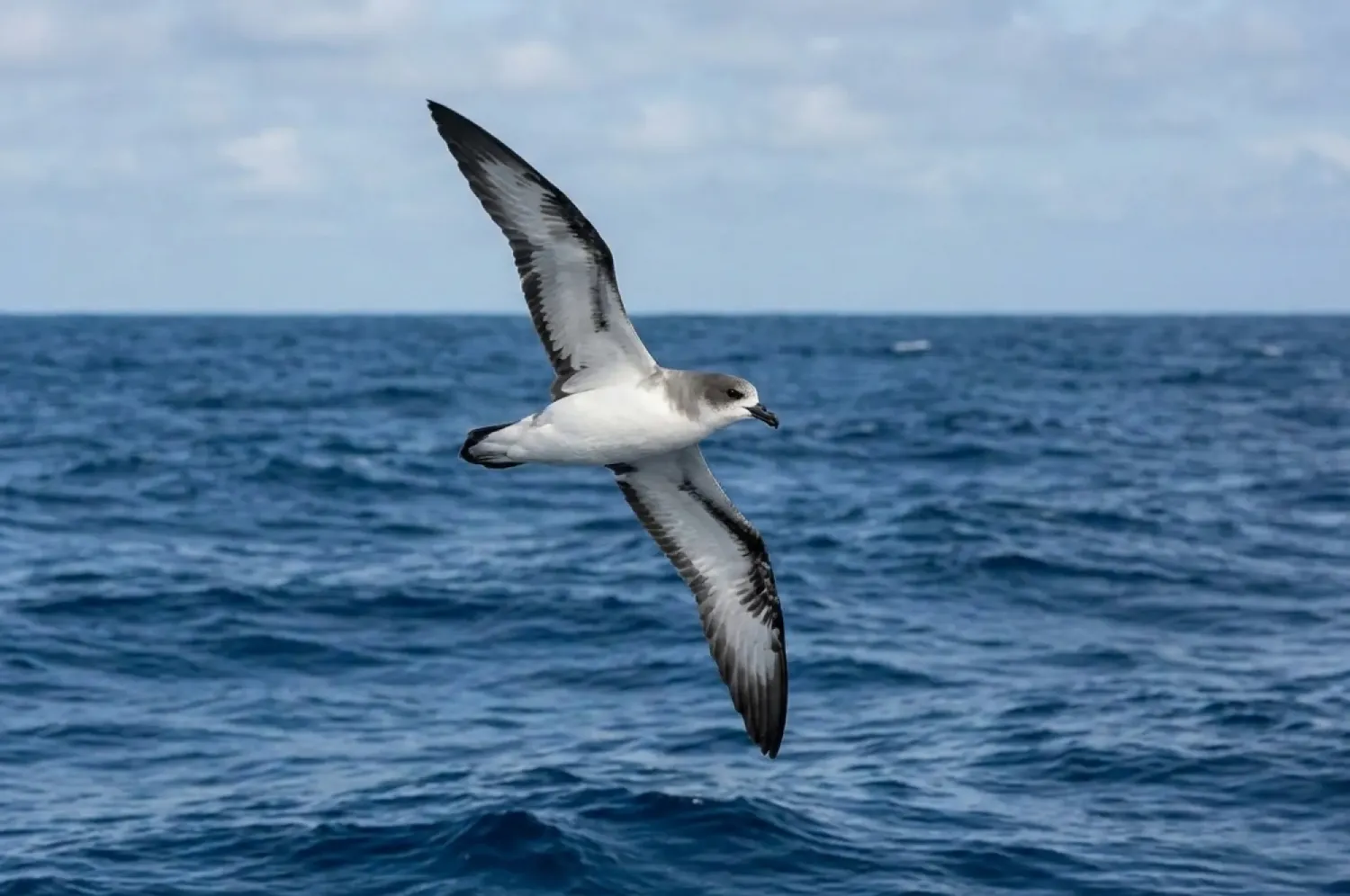
The Barau's petrel measures between 38 and 40 cm in length. It is characterized by its white undersides and forehead, which contrast sharply with its black bill and dark upper parts. When in flight, a moderately distinct 'M' pattern can be observed across its wings and back. Its underwings are predominantly white, framed by black bands on the leading and trailing edges.
Habitat
As a pelagic species, Barau's petrel spends the majority of its life at sea, ranging across the Indian Ocean from Réunion to Western Australia and Indonesia. Their nesting habitat is exceptionally rare, located far inland at high elevations between 2,400 and 2,700 meters above sea level in the forested mountains of Réunion.
Diet
These petrels are skilled hunters that prey mainly on small fish (approximately 10 cm in length). They feed by seizing prey from the surface or by plunge diving. They are social feeders, often associating with other seabird species and occasionally following fishing vessels to scavenge or find schools of fish.
Breeding and Nesting
The breeding colonies of Barau's petrel are found in high-altitude forests where they dig burrows for nesting. The species is believed to have a 55-day incubation period, with chicks requiring 100 to 120 days to fledge. Fledging typically occurs between November and February.
Behavior
One of the most unique behaviors of Barau's petrel is its diurnal return to inland colonies. Unlike many other burrow-nesting procellariids that return under the cover of darkness, these birds return in the late afternoon, utilizing thermal updrafts to conserve energy while climbing to their high-mountain nests.
Conservation Status
Barau's petrel is currently classified as globally threatened. Its survival depends on specific Important Bird Areas (IBAs) on Réunion, such as Piton des Neiges – Gros Morne. Threats include habitat loss and predation by invasive species at their limited nesting sites.
Interesting Facts
- They are one of the few seabirds in the world to nest at altitudes exceeding 2,400 meters.
- The species is named after the Réunionnais naturalist Armand Barau.
- Almost the entire global population nests on the single island of Réunion.
- They use the same thermal air currents as paragliders to reach their mountain burrows.
Tips for Birdwatchers
For the best chance to see Barau's petrel, visit the coast of Réunion Island in the late afternoon. Look for them gathering offshore before they begin their evening ascent to the mountains. A good pair of binoculars will help you identify the dark 'M' pattern on their wings against the ocean surface.
Conclusion
Barau's petrel is a fascinating and resilient seabird that bridges the gap between the deep ocean and high mountain peaks. As a globally threatened species, understanding its unique biology and protecting its limited nesting grounds is vital for its continued existence in the Indian Ocean.